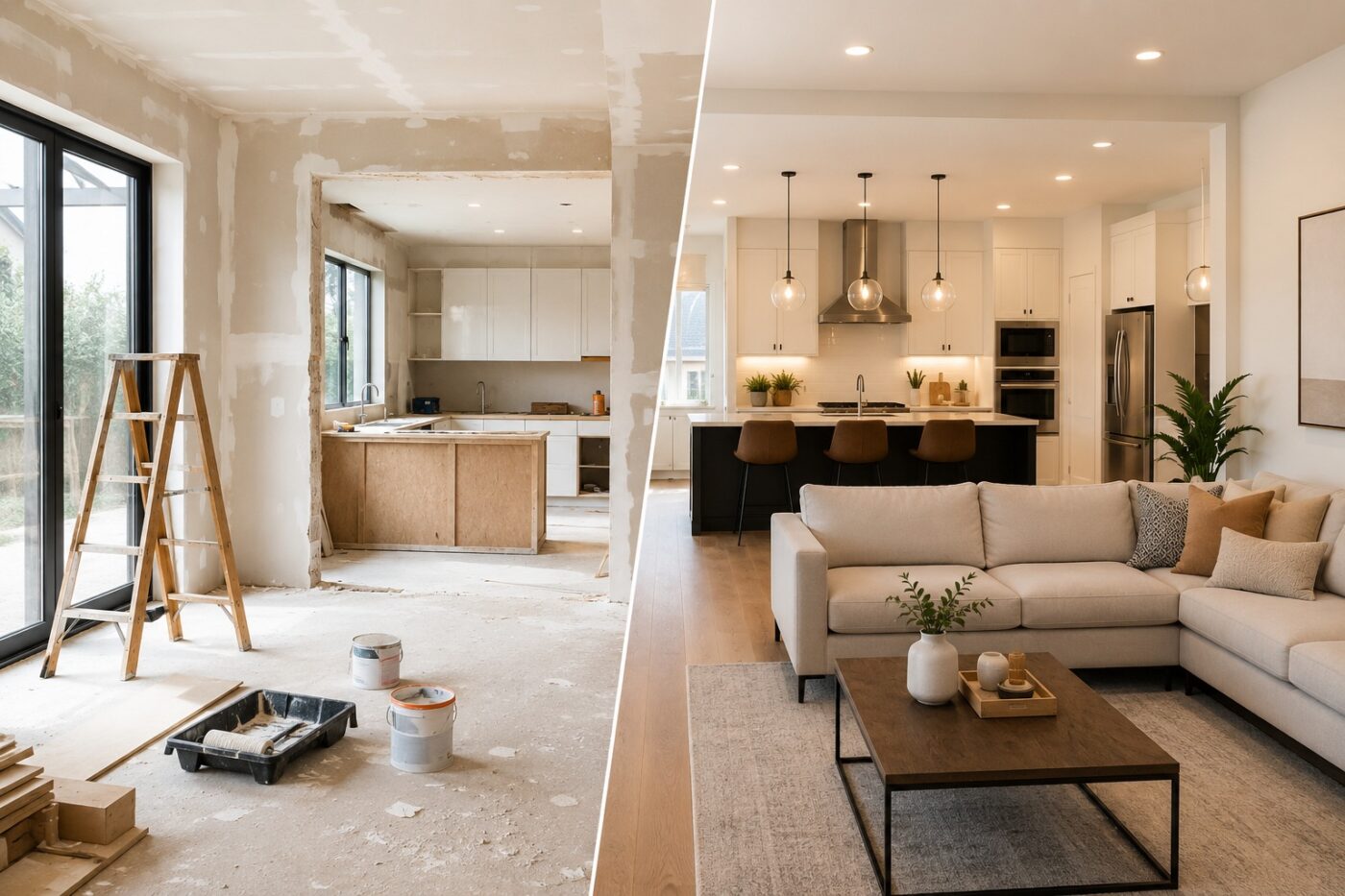
Home renovation can be a worthwhile investment in 2026, but the answer depends on what you want to achieve, how much the project will cost, and how long you plan to stay in your home.
For some homeowners, renovating is a practical way to avoid the expenses and disruption of moving. For others, upgrading an older property can become more expensive than buying a different home, particularly when major structural repairs are involved.
The challenge is that renovation costs and financial returns do not always move together. A beautifully remodeled kitchen may improve everyday life without adding an equivalent amount to the property's resale value. Meanwhile, less noticeable improvements, such as insulation or essential repairs, may protect the home and reduce future expenses.
In 2026, these decisions deserve particular attention. Construction costs remain under pressure in many markets, financing can be expensive, and homeowners are increasingly concerned about energy efficiency and long-term maintenance.
The key question is not simply whether renovation increases property value. It is whether the benefits justify the total cost for your particular home.
This guide examines renovation costs, resale returns, energy savings, hidden expenses, and the financial differences between remodeling and moving. It also provides practical examples and a decision-making framework to help you determine when renovating makes sense—and when it may be wiser to reconsider.
1. What Has Changed in Home Renovation in 2026?
The home renovation market in 2026 reflects a combination of persistent cost pressures, changing housing conditions, and greater attention to long-term property performance.
Although some materials have become more readily available since the supply disruptions of earlier years, renovation is not necessarily becoming cheaper. Labor, transportation, specialist work, and materials can still account for a substantial portion of a project's budget.

Renovation costs remain under pressure
According to the National Association of Home Builders, its Remodeling Input Price Index showed that nonlabor input costs for residential remodeling in the United States increased by 6.6% year over year in the second quarter of 2026.
This figure does not mean that every renovation became 6.6% more expensive. It measures changes in selected inputs rather than the final price of an individual project. Nevertheless, it illustrates why homeowners should avoid relying on outdated estimates.
Contractor availability and project complexity also influence the final cost. Work involving structural modifications, specialized electrical systems, or extensive plumbing may require several trades, inspections, and careful coordination.
The renovation market remains substantial
The Harvard Joint Center for Housing Studies reported in October 2026 that annual U.S. spending on home improvements and repairs was expected to remain relatively flat, hovering around $525 billion through the third quarter of 2027.
The outlook suggests a large but relatively slow-growing market rather than an accelerating renovation boom.
These figures describe the United States. Homeowners elsewhere may experience very different conditions because construction costs, interest rates, property values, and labor markets vary considerably between countries.
Homeowners are thinking beyond appearance
Modern renovation decisions increasingly involve questions that go beyond interior design.
A kitchen that looks attractive but has an inefficient layout may be less useful than a modest update that improves storage and workflow. Likewise, replacing a functioning heating system purely because a newer model exists may provide less value than first improving insulation and reducing heat loss.
Energy monitoring, efficient heating and cooling, and practical smart-home features can contribute to better home performance. However, the financial benefits depend on installation costs, energy prices, and how occupants actually use the technology.
Another important consideration is the age of existing housing. Many older homes require repairs to roofing, moisture protection, ventilation, electrical systems, or plumbing. These improvements may not deliver impressive resale returns on paper, but they can prevent deterioration and protect the property.
What does this mean for homeowners in 2026?
Renovation should begin with an assessment of the property's condition and long-term needs, not with a shopping list of desirable upgrades. Choosing the right project matters more than following the latest design trend.
2. Main Reasons Why Homeowners Renovate
People renovate their homes for different reasons, and those motivations should influence how much money they spend and which improvements they prioritize.
Increasing property value is one common goal, particularly among homeowners planning to sell within a few years. Updated finishes, functional kitchens, attractive bathrooms, and well-maintained exteriors can improve buyer perception.
However, increasing resale value is not the same as recovering the full cost of renovation. An improvement may make a property easier to sell without producing a dollar-for-dollar increase in its selling price.
Comfort and functionality are equally important reasons to renovate.
A family may need additional storage, a more practical kitchen, another bathroom, or a dedicated workspace. In these situations, remodeling allows the existing property to adapt to changing circumstances without requiring a move.
For homeowners who intend to remain in the same location for many years, these everyday improvements may provide substantial value even when their resale returns are modest.
Energy efficiency is another motivation. Poor insulation, air leakage, inefficient heating equipment, and inadequate temperature control can make an otherwise comfortable house expensive to operate.
Addressing these problems may improve indoor comfort while reducing ongoing energy consumption. The size of any savings depends on the climate, building condition, utility rates, and selected improvements.
Other renovations are necessary rather than optional.
A leaking roof, unsafe electrical installation, or persistent moisture problem cannot always be postponed without consequences. Delaying essential maintenance can allow relatively manageable defects to develop into more extensive damage.
Finally, some homeowners renovate because they have an emotional connection to their property. Familiar surroundings, neighborhood relationships, and years of personal memories can make remaining in the same home especially valuable.
These motivations are legitimate, but they should be considered separately.
A renovation intended to improve daily living does not need to meet the same financial criteria as a renovation intended to generate profit at resale.
Recognizing this distinction makes it easier to set priorities and avoid spending money on improvements that do not support the homeowner's actual goals.
3. When Home Renovation Is Financially Worth It
A renovation is financially worthwhile when its expected benefits justify its total cost and the risks involved.
Those benefits may include an increase in resale value, lower operating expenses, avoided future repairs, or a combination of these outcomes. Personal enjoyment also matters, although it cannot always be expressed as a financial return.
Understanding renovation ROI
Return on investment is frequently used to compare home improvements, but renovation reports often measure something more specific: the percentage of project costs expected to be recovered when the property is sold.
Cost recovery can be calculated as:
Cost Recovery (%) = (Estimated Added Resale Value ÷ Total Renovation Cost) × 100
For example, suppose a homeowner spends $20,000 remodeling a kitchen. A local property assessment suggests that the improvement increases the home's market value by approximately $12,000.
The estimated cost recovery is 60%.
This means the renovation adds an estimated $12,000 in resale value against $20,000 in spending. The difference is $8,000, before considering financing, selling expenses, or personal enjoyment of the improved kitchen.
It would therefore be misleading to describe this project as generating a 60% profit.
A more complete financial assessment considers both the money spent and the measurable benefits received.
Which renovations offer stronger resale returns?
The 2025 Remodeling Impact Report, published by the National Association of REALTORS in partnership with the National Association of the Remodeling Industry, provides estimates of how much homeowners may recover from different improvements at resale.
| Renovation Project | Estimated Cost Recovery |
|---|---|
| New steel front door | 100% |
| Closet renovation | 83% |
| New vinyl windows | 74% |
| Complete kitchen renovation | 60% |
| Minor kitchen upgrade | 60% |
| Bathroom renovation | 50% |
Source: 2025 Remodeling Impact Report, U.S. estimates. These are not guaranteed returns or worldwide averages.
The figures illustrate why the size of a renovation does not necessarily determine its financial value.
A relatively small exterior improvement may recover a greater proportion of its cost than an extensive kitchen or bathroom remodel.
However, homeowners should be cautious about treating any national ranking as a prediction for their own property.
For example, Zonda's 2025 Cost vs. Value Report estimated that a minor kitchen remodel recovered approximately 112.9% of its cost, considerably higher than the 60% estimate in the NAR/NARI report.
The difference reflects the reports' distinct project definitions, methods, and valuation processes. It demonstrates why renovation ROI figures should always be examined alongside their sources.

Kitchen and bathroom renovations
Kitchens and bathrooms remain influential spaces because buyers pay close attention to their condition, layout, and functionality.
Yet a complete remodel is not automatically the smartest financial choice.
If the existing kitchen cabinets are structurally sound and the layout works well, refinishing surfaces, improving lighting, and replacing worn fixtures may provide a better balance between cost and impact than replacing everything.
A bathroom with outdated finishes may benefit from improved ventilation, lighting, and durable fixtures without requiring extensive plumbing modifications.
The objective should be to correct genuine weaknesses and create a space that functions well, rather than pursuing the most expensive possible transformation.
Structural repairs and essential maintenance
Roofing, water damage repairs, electrical upgrades, and structural improvements require a different financial perspective.
These projects may not always add their full cost to the market price because buyers often expect a property to be safe and properly maintained.
Nevertheless, essential repairs can preserve value, prevent deterioration, and reduce the risk of more serious problems.
A neglected roof, for example, can eventually damage insulation, ceilings, finishes, and structural materials. Repairing the original defect may be considerably less expensive than addressing the resulting damage.
Location matters more than national averages
A renovation's financial performance depends heavily on the surrounding property market.
Buyers in one neighborhood may value updated kitchens and contemporary interiors, while buyers elsewhere may place greater importance on additional living space, parking, or lower energy costs.
Before committing to a major project, homeowners planning to sell should compare nearby properties with similar characteristics and consult a qualified local real estate professional.
The best financial renovations are generally those that solve identifiable problems, match local demand, and remain proportionate to the property's potential market value.
4. When Renovation Is Not Worth It
There are situations in which extensive renovation creates more financial risk than benefit.
The most obvious concern is a property with serious structural or environmental problems. Extensive foundation movement, widespread water damage, severe deterioration, or major defects in essential building systems can make an otherwise straightforward remodel unusually expensive.
This does not mean that every older or damaged house should be abandoned. Some properties are economically viable to restore, especially when their location, architectural value, or replacement cost justifies the investment.
The important distinction is whether the homeowner understands the scale of the required work before committing.

When repair costs outweigh the expected benefits
Consider a hypothetical property valued at $150,000 in its current condition.
Suppose a professional assessment identifies $80,000 of necessary structural and system repairs. After completion, the estimated market value would be $190,000.
The projected increase in property value is $40,000, only half of the proposed repair budget.
This does not automatically mean the work should be rejected. The owner may still need to address safety issues, and the value of continued occupancy may be significant. However, the figures indicate that the repairs are unlikely to be justified by resale appreciation alone.
At this point, comparing renovation with rebuilding or relocating becomes essential.
Over-improving for the neighborhood
Another common financial mistake is spending far more than the local housing market is likely to recognize.
A luxury kitchen, expensive custom finishes, or highly specialized entertainment space may be enjoyable for the owner, but prospective buyers may be unwilling to pay substantially more for these features.
Market value is influenced by location, property size, condition, and comparable sales—not simply by the amount spent on improvements.
Renovating without a defined objective
Financial problems also arise when a project's scope changes repeatedly.
A homeowner may initially plan to replace flooring but decide during construction to move walls, upgrade lighting throughout the house, replace furniture, and install additional technology.
Individually, the changes may seem reasonable. Together, they can increase costs beyond what the property or household budget can support.
Highly personalized design decisions deserve similar caution, particularly if the homeowner expects to sell soon.
There is nothing inherently wrong with choosing unusual materials or colors for a long-term home. The mistake is assuming that future buyers will place the same monetary value on those choices.
When moving solves a problem renovation cannot
Renovation may also be the wrong solution when the fundamental issue involves location, land area, or an unsuitable building configuration.
A house can be modernized, but it cannot easily be moved closer to employment opportunities or given substantially more surrounding land.
When renovation requires expensive alterations yet still fails to meet the household's long-term needs, relocation may deserve serious consideration.
Before starting a large project, homeowners should ask whether they are improving the property they want to live in—or investing heavily in a house that will remain unsuitable.
5. Renovation vs. Buying a New Home in 2026
Choosing between renovation and relocation involves more than comparing the price of construction with the purchase price of another property.
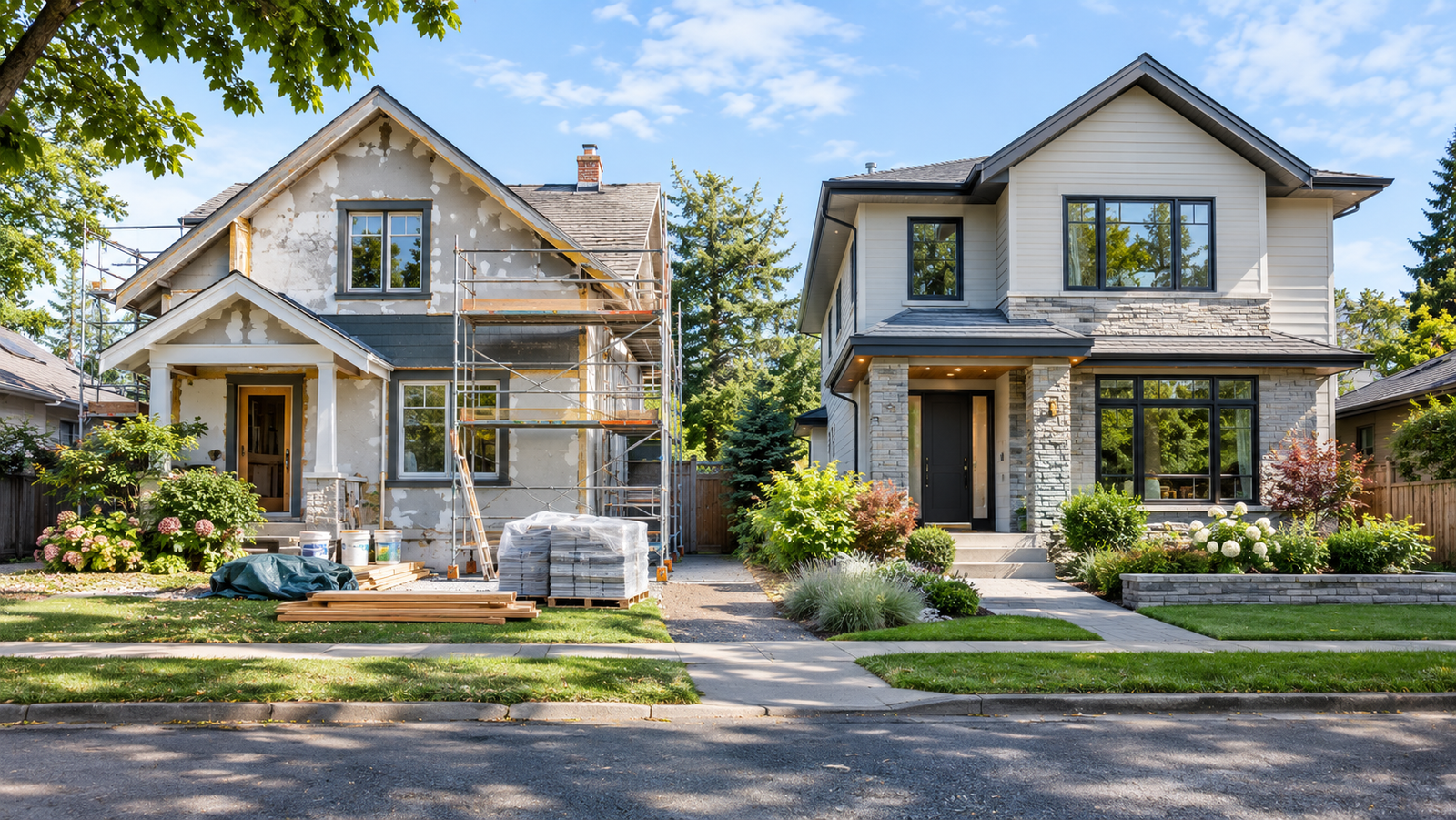
Both options create financial commitments, practical disruptions, and long-term consequences.
Renovation often allows homeowners to preserve their existing location and adapt familiar spaces to changing needs. It may also avoid some of the transaction expenses associated with selling and purchasing property.
However, a renovation can require additional borrowing, temporary accommodation, and substantial contingency spending. If the work involves structural alterations or major extensions, those costs can change the comparison considerably.
Purchasing another home offers a different set of advantages. It may provide a better layout, more space, a preferred neighborhood, or fewer immediate repairs.
But purchasing costs can include taxes, legal expenses, inspections, financing charges, moving services, and improvements needed after moving in.
A different house may also contain hidden problems, so purchasing is not automatically less risky than renovating.
Comparing the two options
| Decision Factor | Renovating Your Home | Buying Another Home |
|---|---|---|
| Location | Preserves the existing location | Allows relocation |
| Upfront spending | Depends on project scope | Depends on purchase and transaction costs |
| Design control | High within structural limits | Often requires compromises |
| Unexpected expenses | Hidden construction problems | Hidden property defects and moving costs |
| Disruption | Construction and temporary loss of rooms | Moving and settling into another property |
| Long-term suitability | Depends on what renovation can achieve | Depends on the replacement property |
One particularly important consideration is financing.
A homeowner with an affordable existing mortgage may be reluctant to replace it with a more expensive loan. Another household may be able to purchase a suitable property without borrowing or may find that remodeling finance is unattractive.
Interest rates, lending conditions, taxes, and property markets vary between countries and change over time. These circumstances must be evaluated locally rather than assumed from national headlines.
Compare total costs, not headline prices
A meaningful comparison should include the complete cost of each option.
For renovation, that means contractor quotations, design services, permits, repairs, temporary accommodation, financing expenses, and contingency funds.
For relocation, it means the net purchase cost after selling the current property, transaction expenses, financing, moving costs, immediate repairs, and expected maintenance.
A useful additional question is whether the replacement property will genuinely eliminate the problems that motivated the move.
Buying another house only to renovate its kitchen, replace its heating system, and repair its roof may produce a different financial result from the one originally expected.
Renovation is usually more compelling when the existing property is fundamentally suitable and its problems can be solved at a manageable cost.
Moving becomes more attractive when important limitations cannot be corrected without extensive reconstruction or financial strain.
6. Energy-Efficient Renovations That Save Money
Energy efficiency can improve the financial value of renovation because it affects a home's ongoing operating costs.
Unlike decorative upgrades, which may provide primarily aesthetic benefits, certain energy improvements can reduce future spending on heating, cooling, and electricity.
However, savings are not automatic. The effectiveness of each improvement depends on the existing building, local climate, installation quality, energy prices, and household behavior.

Insulation and air sealing
Improving insulation and reducing uncontrolled air leakage are often sensible places to begin.
Heat can escape through poorly insulated roofs, walls, floors, and gaps around building components. In warm climates, the same weaknesses can increase cooling demand.
According to ENERGY STAR, air sealing and insulation improvements in typical existing U.S. homes can produce average modeled savings of approximately 15% on heating and cooling costs, equivalent to about 11% of total energy costs.
These figures apply to a defined package of improvements and should not be interpreted as guaranteed results from installing insulation in a single location.
A building assessment can help determine whether attic insulation, wall improvements, floor insulation, or air sealing would produce the greatest benefit.
Windows and heating systems
Replacing poorly performing windows may improve comfort, reduce drafts, and address deterioration.
Yet replacing every window solely to save energy is not necessarily cost-effective. If existing windows are sound, targeted air sealing, repairs, or other envelope improvements may offer better value.
Heating and cooling systems require similar evaluation.
Heat pumps, efficient boilers, modern controls, and appropriate zoning can reduce energy use under suitable conditions. The actual savings depend on the equipment being replaced, the building's heat loss, fuel prices, and operating patterns.
It is often wise to address major insulation and air leakage problems before choosing new heating equipment. A more efficient building may require a smaller system, avoiding unnecessary equipment capacity.
Solar panels and smart technology
Solar photovoltaic systems can reduce purchased electricity when local sunlight, installation conditions, and electricity prices support the investment.
Battery storage may provide additional value through backup power or time-of-use energy management, but it creates extra costs and does not always improve the financial payback of the solar installation.
Smart thermostats, occupancy controls, and energy monitoring systems can also help homeowners understand and manage consumption.
Their usefulness depends on the household's needs. Technology should solve a problem rather than become an expensive feature installed simply because it is available.
How to calculate the payback period
Consider a hypothetical insulation project costing $6,000 that reduces annual energy spending by $400.
The simple payback period would be:
$6,000 ÷ $400 = 15 years
This calculation is easy to understand, but it has limitations.
It does not account for financing costs, the changing price of energy, future maintenance, inflation, or the time value of money. It also excludes nonfinancial benefits such as warmer rooms, fewer drafts, and improved comfort.
If insulation must be replaced as part of an already necessary repair, the relevant investment may be only the additional cost of choosing a more efficient solution.
This is why energy-related renovation decisions should consider both total project cost and the incremental cost of improving efficiency.
The most useful energy renovation is not necessarily the most technologically advanced one. It is the improvement that addresses a documented weakness at a reasonable cost.
7. Hidden Renovation Costs Homeowners Forget
A renovation budget can appear realistic until construction reveals work that was not included in the original estimate.
This is especially common in older homes, where walls, ceilings, and floors may conceal damaged materials, outdated wiring, leaks, or inadequate insulation.
Some unexpected costs arise because the building's actual condition differs from initial assumptions. Others result from incomplete planning, missing contractor specifications, or decisions made after construction begins.
Problems discovered during demolition
Opening walls can reveal moisture damage, deteriorated framing, damaged pipes, or electrical installations that require correction.
These discoveries may introduce additional specialist work and delay subsequent construction stages.
Older buildings can also contain hazardous materials. Depending on the property's age and country, disturbing certain finishes or insulation materials may require professional testing and controlled removal.
An inspection before renovation can reduce uncertainty, although it cannot guarantee that every concealed defect will be discovered.
Expenses outside the construction estimate
Permit charges, engineering assessments, design changes, utility connection work, and waste disposal may not be included in a contractor's initial quotation.
Large projects can also affect everyday living costs.
When a kitchen or bathroom becomes unavailable, a household may spend more on meals, transportation, temporary facilities, or alternative accommodation.
Even apparently minor changes, such as selecting different tiles or adding extra electrical outlets, can become expensive after installation work has started.
Finishing expenses are another common source of budget pressure. Lighting fixtures, appliances, window treatments, furniture, and final decorating are sometimes excluded from the construction budget even though they are necessary to complete the intended result.
How much contingency should you keep?
A contingency allowance of approximately 10–20% is a practical starting point for many renovation budgets, although it is not a universal industry requirement.
A straightforward cosmetic project in a well-understood building may need less. An extensive renovation of an older property with incomplete documentation may justify substantially more.
For example, a $50,000 renovation with a 15% contingency allowance would require a total available budget of $57,500.
This does not mean the additional $7,500 should automatically be spent. It is a reserve intended to absorb unforeseen necessary work.
A contingency fund should not replace a clear project scope, detailed quotations, or proper inspections.
The better the homeowner understands the property and the proposed work, the easier it becomes to identify genuine risks before construction begins.
8. DIY Renovation vs. Hiring Professionals
Doing some renovation work yourself can reduce labor expenses, but the financial benefit depends on the complexity of the task and your ability to complete it correctly.
Simple cosmetic improvements are often suitable for homeowners who have enough time, appropriate tools, and basic practical skills.
Painting, assembling storage systems, replacing nontechnical decorative hardware, and carrying out straightforward landscaping are examples of projects that may be completed without a professional contractor.
Some homeowners can also install certain types of flooring, provided the subfloor is sound and the work does not involve technical systems or hazardous materials.
DIY projects offer greater flexibility over scheduling and can make smaller renovations more affordable.
However, labor savings are not the entire financial picture.
Tools, protective equipment, material waste, repeated purchases, and the time needed to correct mistakes should all be considered.

When professional work is essential
Structural modifications, gas installations, significant electrical work, plumbing alterations, and major roofing projects require specialist knowledge.
Incorrect work can lead to fire, water damage, unsafe building conditions, failed inspections, or expensive repairs.
Local laws may also restrict who is permitted to complete certain installations.
A homeowner should verify applicable licensing, permit, and inspection requirements before attempting work on critical building systems.
Older properties require additional caution.
In the United States, for example, the Environmental Protection Agency warns that renovation work disturbing lead-based paint in homes built before 1978 can create hazardous dust. Its Renovation, Repair and Painting program establishes requirements for many paid renovation activities in these properties.
Similar concerns may exist elsewhere, although regulations and construction histories differ.
A combined approach often works best
For many homeowners, the most practical strategy is to divide work according to risk and expertise.
A qualified contractor can handle structural changes, technical installations, and critical waterproofing, while the homeowner completes appropriate decorative or organizational tasks.
This approach can reduce costs without exposing the property to unnecessary technical risks.
The goal should not be to perform as much work as possible independently. It should be to save money only where doing so does not compromise safety, quality, or long-term durability.
9. Best Renovation Projects for Small Budgets
A limited budget does not necessarily prevent a noticeable improvement in the appearance or functionality of a home.
In fact, smaller projects can be financially attractive because they allow homeowners to address specific problems without taking on the risks of a complete remodel.
The most effective budget renovations usually improve something occupants notice or use every day.
Refreshing surfaces and lighting
Repainting walls remains one of the most accessible ways to change a room's appearance.
A consistent finish can make interiors feel cleaner and brighter, particularly when previous colors or surfaces are visibly worn.
Lighting can produce a similarly strong improvement.
Rather than replacing every fixture, homeowners can evaluate where existing lighting is inadequate. Better task lighting in a kitchen, improved illumination near a mirror, or carefully positioned ambient lighting may make a space more functional and comfortable.
LED lighting can also reduce electricity consumption compared with older, inefficient bulbs.
Updating kitchens without rebuilding them
A kitchen does not always need new cabinetry or an entirely different layout.
When cabinets are in good condition, repainting or refinishing suitable surfaces, replacing worn handles, improving organization, and updating a backsplash may refresh the space at considerably lower cost.
Selective replacement is often preferable to removing serviceable components.
The same principle applies to countertops and appliances. Upgrading an item because it is damaged, inefficient, or unsuitable is easier to justify than replacing it purely for visual consistency.
Improving bathrooms and storage
Small bathroom projects can focus on better mirrors, lighting, ventilation, fixtures, and storage.
Replacing damaged sealant, addressing minor surface deterioration, and improving moisture control may also help protect finishes.
However, signs of persistent leaks or failed waterproofing require proper investigation rather than cosmetic concealment.
Storage improvements can provide particularly good everyday value in smaller homes.
Additional shelving, well-planned wardrobes, and more efficient use of existing cabinets may reduce clutter without requiring structural expansion.
Improving the exterior
First impressions matter, especially when preparing a property for sale.
Maintaining landscaping, repairing visible defects, cleaning exterior surfaces appropriately, and improving entryway lighting can make a house appear better cared for.
Before committing to more expensive exterior upgrades, homeowners should consider whether routine maintenance would achieve much of the same result.
A useful rule for limited budgets is to finish a small number of meaningful improvements properly rather than begin several projects that cannot be completed.
The objective is not to spend as little as possible on everything, but to use available funds where they create the greatest practical benefit.
10. How to Decide If Renovation Is Worth It for You
There is no single renovation budget or ROI percentage that determines whether remodeling is worthwhile for every homeowner.
The decision becomes clearer when financial considerations, property condition, and long-term plans are evaluated together.
The following EURENOVA Renovation Value Framework provides a practical way to assess a proposed project before committing substantial money.

Step 1: Establish the true condition of the property
Begin by identifying the building's existing problems.
A visual inspection may reveal obvious damage, but significant renovations can justify a professional assessment of structural elements, roofing, moisture protection, electrical installations, plumbing, and heating systems.
Distinguish between repairs that are necessary for safety or maintenance and improvements that are primarily optional.
This distinction prevents cosmetic spending from taking priority over urgent problems.
Step 2: Define what the renovation must accomplish
The next question is whether the proposed work solves a real and clearly defined need.
Improving an impractical kitchen layout, correcting inadequate ventilation, creating necessary storage, or reducing excessive heat loss are measurable objectives.
A vague desire to make the house feel more modern is not necessarily a poor reason to renovate, but it provides a weaker basis for evaluating the budget.
Each major expense should be connected to a specific benefit.
Step 3: Calculate the complete project cost
Obtain detailed quotations that separate labor, materials, equipment, professional services, and other charges.
Include permits, inspections, disposal, financing, temporary accommodation, and contingency funds where applicable.
If significant work is planned, comparing multiple qualified contractors may reveal differences in specifications rather than simply differences in price.
A low estimate may exclude tasks or materials included in a higher one, so quotations should be compared on a consistent basis.
Step 4: Estimate financial and personal benefits separately
Homeowners expecting to sell should investigate whether similar renovated properties achieve higher prices in the local market.
Those planning to remain in the property should consider operating-cost savings, avoided repairs, improved comfort, and the expected useful life of the renovation.
A project can provide substantial personal value without producing a positive short-term resale return.
Recognizing this helps prevent unrealistic expectations.
Step 5: Compare renovation with realistic alternatives
Finally, compare the proposed project with other options.
Would targeted repairs achieve most of the benefit for less money? Could renovation be divided into stages without creating duplicated work? Would purchasing another property better address the household's requirements?
The decision should consider not only total spending but also financial resilience.
A renovation that leaves the household without sufficient emergency savings may be risky even if the projected property value is attractive.
Three practical renovation scenarios
Scenario A: A homeowner planning to stay for 15 years
A homeowner has a structurally sound house but experiences high heating costs and poor winter comfort.
An insulation and air-sealing project costs $6,000 and is expected to save approximately $400 annually.
The simple financial payback is 15 years, excluding changes in energy prices and financing costs.
Although this is not a rapid return, the project may still be worthwhile because the homeowner expects to use the improvements for many years and values the additional comfort.
Scenario B: A homeowner planning to sell within one year
A homeowner considers spending $20,000 on a kitchen remodel, but comparable local sales suggest the improvement may increase the selling price by only $12,000.
The estimated cost recovery is 60%.
Because the owner will have little time to enjoy the renovation, less expensive repairs and cosmetic improvements may make greater financial sense.
Scenario C: A homeowner facing extensive structural repairs
A property requires approximately $80,000 of necessary work, while the expected increase in market value is substantially lower.
The homeowner also needs additional living space that would require a further extension.
In this situation, a careful comparison with alternative properties becomes particularly important. Renovation may still be justified by location, emotional value, or replacement costs, but it should not proceed on an assumption of strong resale profit.
Making the final decision
| Your Situation | Most Sensible Next Step |
|---|---|
| The home is structurally sound and meets long-term location needs | Consider targeted renovation |
| The renovation provides useful improvements at a manageable cost | Proceed with a detailed plan |
| Major defects remain poorly understood | Obtain professional assessments first |
| The budget depends on uncertain resale gains | Reassess financial assumptions |
| The property's fundamental limitations cannot be corrected economically | Compare relocation options |
| Financing would create serious household pressure | Reduce, phase, or postpone optional work |
This framework is a decision aid rather than a substitute for professional property, engineering, or financial advice.
It encourages homeowners to ask the most important question before beginning construction: What will this renovation improve, and is that improvement worth its full cost?
11. Expert Tips to Maximize Renovation Value
Maximizing renovation value begins long before the first wall is opened.
The most important decisions usually concern project scope, sequencing, contractor selection, and the relationship between cost and long-term usefulness.
Plan the sequence before construction
Renovation activities should follow a logical order.
Structural issues, water protection, and essential building systems generally need to be addressed before installing decorative finishes.
For example, completing expensive wall finishes before replacing defective wiring can result in unnecessary demolition and repeated work.
Coordinating electrical, plumbing, ventilation, and heating plans before closing walls helps reduce these problems.
Choose materials for their actual use
Material selection should reflect durability, maintenance requirements, environmental conditions, and budget.
High-traffic flooring must withstand daily wear, while bathroom finishes need to perform reliably in humid conditions.
Paying more for a product can be justified when it offers meaningful advantages in service life or maintenance. However, premium branding alone does not guarantee better long-term performance.
Homeowners should compare specifications and suitability rather than judging quality only by price.
Evaluate contractors carefully
A detailed written agreement is more valuable than an attractive verbal estimate.
The agreement should clearly identify the work, materials or performance specifications, payment terms, responsibilities, expected schedule, and the procedure for handling changes.
References, relevant qualifications, insurance, and regulatory compliance should be checked where applicable.
Contractors should also explain which parts of the work may require additional investigation.
Avoid changes after work begins
Late changes can create new material orders, additional labor, and delays.
Finalizing the layout, fixtures, and major finishes before construction reduces the likelihood of these problems.
When changes become necessary, homeowners should request the expected cost and schedule impact in writing before authorizing the work.
Renovate in phases when appropriate
Phased renovation can help households spread costs over time, but it works best when the overall plan is established in advance.
Related technical work should be coordinated to avoid reopening completed surfaces.
For example, replacing flooring before planned plumbing alterations may create unnecessary additional expense.
A staged approach is most useful when individual phases can be completed without compromising later work.
Measure the finished result
After renovation, keep a record of invoices, warranties, permits, inspections, and important material specifications.
For energy upgrades, compare utility consumption over suitable periods while accounting for weather and changes in household use.
For larger renovations, retaining photographs of concealed installations before walls are closed can also support future maintenance.
These records help homeowners understand the actual cost and performance of the project and may be useful when the property is eventually sold.
Ultimately, renovation value comes from solving the right problems with suitable materials, skilled workmanship, and disciplined financial planning.
12. Conclusion: Is Home Renovation Worth It in 2026?
Home renovation can be worth the investment in 2026, but there is no universal financial advantage to remodeling.
A successful project does not have to transform an entire house or produce an immediate increase in resale value. Sometimes the most valuable improvement is a more functional kitchen, a reliable roof, better insulation, or the ability to remain comfortably in a familiar neighborhood.
The financial case becomes stronger when renovation addresses genuine needs, avoids unnecessary work, and fits within a realistic budget.
On the other hand, expensive cosmetic upgrades, poorly understood structural problems, and projects that exceed local property values can make renovation difficult to justify financially.
The most useful approach is to evaluate three things together: what the home needs, what the project will really cost, and how its benefits align with your plans.
Before making a decision, inspect the property, compare realistic alternatives, obtain detailed estimates, and consider how long you expect to benefit from the results.
Renovation is worth it when the improvements create lasting value without placing the homeowner under unreasonable financial pressure.
In 2026, making the right renovation decisions matters more than simply making the biggest improvements.
Frequently Asked Questions
Is home renovation cheaper than buying a new house in 2026?
Renovating may cost less than buying another property when the existing house is structurally sound and the proposed improvements are limited in scope. However, the comparison depends on local housing prices, transaction costs, financing, and the extent of required work. Major reconstruction or extensive repairs can make relocation more competitive financially. The best approach is to compare the complete cost of both options rather than only the initial renovation estimate.
Which home renovations add the most value?
Resale returns vary according to location, property condition, and the type of improvement. Research has shown that certain exterior upgrades, entry doors, and relatively modest improvements can achieve strong cost recovery, while large interior remodels do not always recover their full expense. The most suitable projects are those that address the property's weaknesses and match local buyer expectations.
How can I calculate renovation ROI?
Start by estimating the total project cost and the additional market value the renovation is expected to create. Dividing the estimated added value by the renovation cost gives the cost-recovery percentage. For a fuller financial assessment, account for financing and selling expenses, operating-cost savings, and the difference between added value and money spent. A local appraisal or comparison of similar properties can help produce more realistic assumptions.
How much should I budget for unexpected renovation costs?
A contingency reserve of approximately 10–20% can be a useful planning guideline, but the appropriate amount depends on project complexity and how well the property's condition is understood. Older buildings, major structural work, or projects with limited access to concealed systems may justify a larger reserve. Contingency funds should cover unforeseen necessary expenses rather than optional design upgrades.
Are energy-efficient renovations worth the investment?
They can be worthwhile when they address significant energy losses or replace inefficient equipment under suitable conditions. Insulation, air sealing, heating improvements, and other upgrades may reduce operating expenses while improving comfort. Financial payback depends on installation costs, energy rates, climate, and actual savings. A building energy assessment can help identify the most promising improvements before spending money.
Is DIY home renovation worth it?
DIY work can reduce labor costs for suitable cosmetic and organizational projects. Painting, simple storage improvements, and certain flooring tasks may be manageable for homeowners with appropriate skills. Structural modifications, electrical installations, gas work, and complex plumbing generally require professional expertise and may be subject to licensing rules. The potential savings should always be weighed against safety, quality, and the cost of correcting mistakes.
Should I renovate before selling my home?
Minor repairs, fresh paint, improved cleanliness, and better exterior presentation may help attract buyers without requiring a major investment. Extensive remodeling immediately before selling is less predictable because the additional selling price may not cover the project's cost. A local real estate professional can help identify which improvements buyers value and whether selling the property in its current condition may be more economical.
What are the biggest hidden renovation costs?
Common unexpected expenses include concealed moisture damage, outdated electrical or plumbing systems, additional specialist work, permits, disposal, design changes, and temporary living arrangements. Incomplete contractor quotations can also leave important work outside the original budget. A detailed scope and appropriate pre-renovation inspections can reduce, although not eliminate, the risk of surprises.
How long does a typical home renovation take?
The duration depends on the project's scope, contractor availability, permit requirements, and material delivery schedules. Small cosmetic improvements may be completed in days or weeks, while comprehensive remodeling can take several months or longer. Structural changes and unexpected repairs can extend schedules considerably. Homeowners should request a realistic project timeline with dependencies and allowances for likely interruptions.
When should I choose moving instead of renovating?
Moving may be a better option when the house cannot realistically meet long-term needs or when necessary reconstruction would cost too much relative to the available alternatives. Location problems, severe structural limitations, and insufficient land area can be difficult or expensive to resolve. Before deciding, compare total renovation costs with the full financial consequences of selling and purchasing another property.
Is it better to renovate everything at once or in stages?
A complete renovation may reduce repeated setup costs and allow more efficient coordination, but it requires more available funding and can cause greater short-term disruption. Phased work can make spending easier to manage when the stages are carefully planned. Essential systems and related construction activities should be coordinated from the beginning to avoid damaging finished areas during later work.
What is the smartest first step before renovating?
Begin with an honest assessment of the property's condition and define what the renovation must accomplish. Identify essential repairs, establish a realistic spending limit, and obtain professional advice where technical or structural issues are involved. Only then should you finalize designs, compare contractor quotations, and decide which improvements deserve priority.
Research and Sources
The following sources provide the research context for the market figures, resale estimates, and energy-efficiency information discussed in this article. U.S. national findings are identified as such and should not be treated as universal estimates for other countries.
Harvard Joint Center for Housing Studies. Remodeling Spending Continues to Stagnate. October 22, 2026. Market outlook for U.S. homeowner improvement and repair spending.
National Association of Home Builders. Q2 2026 Remodeling Market Update: Labor and Nonlabor Input Costs. September 2026. Data on labor earnings and selected nonlabor input price changes.
National Association of REALTORS and National Association of the Remodeling Industry. 2025 Remodeling Impact Report. Research on homeowner motivations, estimated cost recovery, and buyer appeal.
Zonda. 2025 Cost vs. Value Report. September 18, 2025. Estimates of renovation costs and resale value across U.S. markets.
ENERGY STAR / U.S. Environmental Protection Agency. Methodology for Estimated Energy Savings. Explanation of estimated savings from air sealing and insulation.
U.S. Environmental Protection Agency. Lead Renovation, Repair and Painting Program. Guidance and regulatory information regarding lead-safe renovation in older U.S. buildings.
Editorial note: Financial scenarios are illustrative calculations rather than actual projects or guaranteed results. Construction costs, regulations, available incentives, and property values differ by location. Readers should obtain local professional advice before making major financial or structural decisions.