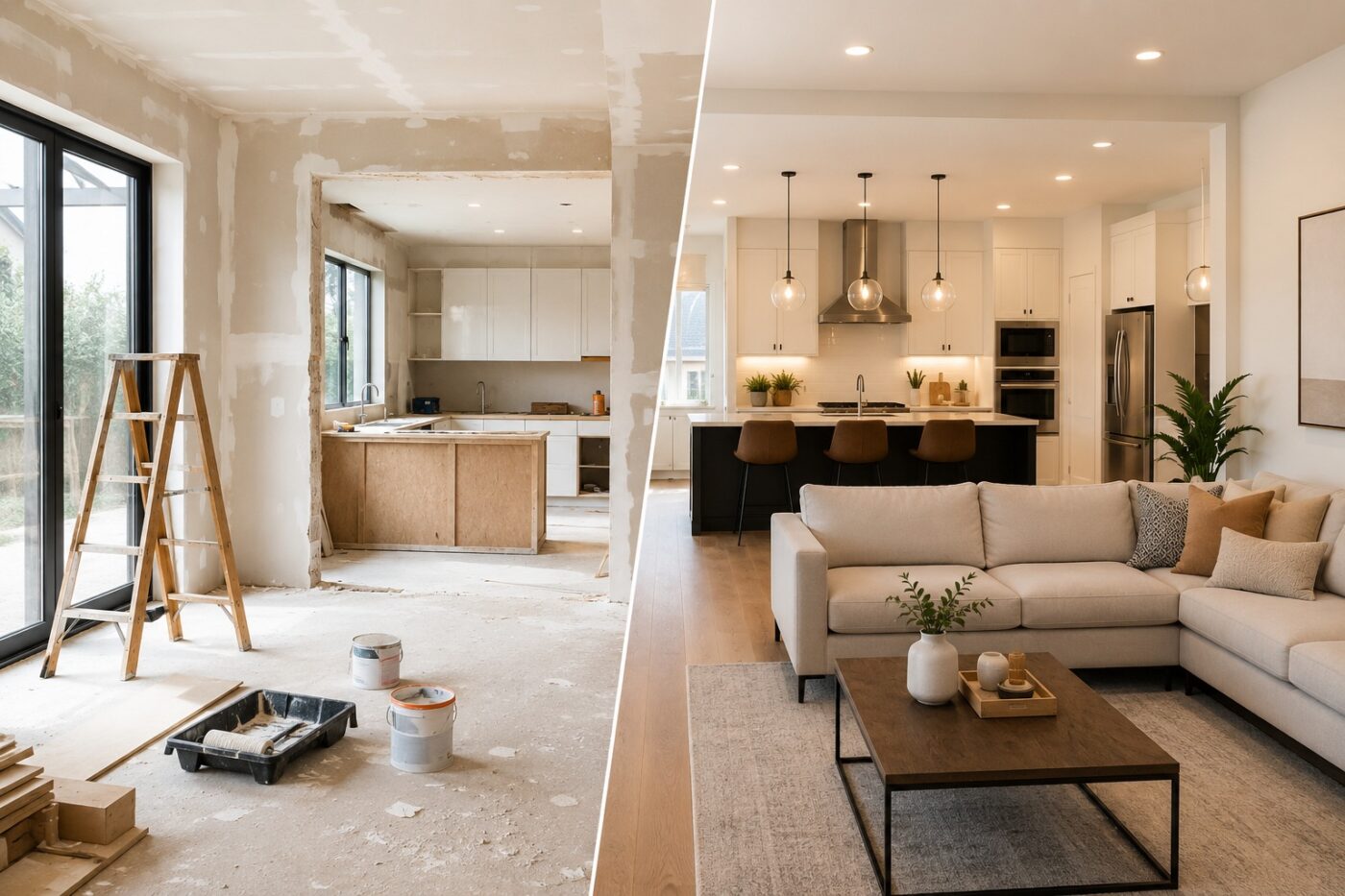
Home renovation can improve daily comfort, modernize an aging property, and make a house more attractive to future buyers. However, the financial value of these improvements depends on more than their appearance or price.
Some renovations recover a substantial portion of their cost when a property is sold. Others deliver their greatest benefits through lower utility bills, reduced maintenance, or a more comfortable living environment. Understanding that difference helps homeowners avoid spending money on improvements that may not support their financial goals.
When evaluating renovation projects with the best ROI, the most expensive upgrades are rarely the automatic winners. Targeted exterior improvements, modest kitchen updates, and essential repairs can provide better financial results than extensive luxury remodeling.
Research published in the 2025 Remodeling Cost vs. Value Report found that exterior replacement projects dominated the highest-performing categories in the U.S. market. The report also showed that relatively modest kitchen improvements could outperform much larger kitchen renovations.
These findings are useful when planning renovations in 2026, although actual results vary by location, property condition, renovation scope, and market conditions.
This guide explores which home improvements may deliver the strongest resale returns, how renovation ROI is calculated, and how to choose projects that balance investment value with everyday living.
Understanding Home Renovation ROI
Return on investment is one of the most frequently discussed measurements in home renovation. Yet it is also one of the most commonly misunderstood.
In remodeling research, ROI often refers to the percentage of renovation costs recovered through an increase in a property's estimated resale value. In financial analysis, however, ROI normally refers to the net return relative to the original investment.
Both measurements are useful, but they answer different questions.
Cost Recovery vs. Net ROI
Cost recovery measures how much of the renovation expense is reflected in the property's additional resale value.
Cost Recovery (%) = (Estimated Added Resale Value ÷ Renovation Cost) × 100
Net ROI measures the financial return after subtracting the original renovation investment.
Net ROI (%) = ((Estimated Added Resale Value − Renovation Cost) ÷ Renovation Cost) × 100
Consider a homeowner who spends $20,000 renovating a kitchen. After the renovation, an assessment suggests that the property's market value has increased by $15,000.
The renovation has achieved 75% cost recovery because the estimated increase in property value represents three-quarters of the original expense.
Its net resale ROI is −25%, meaning that the estimated increase in property value is $5,000 lower than the renovation cost.
This distinction matters. A renovation can increase the value of a property without generating a positive financial return on its own.
For consistency, this article uses cost recovery when comparing published remodeling statistics and net ROI when calculating the financial gain or loss of an individual project.
These are simplified resale calculations. They do not automatically include financing expenses, transaction costs, taxes, or ongoing maintenance.
Resale Value Is Not the Only Financial Benefit
Some renovations provide additional economic benefits that are not fully reflected in property valuations.
Improved insulation may reduce heating expenses over several years. A modern heating system may lower energy consumption and reduce the risk of unexpected repairs. Durable flooring can postpone future replacement costs.
These benefits matter, particularly for homeowners who intend to remain in their property for an extended period.
However, operating savings should be evaluated separately from resale value. Adding projected energy savings to estimated resale value without considering timing, overlapping benefits, or future costs can produce misleading conclusions.
What Influences Renovation ROI?
The financial performance of a renovation depends on the local housing market, the condition of the existing property, project quality, neighborhood expectations, and the amount invested.
A kitchen upgrade that makes sense in a competitive urban market may be unnecessarily expensive for a modest property in a lower-priced area.
Similarly, replacing a failing roof may not produce the highest percentage of cost recovery, but it can prevent deterioration and make a home easier to sell.
The most useful renovation strategy considers both the percentage of costs recovered and the property's overall condition.
Comparing Renovation Projects
The following table provides an original EURENOVA decision framework. It is intended to help homeowners compare project characteristics rather than predict exact financial returns.
| Renovation project | Main potential benefit | Key consideration |
|---|---|---|
| Exterior doors and garage doors | Curb appeal and functionality | Replace components when condition or appearance justifies the expense |
| Minor kitchen updates | Modern appearance and usability | Preserve functional layouts and serviceable cabinets |
| Bathroom modernization | Buyer confidence and daily comfort | Control plumbing, waterproofing, and finish costs |
| Flooring improvements | Consistent interior appearance | Match material quality to local property values |
| Insulation and air sealing | Reduced energy consumption | Assess the building before choosing upgrades |
| Basement and attic conversions | Additional usable space | Confirm structural feasibility and legal requirements |
| Smart home technology | Convenience and preventive monitoring | Avoid expensive systems with uncertain resale value |
| Luxury remodeling | Personal comfort and customization | Often requires a higher budget without proportional resale benefits |
The best choice depends on what the house actually needs, not simply which project appears most profitable in a national ranking.
Kitchen Renovations: Targeted Updates vs. Major Remodels
The kitchen is one of the most influential spaces in a home. Its condition affects everyday functionality, interior appearance, and how buyers evaluate the property's overall maintenance.
An outdated kitchen can create the impression that a house requires extensive work, even when its structural condition is otherwise sound.
However, renovating the kitchen does not necessarily mean replacing everything.

Why Smaller Kitchen Remodels Often Perform Better
A minor kitchen remodel focuses on improving existing features while retaining the fundamental layout.
Cabinets may be repainted or refaced, countertops replaced, lighting improved, and outdated appliances exchanged for more practical alternatives. New cabinet hardware, a modern sink, and a coordinated backsplash can also create a substantial visual improvement.
The advantage is financial as well as practical. Keeping the existing layout usually reduces the need for plumbing relocation, electrical modifications, extensive demolition, and replacement cabinetry.
According to the Remodeling 2025 Cost vs. Value Report, a defined midrange minor kitchen remodel had an estimated national U.S. project cost of $28,458 and added resale value of $32,141, representing approximately 112.9% cost recovery.
That result applies to a specifically defined remodeling project, not every kitchen refresh. Smaller cosmetic updates may have different costs and financial outcomes.
When a Major Kitchen Remodel Makes Sense
A complete kitchen renovation becomes appropriate when the existing layout is dysfunctional, cabinets are structurally damaged, or essential plumbing and electrical systems require replacement.
Major projects may involve custom cabinetry, moving appliances, replacing flooring, changing walls, and installing entirely new work surfaces.
These improvements can substantially increase comfort, particularly for homeowners planning to remain in the house for many years.
Nevertheless, larger projects are more expensive and may recover a smaller proportion of their cost at resale.
The same 2025 Cost vs. Value Report estimated that a defined midrange major kitchen remodel cost $82,793 and added $42,130 in resale value, equivalent to approximately 50.9% cost recovery.
The difference illustrates why project scope matters more than the assumption that a renovated kitchen will always increase property value enough to cover the investment.
Kitchen Improvements Worth Prioritizing
Well-maintained cabinets, practical storage, adequate task lighting, durable countertops, and reliable appliances are sensible starting points.
Where existing cabinet structures remain sound, changing doors or finishes may provide a more economical result than full replacement.
Countertop selection should reflect the household's requirements and local market expectations. Quartz, laminate, solid-surface products, and other materials each offer different combinations of cost, durability, appearance, and maintenance.
Lighting deserves particular attention because poorly illuminated work areas make even expensive kitchens less functional. Under-cabinet fixtures, suitable ceiling lighting, and properly placed task lights can improve usability without requiring a complete redesign.
When selecting appliances, functionality and compatibility with the existing kitchen should take priority over unnecessary premium features.
Avoiding Kitchen Overinvestment
A luxury kitchen can be enjoyable, but professional-grade appliances, highly customized cabinetry, and premium imported finishes may not appeal equally to future buyers.
Homeowners should also avoid changing a functional layout solely to follow a design trend.
Before approving a major renovation, compare the estimated cost with recent sales of similar properties. If the house is already near the upper end of local market values, an expensive kitchen may have limited potential to increase its selling price.
The most financially sensible kitchen projects improve what matters most without rebuilding features that already work well.
Bathroom Remodeling and Resale Value
Bathrooms influence buyer confidence because they combine plumbing, moisture protection, electrical installations, ventilation, and everyday functionality.
A bathroom with damaged surfaces, persistent dampness, or unreliable fixtures can suggest more serious maintenance problems.
By contrast, a clean and well-maintained bathroom helps buyers understand that the property has received appropriate care.

Cosmetic Renovation vs. Complete Replacement
A cosmetic bathroom refresh may involve repainting suitable surfaces, replacing an outdated mirror, improving lighting, renewing fixtures, or updating a vanity.
When the waterproofing system, plumbing, and existing tile remain in good condition, these changes can improve appearance without extensive construction.
A complete bathroom renovation is more appropriate when there is water damage, deteriorated waterproofing, an unsuitable layout, or aging plumbing that cannot be addressed through minor repairs.
However, moving a toilet, shower, or bathtub often increases costs substantially because drainage and water supply systems may need modification.
For homeowners focused on resale, the objective should be a durable, comfortable bathroom that fits the property rather than an elaborate spa-style installation.
Which Bathroom Upgrades Deserve Investment?
Bathroom improvements should begin with the condition of the underlying systems.
Waterproofing, drainage, and ventilation are more important than decorative features because failures can cause expensive damage after renovation.
A practical vanity with adequate storage often provides more everyday value than an expensive designer fixture. Similarly, a well-designed shower can improve accessibility and cleaning convenience without requiring elaborate technology.
Porcelain and ceramic tile remain practical options for moisture-prone areas, provided they are installed over suitable waterproofing and substrate systems.
Lighting should allow comfortable use of mirrors while maintaining sufficient general illumination.
Walk-in showers can improve accessibility and create a more open appearance, although removing the only bathtub in a family-oriented property may reduce its appeal to some buyers.
What Does the Research Suggest?
The 2025 Remodeling Impact Report, prepared by the National Association of Realtors and the National Association of the Remodeling Industry, estimated approximately 50% cost recovery for a bathroom renovation under its methodology.
This does not mean every bathroom renovation will recover half its cost. The figure reflects a particular research approach and should not be treated as a universal forecast.
The financial outcome depends on the bathroom's initial condition, project scope, local demand, and construction costs.
A bathroom that already functions well may need only modest updating. A damaged bathroom may require full renovation regardless of whether the additional resale value covers the entire expense.
Energy-Efficient Renovations and Long-Term Savings
Energy efficiency creates a different kind of renovation value. Rather than relying only on an increase in selling price, these improvements can reduce the cost of operating a home.
Their financial performance depends on the original energy consumption, installation cost, climate, energy prices, and how long the homeowner expects to benefit from the improvements.
Insulation and Air Sealing
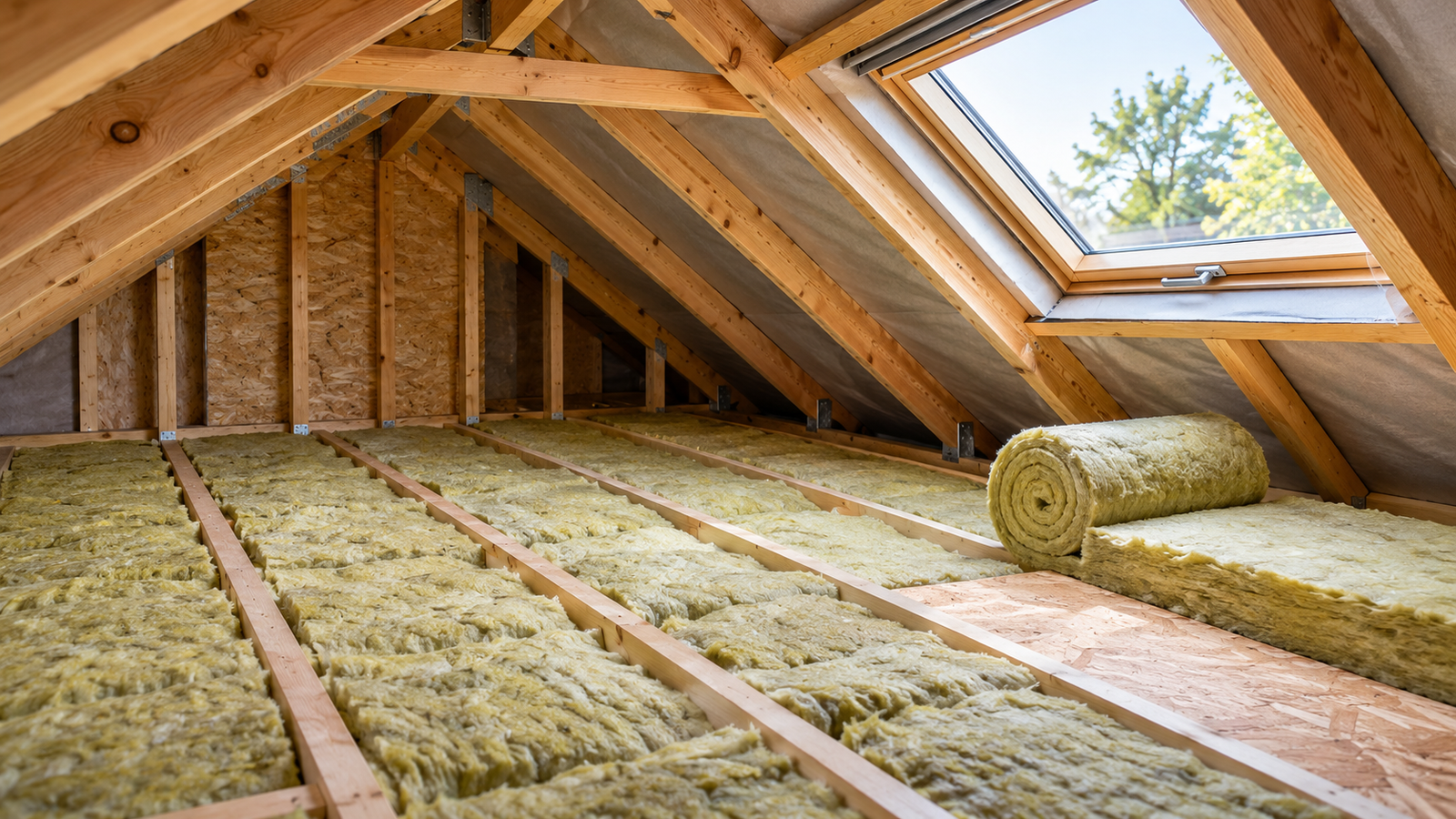
Before replacing heating equipment, it is often sensible to assess how effectively the building retains heat.
Poorly insulated attics, gaps around openings, and uncontrolled air leakage can increase energy demand regardless of how efficient the heating system is.
According to ENERGY STAR, homeowners in typical existing U.S. houses may save an average of approximately 15% on heating and cooling costs by combining appropriate air sealing with insulation improvements in specified building areas.
That estimate describes a package of measures, not a guaranteed result from adding insulation to any single wall or attic.
A professional energy assessment can help identify where improvements are likely to be most effective.
Moisture management and ventilation should be considered alongside insulation because a poorly designed upgrade can create condensation problems.
Energy-Efficient Windows
Replacing deteriorated windows can improve comfort, reduce drafts, and potentially lower heating or cooling demand.
However, replacing every window solely to save energy may not always be the most cost-effective option.
If existing frames and glazing remain functional, targeted sealing or repairs may offer better value.
For new windows, the appropriate thermal performance depends on climate. In colder regions, reducing heat transfer is particularly important, while warmer climates may require greater control of solar heat gain.
Window replacement should therefore be evaluated according to local weather conditions, installation quality, and the condition of the existing units.
Heating, Cooling, and Ventilation
A modern heating or cooling system can reduce energy consumption when it is correctly selected, installed, and controlled.
Heat pumps, efficient boilers, modern air conditioners, and appropriately designed ventilation systems can provide practical benefits, but their economics vary considerably.
Equipment must be sized according to the building's heating and cooling requirements. Installing a larger or more expensive system does not automatically improve efficiency.
For older houses, reducing heat loss before purchasing replacement equipment may allow a smaller system to meet the same comfort requirements.
Ventilation also requires attention. Airtight buildings need suitable fresh-air strategies to maintain indoor air quality and manage moisture.
Solar Panels and Renewable Energy
Solar panels should be assessed using a financial model that considers generation, electricity consumption, export compensation, system maintenance, installation costs, and any applicable incentives.
A system that performs well in a sunny location with expensive electricity may be less attractive in another region.
If battery storage is included, its additional cost and replacement considerations must be evaluated separately.
Solar panels can offer benefits through electricity savings and improved energy independence, but those benefits should not be confused with the amount a buyer may be willing to pay for the system at resale.
How to Evaluate Energy Savings
Consider a hypothetical efficiency upgrade costing $4,000 that reduces household energy expenses by $400 annually.
Its simple payback period would be ten years, assuming stable annual savings and no additional costs.
This calculation is useful as an initial screening method but does not account for energy-price changes, equipment maintenance, financing, discount rates, or the time value of money.
Before investing, homeowners should also check whether current local rebates or financing programs reduce the initial cost. Eligibility, funding, and tax rules vary by jurisdiction and can change over time.
Curb Appeal Improvements With Strong Resale Potential
A home's exterior establishes expectations before buyers inspect the interior.
Worn doors, damaged siding, poorly maintained landscaping, and deteriorated pathways can make a property appear neglected.
Because exterior improvements are highly visible, targeted upgrades can create a meaningful change without requiring a complete interior remodel.
Garage Door Replacement
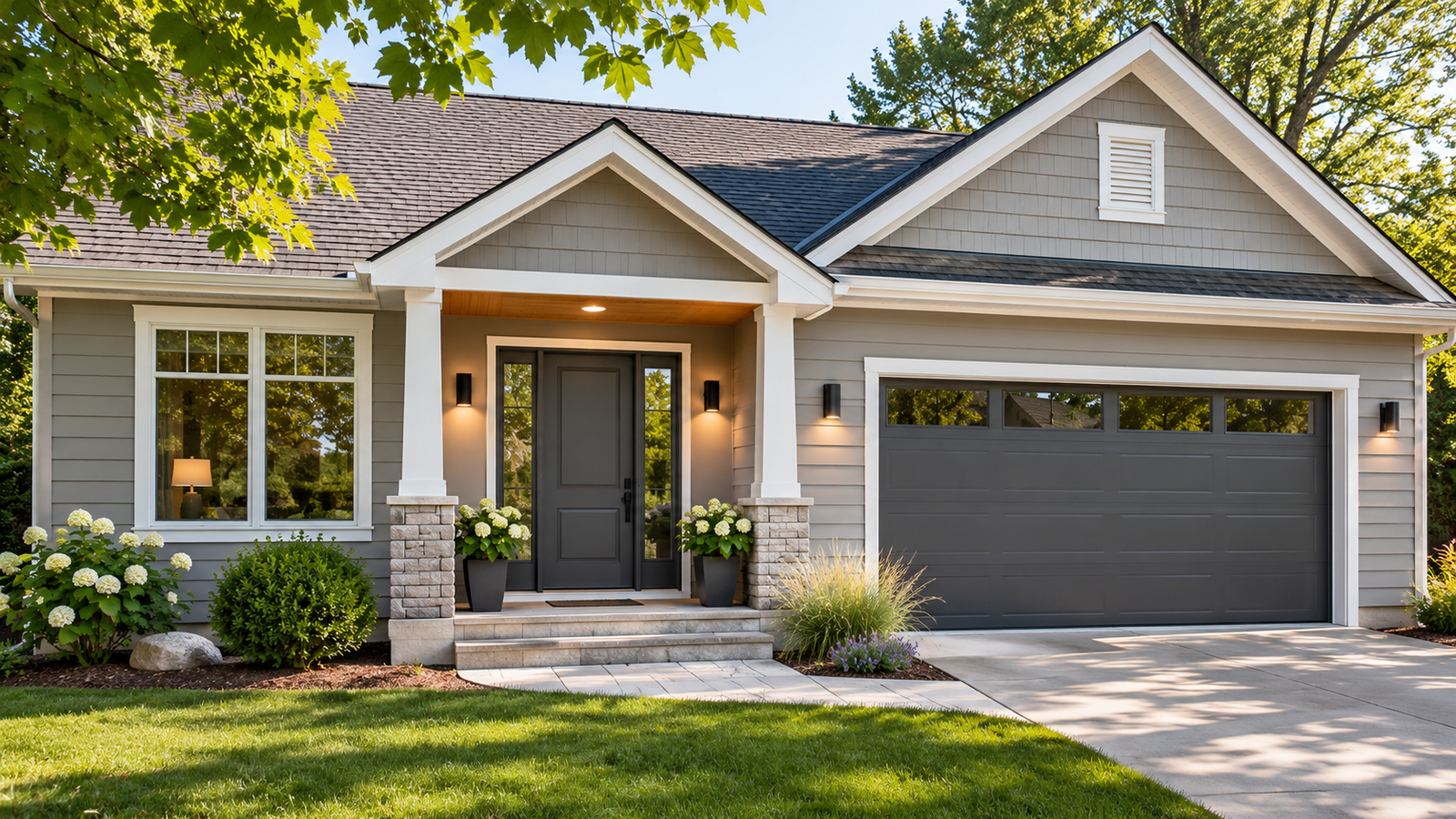
Where a garage door occupies a prominent position on the front of a house, its appearance strongly influences the exterior design.
Replacing an old or damaged door can improve functionality, security, and visual consistency.
The 2025 Cost vs. Value Report estimated a national U.S. project cost of $4,672 for a defined garage door replacement, with approximately $12,507 in added resale value. This represented 267.7% cost recovery.
It was an unusually strong result within that study, not a guaranteed outcome for every property.
Replacement may be particularly worthwhile when the existing door is visibly deteriorated or operates poorly. A functioning door in good condition may need only maintenance or refinishing.
Front Door Replacement
The entrance provides another opportunity to improve both appearance and functionality.
A well-chosen exterior door can contribute to security, weather resistance, insulation, and the overall architectural character of the home.
In the same 2025 research, a defined steel entry door replacement had an estimated cost of $2,435 and added resale value of $5,270, representing 216.4% cost recovery.
Homeowners should choose doors suited to their climate, building design, and security requirements rather than selecting a model based only on appearance.
Correct installation, weather sealing, and durable hardware are essential.
Exterior Cladding and Architectural Details
Damaged or outdated exterior finishes may justify repainting, repairing, or replacing selected sections.
One high-performing project identified in the 2025 Cost vs. Value Report was manufactured stone veneer. The defined project cost $11,702 and was associated with $24,328 in added resale value, or 207.9% cost recovery.
However, this result should not be interpreted as evidence that covering an entire house with stone veneer is financially advisable.
The report evaluates a particular project scope, and expanding that scope may produce a very different return.
Exterior improvements should remain consistent with the building's architecture and surrounding properties.
Landscaping, Lighting, and Walkways
Not every curb appeal improvement requires major construction.
Maintaining existing landscaping, repairing uneven pathways, cleaning exterior surfaces, and improving entrance lighting can make a property more presentable.
Low-maintenance planting is often practical because it reduces the effort required to keep outdoor areas attractive.
Exterior lighting should improve visibility and safety without producing unnecessary glare.
Before replacing a driveway, homeowners can assess whether cleaning, localized repairs, or resurfacing would provide sufficient improvement.
The goal is to create a well-maintained exterior, not to spend excessively on decorative features.
Flooring Upgrades Buyers Actually Notice
Flooring influences how rooms connect visually and how comfortable a property feels during everyday use.
Damaged, inconsistent, or poorly installed floors can distract from otherwise attractive interiors.
However, replacing every floor in a house is not always necessary. Existing materials may be suitable for repair, refinishing, or professional cleaning.

Hardwood Flooring
Wood flooring can provide a durable and timeless appearance, especially in living areas and bedrooms.
One of its advantages is the possibility of refinishing suitable solid hardwood floors instead of replacing them.
Refinishing can restore worn surfaces while preserving materials that may still have many years of useful life.
Before selecting hardwood, homeowners should consider moisture exposure, maintenance expectations, subfloor conditions, and installation costs.
The best choice is not necessarily the most expensive species or finish.
Luxury Vinyl Plank and Laminate
Luxury vinyl plank is frequently considered for renovations because it is available in a wide range of styles and can offer practical resistance to everyday wear.
However, not every vinyl product is fully waterproof as an installed floor system. Water can still affect seams, subfloors, and adjacent materials.
Laminate flooring offers another alternative, with performance depending on the product's construction and moisture-resistance specifications.
Higher-quality products generally provide more convincing textures and better durability than the cheapest options.
For both materials, proper subfloor preparation and installation are essential.
Tile Flooring
Porcelain and ceramic tile are practical choices for kitchens, bathrooms, entrances, and other areas exposed to moisture.
Tile durability depends not only on the surface material but also on the supporting structure, adhesive system, movement joints, and installation quality.
In wet rooms, tile and grout should not be treated as substitutes for a suitable waterproofing system.
Textured or slip-resistant finishes may be appropriate where wet surfaces create a safety concern.
Choosing Flooring Based on Value
The most suitable flooring depends on the room and the property's position in the market.
Durability, maintenance requirements, appearance, comfort, and installation costs should be evaluated together.
For a house that already has serviceable hardwood flooring, refinishing may be more economical than installing new material.
For a property with damaged flooring, replacement may be necessary to improve both safety and presentation.
Consistency between adjacent rooms often matters more than following a particular design trend.
Basement and Attic Conversions
Unused basement and attic areas can offer valuable opportunities to improve a home's functionality.
However, converting these spaces is more complicated than ordinary cosmetic renovation.
Structural capacity, moisture control, ceiling height, insulation, access, fire safety, and local building regulations all influence whether a conversion is feasible.
Finished Basements
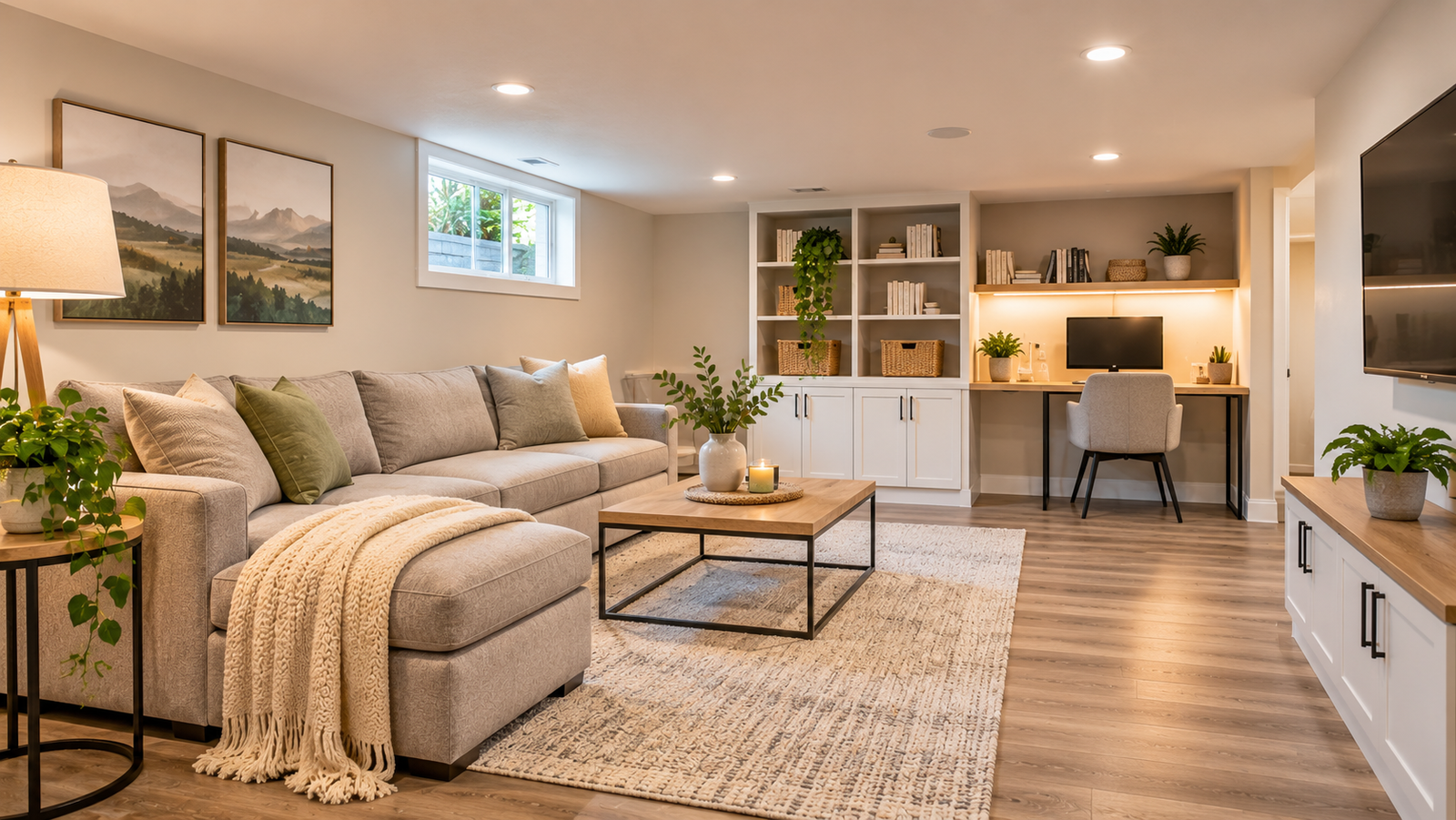
A finished basement can accommodate a family room, home office, hobby space, or other uses permitted by local regulations.
Before construction begins, homeowners should investigate any history of dampness or water intrusion.
Basement moisture problems must be addressed at their source. Covering damp walls with decorative finishes can conceal deterioration rather than solve it.
Suitable flooring, ventilation, lighting, and moisture-resistant construction methods improve long-term usability.
The 2025 Remodeling Impact Report estimated approximately 71% cost recovery for basement conversions to living areas under its methodology.
This provides a useful reference, although individual projects can differ substantially.
Attic Conversions
Attic conversions may create additional bedrooms, offices, or flexible living spaces without expanding the building footprint.
Their feasibility depends heavily on structural and geometric limitations.
Roof framing may require reinforcement, and an acceptable room layout must accommodate sufficient headroom, access, ventilation, insulation, and safety provisions.
Roof windows or dormers can improve natural light, but their installation may require significant structural modifications.
The same 2025 Remodeling Impact Report estimated approximately 67% cost recovery for attic conversions to living areas.
Legal and Valuation Considerations
A finished room does not automatically qualify as legally recognized habitable space.
Local building codes may require minimum ceiling heights, appropriate emergency escape provisions, structural compliance, and suitable heating or ventilation.
Rules regarding the measurement and classification of living area also vary by jurisdiction.
In some markets, below-grade finished space is appraised differently from above-ground living space.
Homeowners should confirm these requirements before making substantial investments. An attractive conversion that cannot be legally recognized or safely occupied may have limited resale value.
Rental Potential
A separate basement apartment or converted living area may offer rental opportunities where permitted.
However, potential income should be evaluated independently from resale cost recovery.
A legally rentable unit may require additional fire protection, separate access, utilities, sound insulation, or other modifications.
Rental income can improve a project's financial case, but projected occupancy, operating expenses, taxes, and local regulations must be included in the calculation.
Smart Home Renovations That Add Practical Value
Smart home technology can improve convenience, efficiency, and property management.
However, it should not automatically be categorized among renovations with the highest financial ROI.
Many smart devices are relatively inexpensive, but reliable evidence that individual systems substantially increase resale prices is limited.
Their strongest value often comes from the practical benefits they provide while the homeowner occupies the property.
Smart Thermostats and Climate Controls
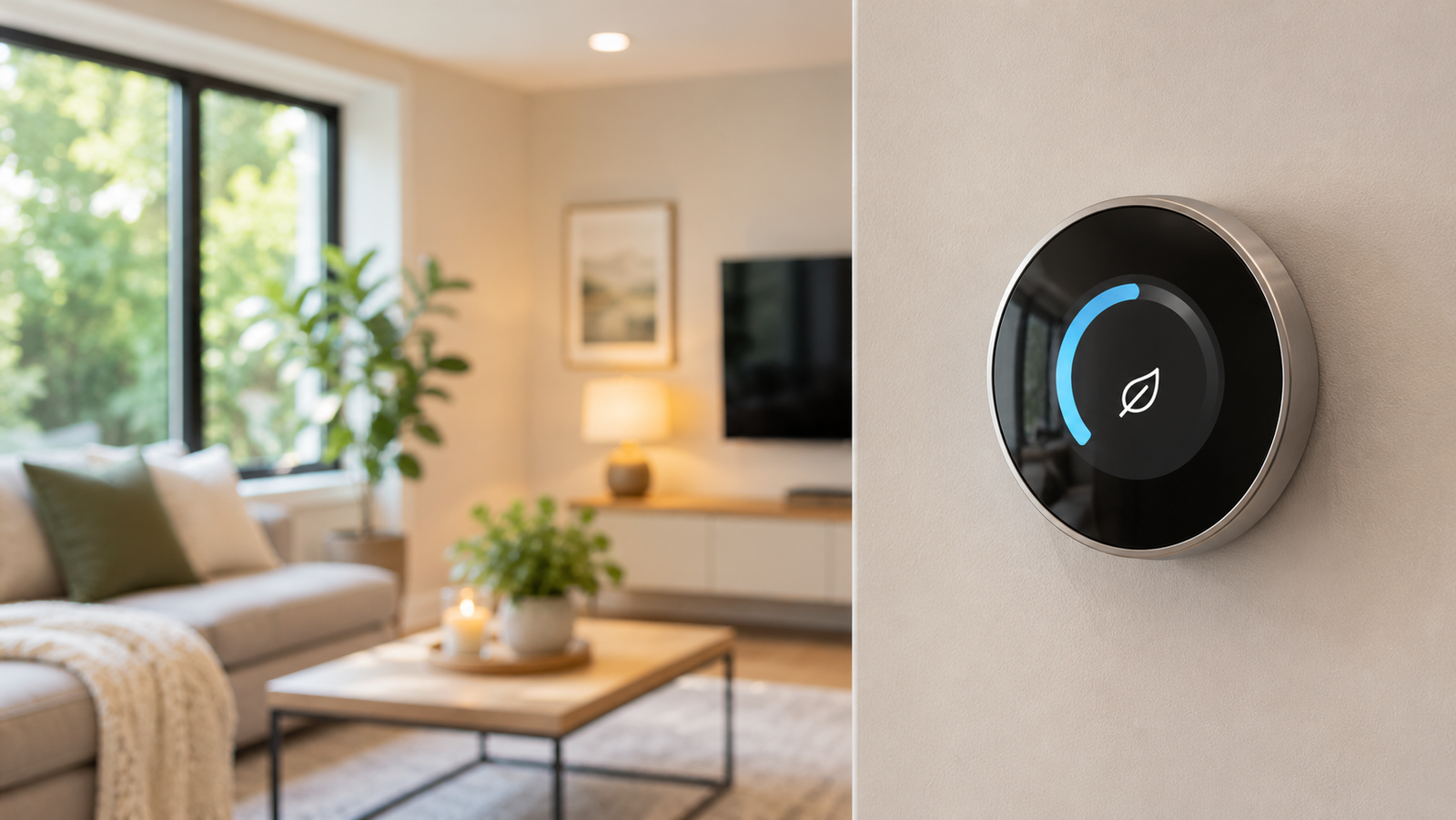
A compatible smart thermostat can help manage heating and cooling schedules and reduce unnecessary energy use.
According to ENERGY STAR, certified smart thermostats save approximately 8% of heating and cooling bills on average, equivalent to around $50 annually for the typical U.S. reference household.
Actual savings depend on equipment, occupancy, climate, and user behavior.
Compatibility should be checked before purchase, particularly for homes with specialized heating systems or complex zoning.
Smart Lighting and Security
Automated lighting can improve convenience through schedules, dimming, motion detection, and remote control.
Security features such as video doorbells, smart locks, motion sensors, and cameras may also improve daily property management.
These devices should be selected for reliability, security, and ease of use rather than the assumption that their purchase price will be recovered at resale.
A system that requires complicated subscriptions or proprietary equipment may be less attractive to a future owner.
Water Leak Detection
Leak detection is a practical category of home automation because it addresses a risk that can result in expensive property damage.
Sensors installed near washing machines, water heaters, sinks, and vulnerable pipe connections can provide early warnings.
Some systems can also operate automatic shutoff valves.
Although their exact contribution to resale value is difficult to measure, preventive monitoring may help homeowners reduce the consequences of plumbing failures.
Avoiding Technology That Ages Too Quickly
Technology changes more rapidly than most building materials.
An elaborate automation system may be difficult to transfer to a buyer, particularly if it relies on a single manufacturer, cloud account, or subscription service.
Homeowners should prioritize established communication standards, software security, maintainable equipment, and straightforward manual operation.
Smart devices should enhance the functionality of a house without making essential systems unnecessarily dependent on internet connectivity.
Renovation Projects With Poor ROI
Some renovations offer significant personal enjoyment but recover relatively little of their initial cost when a property is sold.
This does not necessarily make them poor lifestyle decisions. It means their financial value should be evaluated differently.
Luxury Kitchens and Bathrooms
Premium renovations often become expensive because of customized materials, complex layouts, specialized fixtures, and extensive labor.
The additional cost may not translate into an equivalent increase in market value.
A well-designed bathroom with reliable waterproofing and practical fixtures can meet buyer expectations without expensive spa equipment.
Similarly, a functional kitchen does not necessarily need custom imported cabinetry or professional-grade appliances.
The distinction is particularly important when a home is already near the upper price limit of its neighborhood.
Highly Personalized Interior Spaces
Themed rooms, elaborate home theaters, unusual finishes, and highly customized layouts may appeal strongly to the current owner but less to potential buyers.
Converting a bedroom into a permanent specialized space can be particularly risky if it reduces the number of bedrooms recognized in the property.
Where possible, homeowners should favor reversible changes and flexible layouts.
A room designed as an office, for example, may offer broader appeal if it can easily function as a bedroom or guest room.
Swimming Pools and Expensive Outdoor Features
Pools can be desirable in warm climates and suitable property markets, but their financial return varies considerably.
Installation expenses are only part of the calculation. Maintenance, repairs, insurance, safety requirements, and seasonal usability may influence buyer interest.
The same principle applies to elaborate outdoor kitchens and custom landscaping.
A modest, usable outdoor space may provide better value than a complex installation requiring specialized upkeep.
Overbuilding and Poor Workmanship
Renovations that significantly exceed neighborhood expectations can be difficult to recover financially.
Even excellent workmanship cannot guarantee that buyers will pay substantially more than comparable homes in the surrounding area.
Poor workmanship presents a different problem. Incorrect waterproofing, unsafe electrical alterations, uneven flooring, and visibly defective finishes can undermine buyer confidence.
DIY renovation can be financially sensible when homeowners have the necessary skills, but regulated or safety-critical work should be handled by appropriately qualified professionals.
The objective is not simply to minimize construction costs. It is to avoid repairs and deficiencies that may create larger expenses later.
How to Prioritize Renovations for Maximum Value
Choosing the right renovation requires a clear understanding of the property's condition, the homeowner's goals, and the available budget.
A project that makes sense before an imminent sale may not be the best choice for someone planning to remain in the house for another decade.

Begin With Essential Repairs
Structural problems, active leaks, unsafe electrical systems, roof damage, and serious moisture issues deserve attention before decorative improvements.
These repairs may not produce the highest percentage of cost recovery, but neglecting them can lead to further deterioration or complicate a property sale.
An attractive new kitchen offers limited value if a buyer discovers major water damage or structural defects elsewhere in the house.
Match Renovations to Ownership Plans
For homeowners preparing to sell, relatively modest improvements with broad appeal may be the most practical.
Fresh paint, appropriate repairs, improved lighting, and selective kitchen or bathroom updates can help present the property without requiring major investment.
For homeowners intending to remain in place for many years, comfort and operating costs become more important.
Insulation, accessibility improvements, better ventilation, or more functional living spaces may provide substantial benefits even when resale cost recovery is moderate.
Establish a Realistic Budget
A renovation budget should include more than materials and labor.
Design work, permits, demolition, waste disposal, transportation, temporary accommodation, and unexpected repairs can all affect the final cost.
Older buildings frequently contain hidden conditions that are difficult to evaluate before construction begins.
A contingency reserve of roughly 10–20% can be a useful planning assumption for some renovation projects, although complex or poorly documented properties may require a larger allowance.
This is a budgeting guideline, not a universal requirement.
Prioritize Projects Using a Decision Framework
Rather than assigning every project a generic high, medium, or low ROI label, homeowners should evaluate several factors together.
| Homeowner's main goal | Recommended starting point | What to evaluate |
|---|---|---|
| Sell within 12 months | Essential repairs, presentation, selective cosmetic updates | Local buyer expectations and likely added sale value |
| Remain for 5–10 years | Energy efficiency, durable materials, functional improvements | Operating savings, comfort, and maintenance |
| Improve a deteriorating property | Structural and technical repairs | Safety, durability, and preventing further damage |
| Create additional living space | Basement or attic feasibility assessment | Legal requirements, construction cost, and usable area |
| Modernize on a limited budget | Repair and refresh serviceable features | Cost per improvement and unnecessary replacement |
| Improve accessibility | Bathroom access, circulation, lighting, and safer surfaces | Household needs and long-term usability |
This framework recognizes that renovation value is not measured by resale percentages alone.
Plan the Sequence of Work
Renovation order also affects financial efficiency.
Electrical and plumbing alterations should normally be coordinated before walls and ceilings receive their final finishes.
Necessary waterproofing and moisture repairs should precede flooring installation.
Painting and final decorative work should be scheduled to avoid damage from later construction.
Good sequencing reduces repeated labor, wasted materials, and unnecessary disruption.
For a more detailed approach, see EURENOVA's guide, Renovation Priorities: What to Renovate First.
Realistic ROI Examples and Cost Comparisons
Financial calculations are most useful when homeowners understand exactly what the numbers represent.
National research provides broad market benchmarks, but a project-specific calculation must use the actual estimated cost and realistic local valuation assumptions.
The following scenarios are hypothetical examples created for illustration. They are not market averages, published remodeling statistics, or guaranteed outcomes.
Comparing Three Renovation Scenarios
| Example project | Total cost | Estimated added resale value | Cost recovery | Net resale ROI |
|---|---|---|---|---|
| Targeted exterior refresh | $4,000 | $4,800 | 120% | +20% |
| Midrange interior update | $20,000 | $15,000 | 75% | −25% |
| Extensive luxury remodel | $75,000 | $37,500 | 50% | −50% |
The first scenario illustrates how a relatively inexpensive project could create more estimated resale value than it costs.
The second shows that a renovation can substantially increase property value while recovering only part of the original investment.
The third demonstrates how a large project can create a meaningful increase in property value while still producing a substantial financial shortfall relative to its cost.
None of these examples predicts what a particular homeowner will receive when selling.
Scenario 1: A Targeted Exterior Refresh
Suppose a homeowner spends $4,000 on an exterior improvement package and estimates that comparable buyers would value the completed property $4,800 higher.
The cost recovery calculation is:
($4,800 ÷ $4,000) × 100 = 120%
The net resale ROI is:
(($4,800 − $4,000) ÷ $4,000) × 100 = 20%
The estimated gain above project cost is $800.
However, transaction expenses and other ownership costs could reduce or eliminate that gain.
Scenario 2: A Midrange Interior Update
A homeowner invests $20,000 in improvements that increase estimated resale value by $15,000.
The project recovers 75% of its initial expense through additional resale value.
Its net ROI is −25%, representing a $5,000 difference between investment cost and estimated added value.
If the homeowner enjoys the improved space for several years, the renovation may still provide worthwhile personal benefits.
Scenario 3: A Luxury Renovation
An extensive renovation costs $75,000 but increases estimated property value by $37,500.
The project achieves 50% cost recovery and a net resale ROI of −50%.
The homeowner has effectively spent $37,500 beyond the project's estimated contribution to resale value.
That additional expense may be justified by personal preferences, but it should not be mistaken for a profitable resale investment.
Including Operating Savings
Energy improvements require an additional calculation.
Suppose a hypothetical renovation costs $6,000 and saves $500 annually in energy expenses.
Its simple payback period is twelve years.
If the owner plans to stay for fifteen years, the project could generate $7,500 in undiscounted savings, assuming constant savings and no additional costs.
That does not mean the net investment benefit is automatically $1,500. Maintenance, equipment replacement, financing, inflation, and the time value of money may affect the result.
If the property is sold before the payback period ends, future energy savings will benefit the new owner. Whether those savings increase the sale price must be assessed separately.
Why Published ROI Reports Can Differ
Research organizations may use different renovation specifications, costing methods, survey populations, and valuation approaches.
For example, the 2025 Cost vs. Value Report and the 2025 Remodeling Impact Report produced different cost recovery estimates for some categories.
These estimates should not be averaged without considering their methodologies.
A more reliable approach is to use published research for general guidance, obtain actual local contractor quotations, and consult comparable property sales before making a major financial commitment.
Renovation Trends in 2026 for Long-Term Value
Trends can influence renovation decisions, but popularity does not establish financial performance.
A feature that appears frequently in design publications may offer excellent daily usability without producing a measurable increase in resale value.
Homeowners should distinguish between current design preferences and improvements with more durable practical benefits.
Sustainable and Durable Materials
Materials with long service lives, suitable maintenance requirements, and responsible sourcing characteristics can be attractive choices.
Reclaimed wood, recycled-content materials, low-emission finishes, and durable building products may help reduce environmental impacts when selected appropriately.
However, sustainability claims should be evaluated using reliable product information rather than marketing language alone.
A material is not automatically environmentally preferable simply because it is described as natural or recycled.
Service life, manufacturing impacts, installation requirements, repairability, and eventual disposal all matter.
Flexible Living Spaces
Flexible rooms can accommodate changing household needs without requiring another renovation.
A home office with adequate lighting, electrical outlets, and storage may later function as a guest bedroom or study.
Similarly, a family room designed with adaptable furniture may serve different purposes as household needs evolve.
The strongest long-term advantage is flexibility rather than an assumed increase in resale value.
Accessibility and Aging in Place
Accessible design can improve convenience and safety for people with different mobility requirements.
Step-free access, appropriately designed showers, practical circulation space, non-slip surfaces, and well-positioned lighting can support long-term usability.
These improvements may be particularly valuable to households planning to remain in their homes as their needs change.
Their resale value depends on the local market, but their practical benefits can extend beyond resale considerations.
Low-Maintenance Design
Materials and layouts that are easy to clean, repair, and maintain can reduce ongoing household responsibilities.
Durable countertops, repairable finishes, appropriate flooring, and practical storage may offer better long-term value than delicate decorative features.
Maintenance should also be considered when selecting exterior cladding, decking, landscaping, and mechanical equipment.
A more expensive material is not necessarily more economical over its full service life.
Natural Light and Indoor Comfort
Improved daylight, appropriate ventilation, acoustic comfort, and balanced indoor temperatures can make living spaces more pleasant.
Renovation projects may achieve these improvements through better window placement, lighting design, insulation, or ventilation.
However, enlarging windows or making structural alterations can be expensive. Homeowners should first consider whether simpler changes, such as improving artificial lighting or adjusting room layouts, would provide sufficient benefit.
Smart Technology Without Excessive Complexity
Home automation is likely to remain part of residential improvement, but long-term value depends on reliable operation and compatibility.
Simple climate control, leak detection, and straightforward security features may offer more practical advantages than elaborate systems that require extensive maintenance.
Technology should remain easy to understand, securely maintained, and transferable to future occupants.
Timeless Design Rather Than Short-Lived Trends
Neutral finishes, natural textures, and coherent material combinations can provide flexibility when furniture and preferences change.
However, a timeless interior does not require every room to look identical or completely neutral.
The objective is to create a consistent, functional environment that remains appealing without requiring frequent expensive updates.
The most sensible renovation trends are those that solve real problems rather than introduce features solely because they are fashionable.
Conclusion: Choosing Renovations That Deliver Lasting Value
The best renovation projects are not necessarily the largest, most expensive, or most visually dramatic.
Targeted exterior improvements can perform well when resale value is the primary objective. Modest kitchen renovations may provide a stronger financial result than extensive remodeling, while essential bathroom and flooring improvements can make an older property more functional and presentable.
Energy-efficient upgrades deserve a different evaluation because their financial benefits may accumulate through lower operating costs over many years.
Basement conversions, attic improvements, and smart home technologies can also create meaningful value, but their financial performance depends heavily on project costs, local requirements, and household needs.
The most reliable strategy begins with understanding the property.
Homeowners should correct structural and safety problems, establish a realistic budget, compare local market expectations, and evaluate the likely benefits of each project before committing to construction.
Most importantly, resale cost recovery should not be confused with net profit or personal satisfaction.
A successful renovation may improve resale value, reduce ongoing expenses, increase comfort, or accomplish several of these goals simultaneously.
By identifying the purpose of each improvement and using realistic financial assumptions, homeowners can make renovation decisions that support both immediate needs and long-term property value.
Frequently Asked Questions
Which renovation projects have the highest ROI?
According to the 2025 Remodeling Cost vs. Value Report, selected exterior replacement projects achieved some of the strongest estimated resale cost recovery results in the United States. Targeted kitchen improvements also performed well. Actual results depend on project scope, local housing conditions, and the existing property's condition.
Is a minor kitchen renovation better than a complete remodel?
For homeowners primarily concerned with resale cost recovery, a minor renovation may be the more economical choice when cabinets, plumbing, and the layout remain functional. A complete remodel may still be appropriate when major defects or serious layout limitations require extensive work.
Do bathroom renovations increase home value?
Bathroom renovations can improve property value and buyer appeal, particularly when they correct outdated fixtures, moisture problems, or poor functionality. The amount recovered depends on renovation cost, existing condition, and the local market. A more expensive bathroom is not automatically more valuable.
Are energy-efficient renovations worth the investment?
They can be worthwhile when the expected operating savings justify the installation cost. Insulation, air sealing, efficient heating equipment, and other energy improvements should be evaluated using realistic consumption estimates and ownership timelines. Their resale benefits should be considered separately from utility savings.
Should homeowners replace flooring before selling?
Replacement is worth considering when flooring is damaged, unsafe, visibly deteriorated, or inconsistent with comparable properties. Serviceable hardwood may be refinished, while other floors may benefit from cleaning or targeted repairs. Replacing functional flooring simply to follow a trend may not be financially justified.
Can basement and attic conversions increase property value?
Yes, properly designed and legally compliant conversions can improve functionality and may add resale value. However, structural requirements, moisture protection, ceiling height, permits, and local valuation rules can substantially influence financial performance. Finished space is not always valued in the same way as conventional living area.
Do smart home devices provide good renovation ROI?
Smart devices can improve comfort, security, and energy management, but their direct contribution to resale value is often uncertain. Practical systems such as compatible thermostats and leak detectors may provide benefits during ownership even when a specific resale return cannot be demonstrated.
How much renovation ROI should homeowners expect?
There is no universal target. Cost recovery varies by project, location, initial property condition, and market timing. Some improvements may recover more than their cost in estimated resale value, while others recover substantially less. Homeowners should distinguish between cost recovery, net ROI, operating savings, and personal benefits before evaluating a project.
Is it better to renovate before selling or sell as-is?
The answer depends on the property's condition, local buyer demand, available budget, and expected sale price. Minor repairs and cosmetic improvements may help a home compete more effectively, while expensive renovations can be difficult to recover. Comparing contractor estimates with local comparable sales is usually more useful than following a national renovation ranking alone.
What is the most important step before starting a high-ROI renovation?
The most important step is determining what the property actually needs and estimating whether the proposed improvement is financially justified. This should include an inspection of existing conditions, a realistic budget, and an assessment of comparable properties. A clearly defined renovation objective helps prevent overspending on improvements with limited practical or resale value.
Sources and Research Methodology
This article combines published U.S. remodeling research, energy-efficiency guidance, and original EURENOVA editorial analysis.
The following primary sources were used:
1. Remodeling 2025 Cost vs. Value Report — Zonda / Journal of Light Construction. National and regional estimates of remodeling costs and added resale value for defined project types. The figures cited in this article relate to selected U.S. renovation projects and should not be interpreted as guarantees for individual properties.
Source: www.costvsvalue.com
© 2025 Zonda Media, a Delaware Corporation. Complete data from the Remodeling 2025 Cost vs. Value Report can be downloaded free at www.costvsvalue.com.
2. 2025 Remodeling Impact Report — National Association of Realtors and National Association of the Remodeling Industry. Research examining remodeling motivations, homeowner satisfaction, and estimated cost recovery.
Source: National Association of Realtors — Remodeling
3. ENERGY STAR — Methodology for Estimated Energy Savings. U.S. Environmental Protection Agency guidance concerning potential savings from air sealing and insulation improvements.
Source: ENERGY STAR — Insulation and Air Sealing Methodology
4. ENERGY STAR — Smart Thermostats. Guidance and research on demonstrated heating and cooling savings from certified smart thermostat systems.
Source: ENERGY STAR — Smart Thermostat FAQs
5. U.S. Department of Energy — Energy-Efficient Residential Windows, Doors, and Skylights. Technical guidance on window performance and the influence of climate on energy efficiency.
Source: U.S. Department of Energy — Residential Windows and Doors
Research limitations: Published cost recovery estimates are primarily based on U.S. market conditions and defined renovation scopes. They should not be applied directly to properties in Europe or other regions without local cost and valuation data. All hypothetical financial examples in this article are illustrative calculations, not observed transactions or guaranteed investment outcomes.
Prepared by EURENOVA Editorial Team. Updated November 2026.