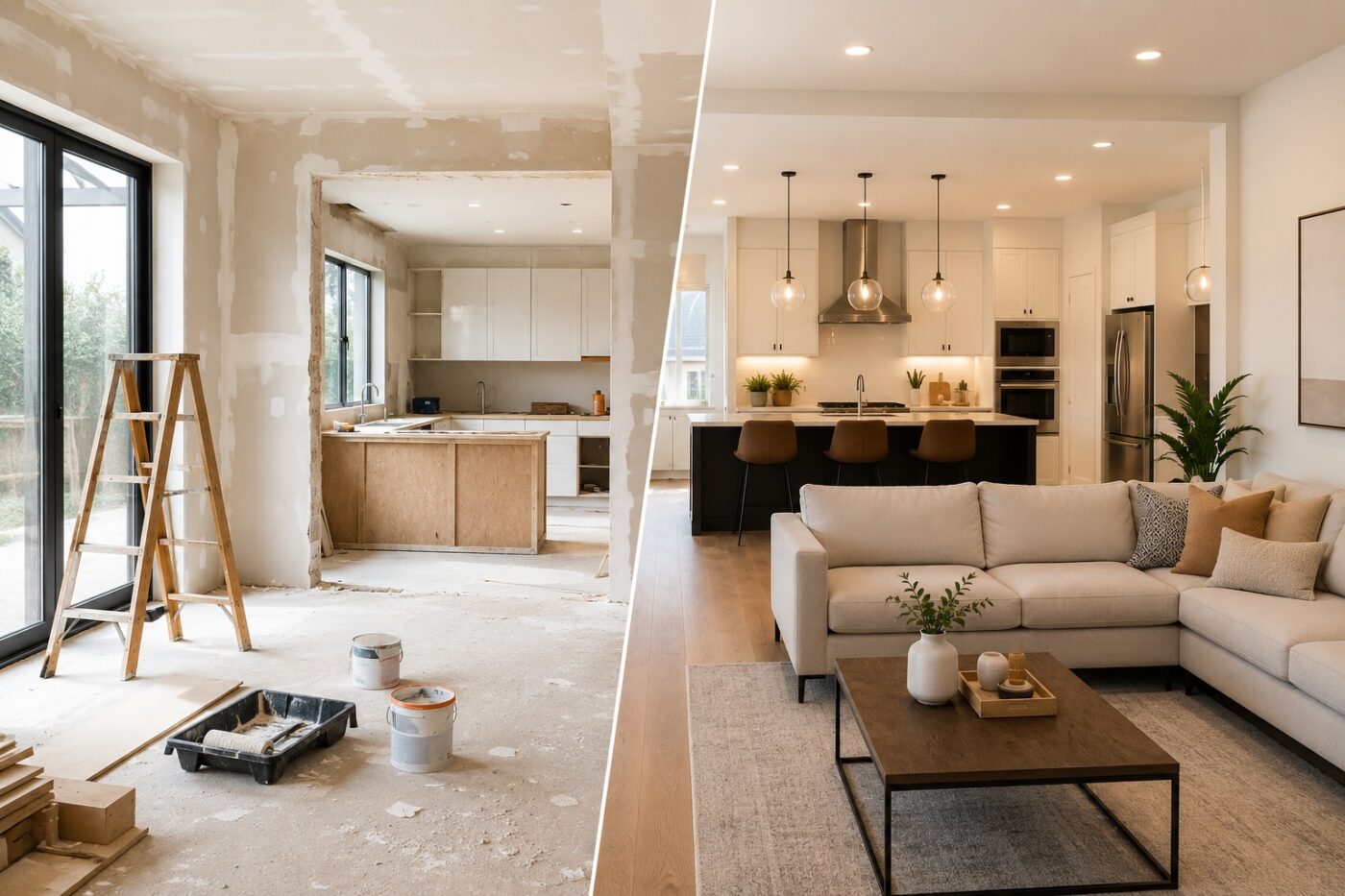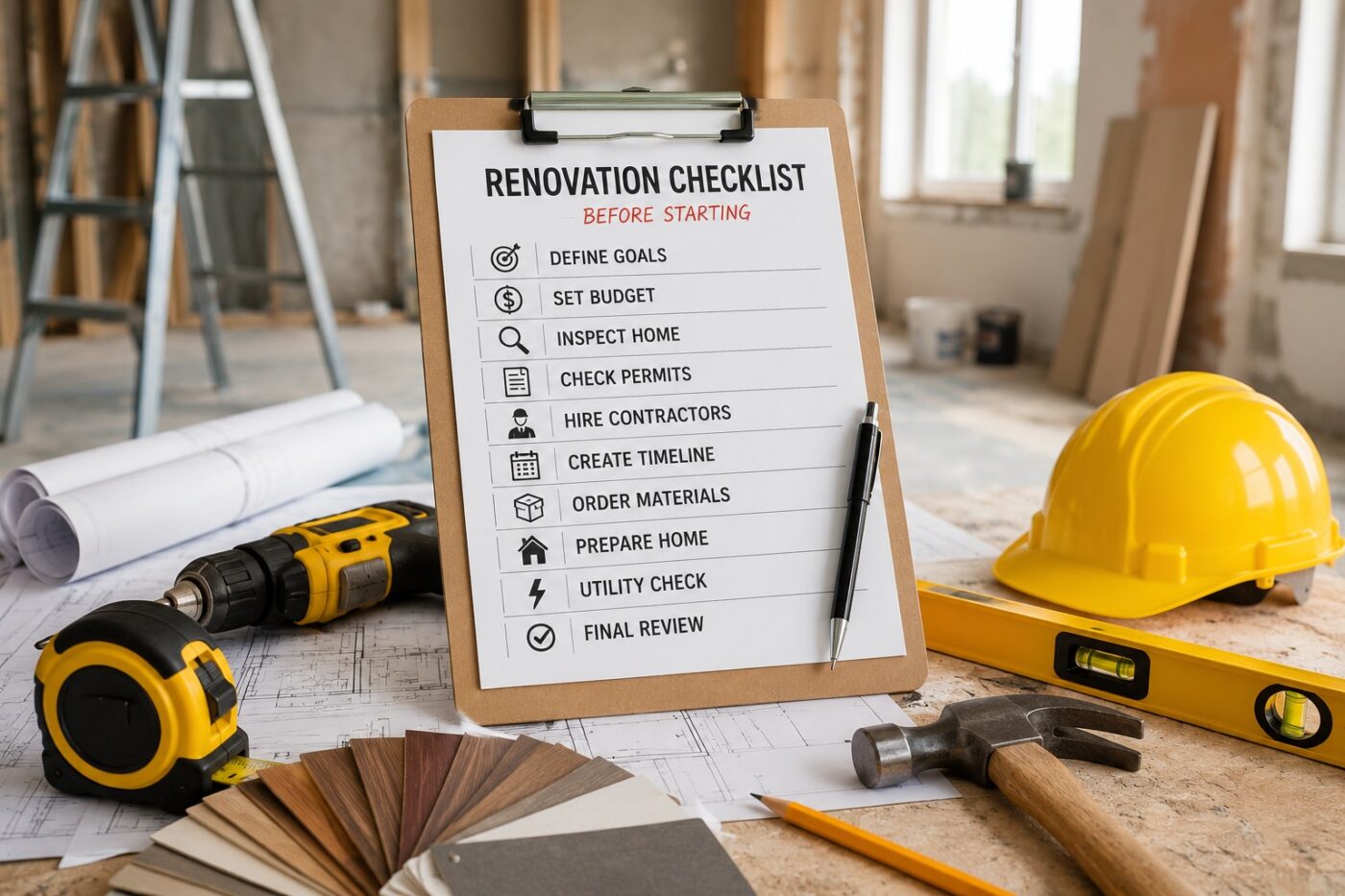
Most renovation problems happen long before the first wall is demolished.
Homeowners usually spend weeks choosing flooring colors, kitchen cabinets, or bathroom fixtures, yet many projects still end up over budget, delayed, or far more stressful than expected. In most cases, the problem is not the renovation itself — it is the lack of preparation before construction begins.
A renovation checklist creates structure before the chaos starts. It helps homeowners organize priorities, plan realistic costs, coordinate contractors, prepare the home properly, and avoid expensive mistakes that commonly appear halfway through a remodeling project.
Without a clear plan, even simple renovations can quickly spiral into problems. A delayed cabinet delivery may stop kitchen installation for weeks. Plumbing leaks hidden behind old walls may destroy newly installed flooring. Contractors booked too late may push the timeline back by months.
Experienced renovators understand one important reality: successful remodeling is mostly planning and only partially construction.
This guide walks through the most important steps homeowners should complete before starting renovation work. From setting realistic goals and building a practical budget to checking permits, scheduling contractors, preparing materials, and organizing the home itself, every section is designed to help reduce stress, avoid delays, and make the renovation process far more predictable.
Whether you are planning a bathroom remodel, a kitchen upgrade, or a full-house renovation, proper preparation will save far more time and money than rushing into construction unprepared.
Table of Contents
Define Your Renovation Goals
Before requesting contractor quotes or browsing material samples, homeowners need to answer one simple question:
“What is this renovation actually trying to achieve?”
This sounds obvious, but many renovations begin without a clearly defined purpose. As a result, projects slowly expand beyond the original plan. Budgets increase, timelines grow longer, and homeowners begin making expensive decisions that do not improve the functionality of the home in any meaningful way.
Some renovations focus on solving practical problems such as outdated plumbing, poor insulation, or lack of storage space. Others are motivated by aesthetics, comfort, resale value, or energy efficiency improvements. The renovation strategy should look completely different depending on the primary goal.
For example, a homeowner preparing a property for resale may prioritize curb appeal, kitchen upgrades, and neutral finishes that appeal to buyers. Someone renovating a long-term family home will usually care more about comfort, durability, storage, heating efficiency, and daily functionality.
One of the smartest things homeowners can do early in the planning process is separate “essential upgrades” from “optional upgrades.”
Structural repairs, outdated electrical systems, roof leaks, plumbing failures, or moisture problems should always take priority over cosmetic improvements. Expensive decorative features may look attractive initially, but they rarely matter if critical systems behind the walls are failing.
This is where many renovation budgets collapse.
A homeowner may originally plan a practical kitchen remodel and later add premium appliances, custom cabinetry, designer lighting, imported tiles, and luxury countertops. Individually these decisions may seem manageable, but together they can completely change the financial scale of the renovation.
A better approach is to define renovation priorities before construction starts.
Experienced contractors often recommend focusing first on:
- Structural integrity: Repairing foundations, sagging ceilings, or load-bearing framing before aesthetic changes.
- Waterproofing and moisture control: Preventing mold and leaks in basements, bathrooms, and exterior walls.
- Roofing stability: Ensuring the roof is completely sealed to protect future interior investments.
- Plumbing and drainage upgrades: Replacing outdated or corroded pipes while walls are completely open.
- Electrical systems safety: Upgrading wiring, circuits, and electrical panels to meet modern safety standards.
- Insulation and ventilation: Improving home energy efficiency to reduce heating and cooling costs long-term.
Cosmetic finishes should come later.
Another overlooked part of renovation planning is thinking long term. Renovations should not only solve today’s problems but also support future needs.
A growing family may eventually need additional storage or workspace. Older homeowners may later appreciate wider doorways, improved lighting, or easier bathroom access. Energy-efficient upgrades may reduce utility costs for decades.
One practical tip many homeowners overlook is writing the renovation plan down before contacting contractors. Even a simple document outlining priorities, room changes, desired improvements, estimated budget range, and timeline expectations creates far more organized discussions later.
Contractors can only provide accurate recommendations when the homeowner has a clear direction from the beginning.
Set a Realistic Budget
One of the fastest ways for a renovation project to become stressful is starting with an unrealistic budget.
Many homeowners underestimate costs because they focus only on visible upgrades such as flooring, cabinets, or paint colors. In reality, renovation expenses often come from the things hidden behind walls, under floors, or inside ceilings.
Electrical upgrades, plumbing repairs, waterproofing problems, structural corrections, permits, demolition, waste removal, and labor costs regularly surprise homeowners once construction begins.
This is especially common in older homes.
A bathroom renovation that initially appears simple can suddenly require pipe replacement after corrosion is discovered behind the walls. A flooring project may reveal uneven subfloors or moisture damage that must be repaired before installation continues.
This is why experienced renovators rarely trust the “perfect scenario” budget.
A realistic renovation budget should include:
- labor costs;
- construction materials;
- inspections and permits;
- demolition;
- temporary living arrangements if necessary;
- delivery fees;
- cleanup and waste removal;
- emergency reserve funds.
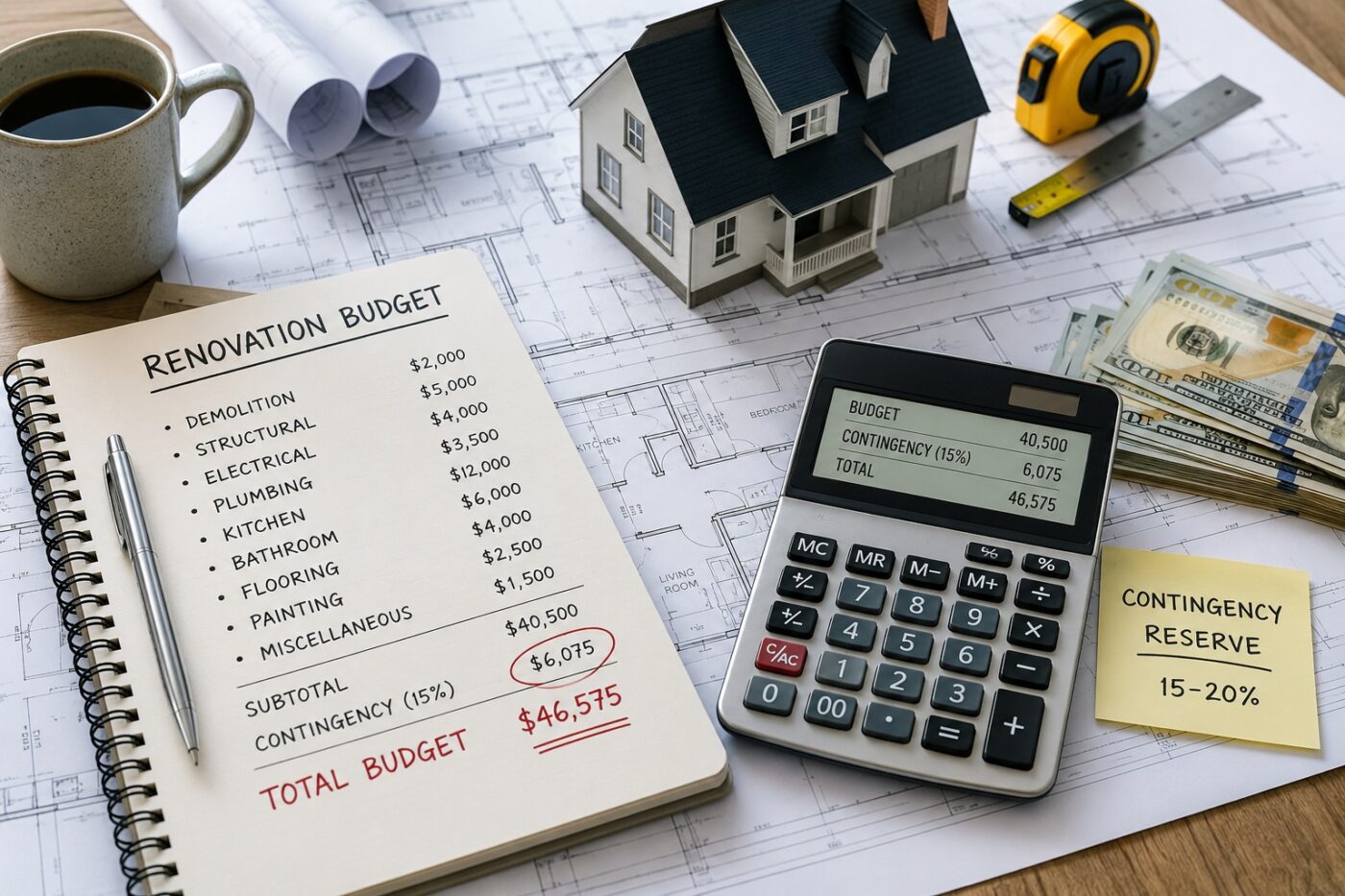
The contingency reserve is one of the most important parts of the budget.
For cosmetic renovations in newer homes, a 10% reserve may be sufficient. Older properties or large remodeling projects often require 15–20% because hidden issues are much more likely to appear once demolition starts.
Reality check:
Many homeowners spend months planning decorative finishes while forgetting to reserve money for unexpected repairs. Then a leaking pipe, electrical issue, or mold problem appears and suddenly the renovation cannot continue without additional financing.
Budgeting also becomes easier when homeowners divide spending into categories rather than looking at one large number.
Labor usually consumes the largest portion of renovation costs, especially during structural, electrical, plumbing, or tile work. Kitchens and bathrooms are typically the most expensive rooms because they combine multiple systems, custom materials, and specialized installation requirements.
Another mistake homeowners frequently make is selecting contractors based entirely on the lowest quote.
Extremely low estimates often mean:
- incomplete project scope;
- poor-quality materials;
- inexperienced labor;
- missing permits;
- hidden future charges.
Professional contractors rarely provide unrealistically cheap pricing for high-quality work.
A much safer approach is comparing several detailed estimates and looking carefully at:
- project scope;
- warranty terms;
- communication quality;
- timeline realism;
- material specifications;
- contractor reputation.
Good budgeting is not about spending as little money as possible. It is about creating a financial plan that can realistically survive the entire renovation process without constant stress or unexpected interruptions.
Inspect the Current Condition of the Home
A surprising number of renovation disasters begin with hidden problems that were never discovered before demolition started.
Fresh paint and modern flooring can easily hide serious structural, plumbing, electrical, or moisture-related issues underneath. Many homes appear visually fine until walls are opened and the real condition of the property becomes visible.
This is why inspections should happen before renovation planning is finalized — not after construction begins.
Structural problems deserve immediate attention because they affect both safety and renovation costs. Foundation movement, sagging ceilings, roof damage, uneven flooring, or moisture deterioration can quickly transform a cosmetic remodel into a major construction project.
One common mistake homeowners make is prioritizing visible upgrades before solving hidden structural issues.
For example, installing expensive flooring before replacing old leaking plumbing pipes often leads to unnecessary demolition later. Experienced contractors usually recommend solving “inside the walls” problems first and cosmetic improvements second.
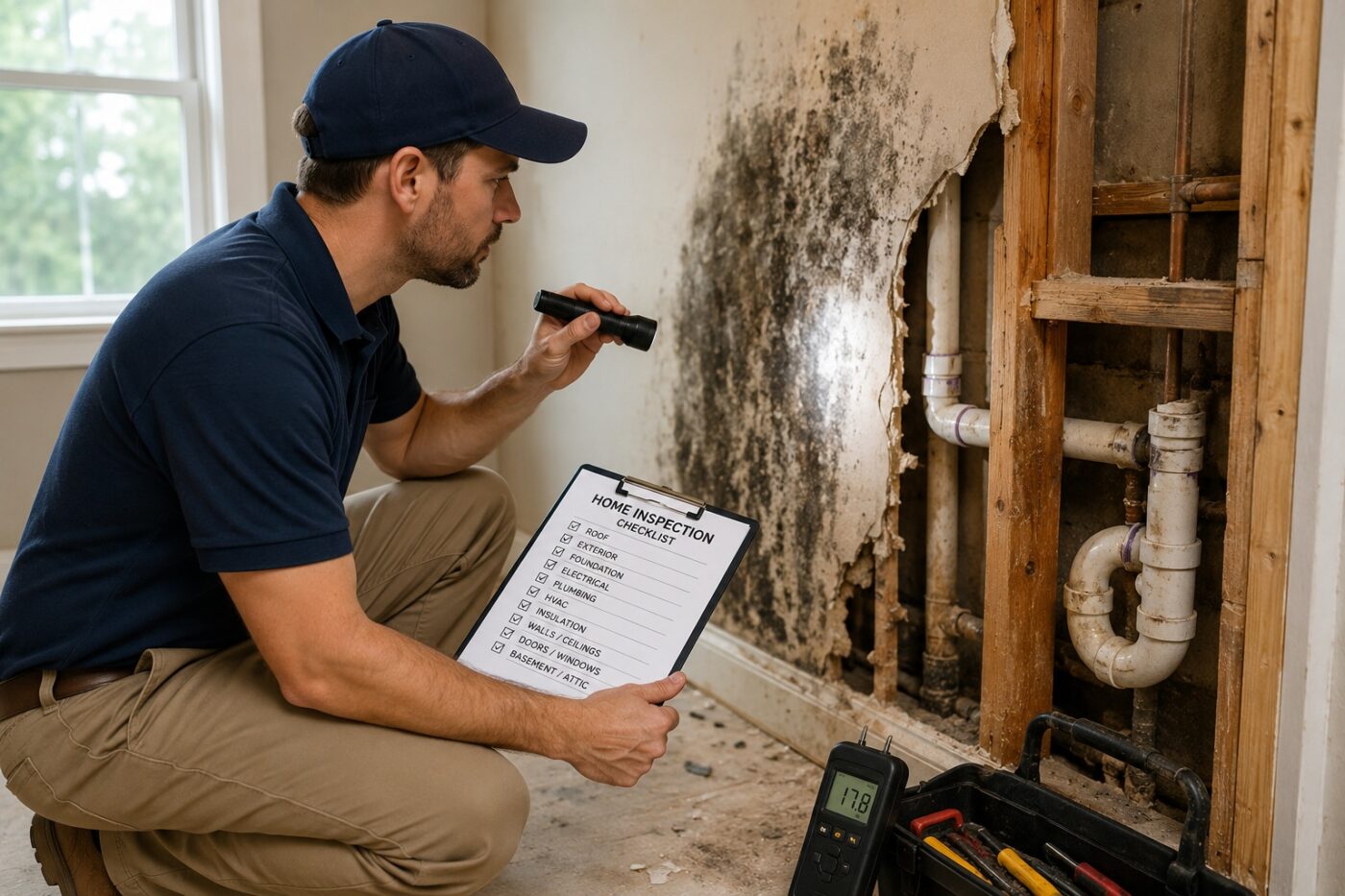
Moisture is another issue that homeowners frequently underestimate.
Small roof leaks, poor ventilation, condensation, or plumbing drips may seem minor initially, but over time they often create:
- mold growth;
- damaged insulation;
- swollen flooring;
- rotting wood structures;
- unhealthy indoor air conditions.
Bathrooms, basements, attics, and kitchens are especially vulnerable.
Pro Tip:
A musty smell inside a home is often a stronger warning sign than visible stains. Hidden moisture problems frequently exist long before they become visually obvious.
Electrical systems also deserve careful inspection, particularly in older homes. Renovation projects are often the ideal opportunity to upgrade outdated wiring, overloaded circuits, or undersized electrical panels before walls are closed again.
Modern homes place much higher demands on electrical systems than houses built decades ago. Large appliances, smart home devices, HVAC systems, heated flooring, and home office equipment all increase energy consumption significantly.
Plumbing systems should be evaluated with the same level of attention. Old pipes hidden behind finished walls can create extremely expensive water damage later if ignored during renovation planning.
Experienced renovators often say:
“Water damage is almost always more expensive than homeowners expect.”
Another area commonly overlooked is insulation and energy efficiency.
A renovation provides rare access to wall cavities, attics, and hidden spaces. Improving insulation during remodeling can significantly reduce heating and cooling costs long term while improving overall comfort.
Many homeowners regret skipping insulation upgrades later because accessing those areas again after finishing work becomes much more expensive.
Professional inspections may initially feel like an unnecessary expense, but they often save thousands of dollars by identifying serious issues before construction begins.
Create a Renovation Timeline
Almost every homeowner underestimates how long renovation projects actually take.
Online renovation videos often compress months of work into a few minutes, creating unrealistic expectations about timelines. In reality, even relatively simple remodeling projects involve scheduling conflicts, inspections, delivery delays, contractor coordination, and unexpected repairs.
A renovation timeline should never be built around the “best-case scenario.”
Instead, it should assume that at least some delays will happen.
One delayed shipment can affect multiple stages of construction simultaneously. A late cabinet delivery may postpone countertop installation, electrical finishing, plumbing fixtures, and final inspections all at once.
This is why renovation sequencing matters so much.
Experienced contractors usually follow a logical order:
planning, permits, demolition, structural repairs, electrical and plumbing rough-ins, insulation, drywall, flooring, painting, cabinetry, fixtures, and finally inspections and cleanup.
Changing this order often creates unnecessary rework.
For example, homeowners sometimes rush to install finished flooring before plumbing upgrades are complete. Later, when leaking pipes or drainage problems appear, sections of the new floor must be removed.
Reality check:
Kitchen cabinets are one of the most common renovation delay points. Custom cabinet production may take anywhere from 6 to 12 weeks depending on supplier schedules and material availability.
The same applies to:
- Custom windows and exterior doors: Which often require weeks for factory fabrication and specific weather conditions for installation.
- Specialty or imported tiles: High-demand or overseas products that face frequent shipping and logistics delays.
- Custom countertops: Fabricators can typically take measurements only after cabinets are fully installed, adding natural wait time.
- Premium appliances and fixtures: Specialized smart-home or kitchen equipment that may have limited regional availability.
Ordering these items too late is one of the biggest reasons renovation schedules collapse.
A realistic renovation timeline should also account for contractor availability. Good contractors are often booked far in advance, especially during busy seasons.
Many homeowners make the mistake of assuming every contractor will be immediately available once they decide to renovate. This rarely happens.
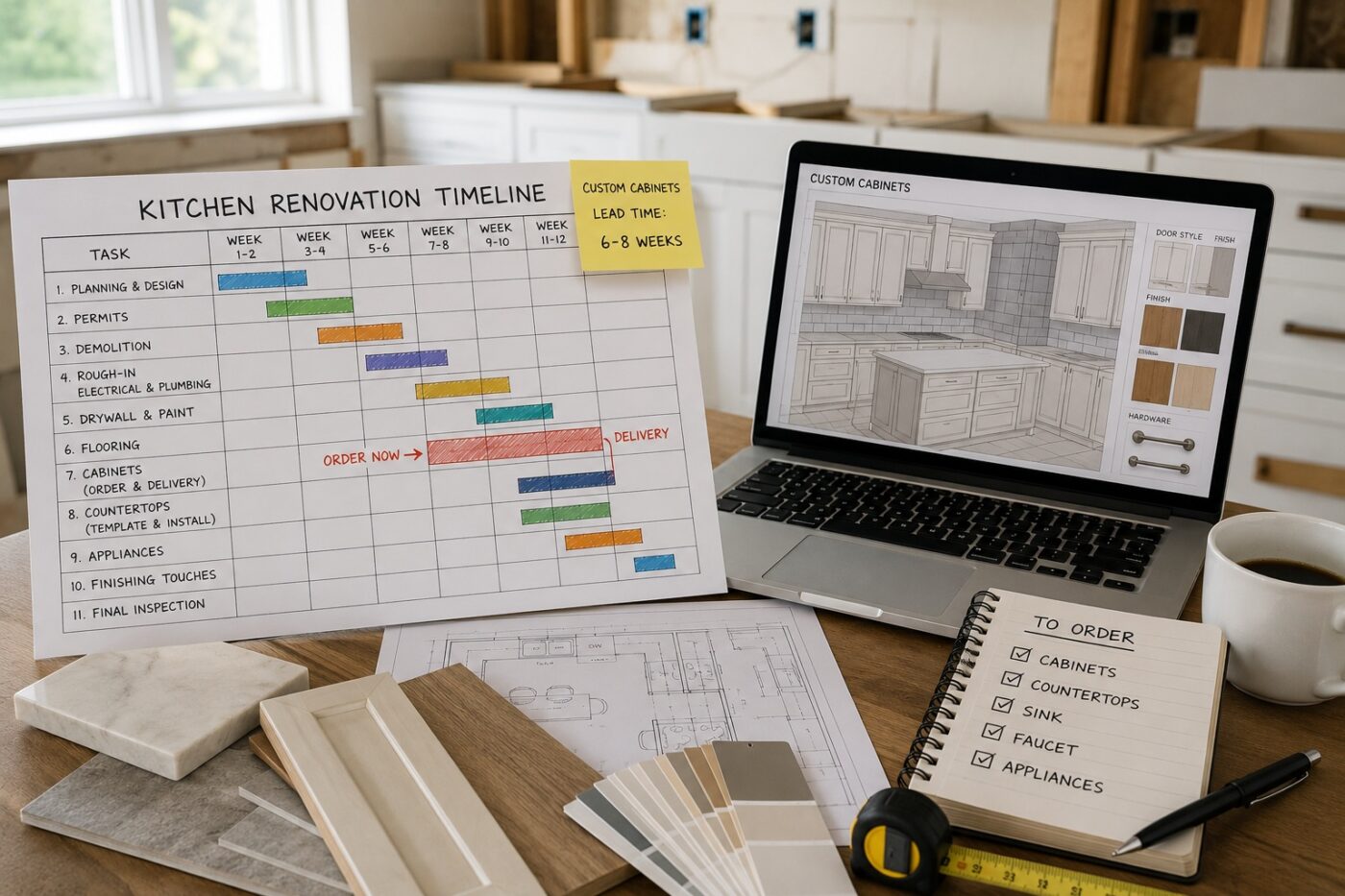
Another important factor is inspection timing. Depending on local regulations, renovation work may pause while waiting for:
- framing inspections;
- electrical approvals;
- plumbing inspections;
- insulation verification;
- final occupancy approval.
These delays are normal.
The smartest renovation schedules include extra buffer time specifically for unexpected problems.
Trying to force an unrealistic deadline usually increases stress, causes rushed workmanship, and creates communication problems between contractors and homeowners.
Experienced renovators understand that flexibility is part of the process.
A renovation timeline is not simply a calendar — it is a coordination system that keeps dozens of moving parts organized throughout the project.
Decide Between DIY and Professionals
DIY renovation videos make almost every project look easier than it actually is.
Painting walls or assembling furniture may seem straightforward, but once plumbing, electrical systems, waterproofing, or structural work become involved, the risks increase dramatically.
Many homeowners start renovation projects believing DIY will save large amounts of money. Sometimes it does. But inexperienced DIY work can also become one of the most expensive mistakes in the entire renovation.
The key is understanding where DIY makes sense and where professional experience becomes essential.
Simple cosmetic projects such as painting, wallpaper removal, decorative installation, or minor demolition are often manageable for homeowners with patience and basic tools. These tasks usually carry lower safety risks and can meaningfully reduce labor expenses.
But technical systems are different.
Electrical mistakes may create fire hazards hidden inside walls for years. Incorrect plumbing installations can slowly damage floors, ceilings, and insulation long before leaks become visible. Poor waterproofing inside bathrooms may require complete demolition later.
One experienced contractor summarized it perfectly:
“Cosmetic mistakes are annoying. Structural and water mistakes are expensive.”
This is why licensed professionals are usually recommended for:
- electrical work;
- gas systems;
- structural modifications;
- waterproofing;
- roofing;
- HVAC installations;
- plumbing replacement.
Another reality homeowners often overlook is time.
DIY renovation almost always takes longer than expected. Professionals complete work faster because they already have:
- specialized tools;
- trained crews;
- supplier relationships;
- installation experience;
- knowledge of local codes.
A homeowner working evenings and weekends may spend several months on tasks that a professional crew could finish within days.
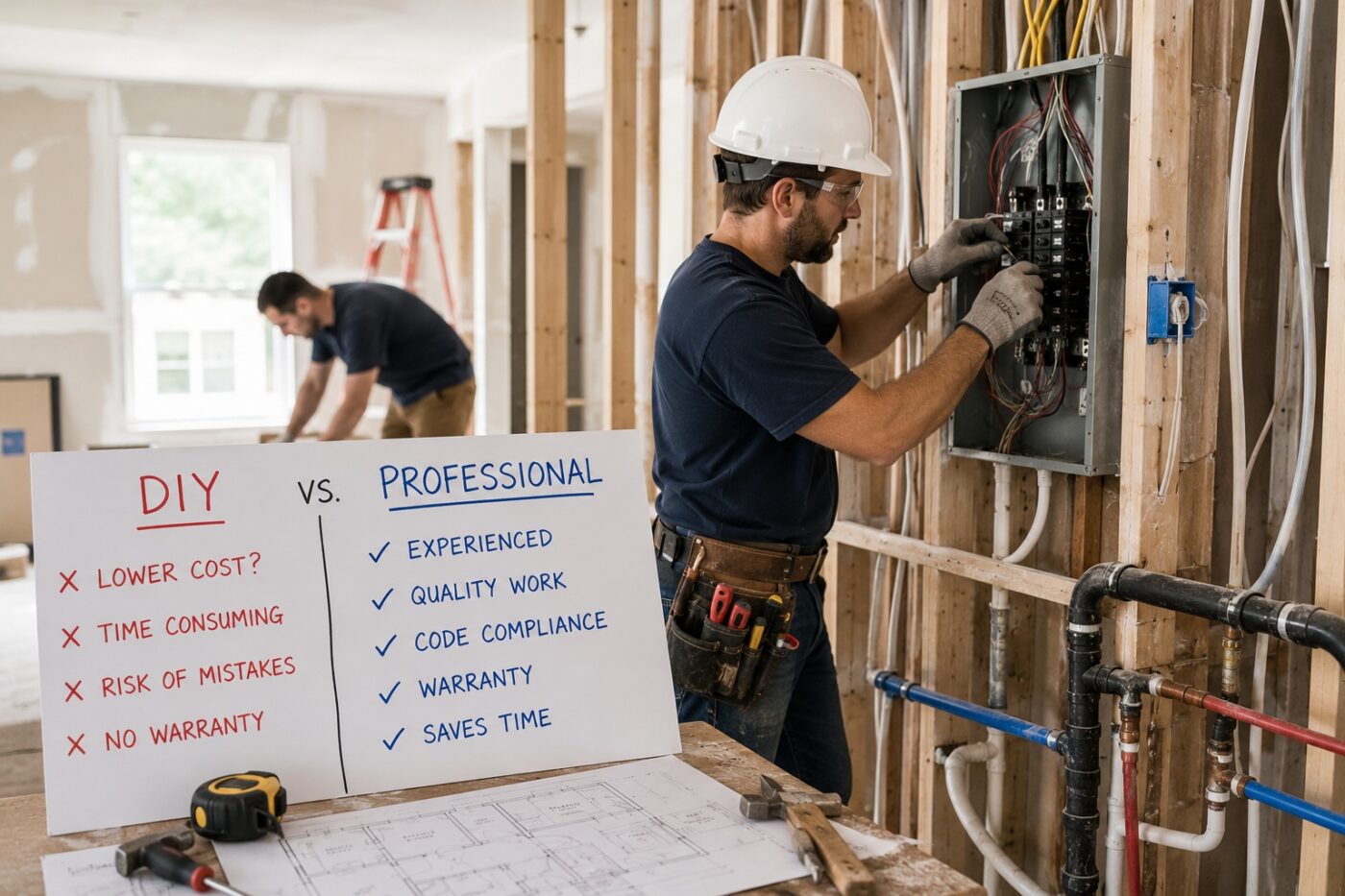
There is also a hidden financial side to DIY projects.
Homeowners frequently underestimate:
- tool costs;
- wasted materials;
- correction work;
- failed inspections;
- additional deliveries;
- repair of installation mistakes.
In some cases, hiring professionals initially costs less than repairing failed DIY work later.
That said, many successful renovations use a hybrid approach.
Homeowners may handle demolition, painting, furniture assembly, or finishing details themselves while hiring professionals for technical systems and specialized installations.
This often creates the best balance between cost savings and long-term quality.
Before choosing DIY, homeowners should honestly ask:
- Do I fully understand this process?
- Is this safe?
- Will mistakes become expensive later?
- Does this require permits or inspections?
- Can I realistically complete this properly?
Being realistic about skill level is not a weakness during renovation planning. It is usually what prevents expensive problems later.
Conclusion
A successful renovation rarely begins with demolition.
It begins with preparation.
The homeowners who experience the smoothest renovations are usually not the ones with the biggest budgets — they are the ones who planned properly before construction started.
They created realistic budgets. They researched contractors carefully. They inspected hidden problems before cosmetic work began. They prepared for delays, organized materials early, and understood that renovations almost never follow a perfect schedule.
Most importantly, they treated renovation like a long-term project instead of a quick cosmetic upgrade.
That preparation changes everything.
Without a checklist, renovations often become reactive. Homeowners make rushed decisions, budgets increase unexpectedly, contractors become difficult to coordinate, and small problems grow into major delays.
With a proper renovation plan, the process becomes far more manageable.
There will still be dust, noise, delivery delays, scheduling changes, and occasional surprises — that is normal in remodeling projects. But preparation dramatically reduces the stress and financial damage those problems can cause.
A renovation checklist is not just about organization. It is about protecting your time, money, home, and long-term investment.
Before starting any remodeling project, review your plan carefully, confirm every major decision, and make sure the renovation is fully organized before the first day of construction begins.
That preparation will almost always save more money than any shortcut taken later.