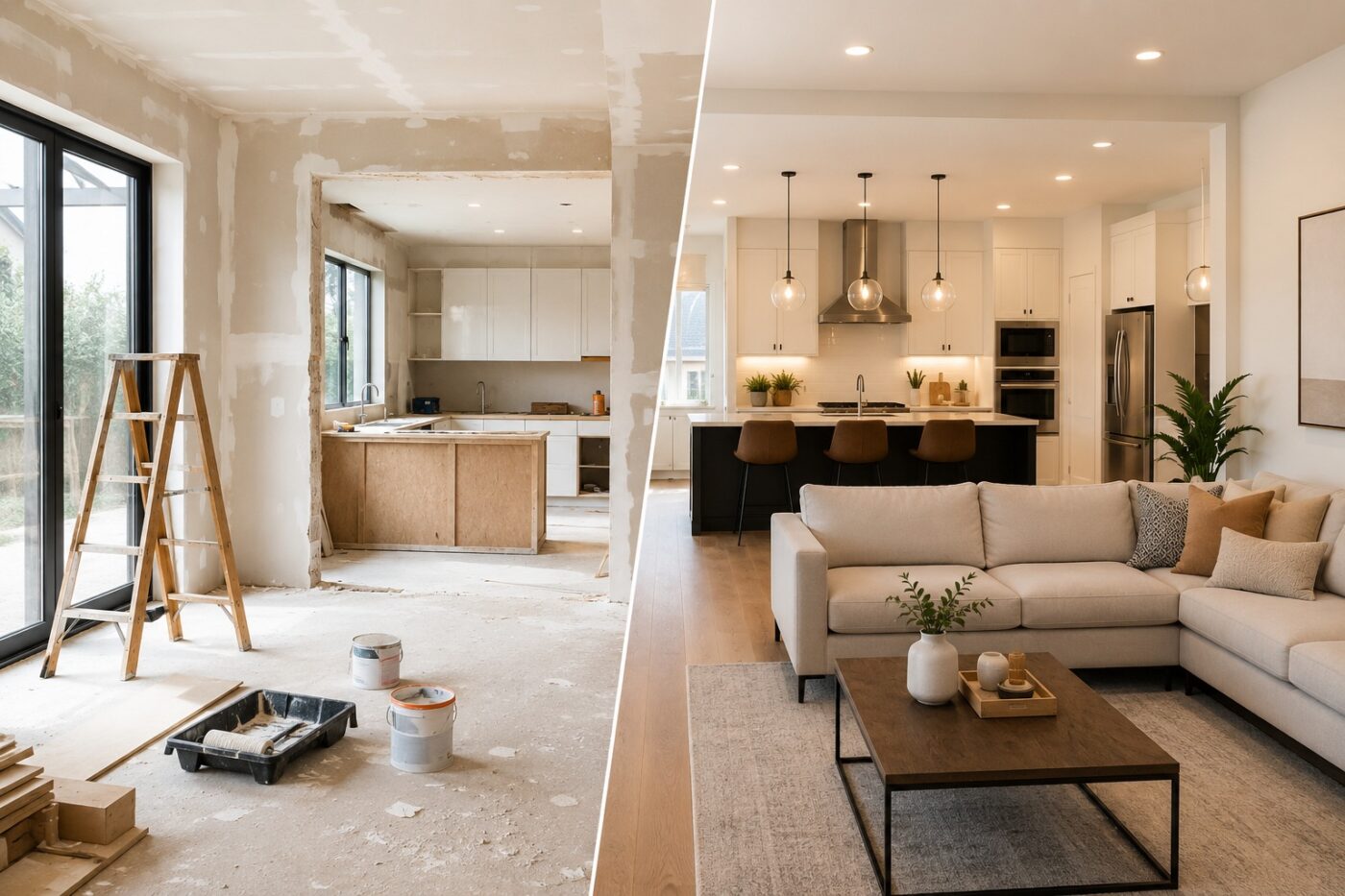
Home renovations can be exciting, but even a carefully planned project can cost more than expected. Homeowners usually focus on visible improvements such as new flooring, kitchen cabinets, bathroom fixtures, and fresh paint. However, the final renovation bill often includes expenses that were never part of the original budget.
Hidden renovation costs can appear at almost every stage of a project. Some emerge when contractors open walls and discover damaged plumbing, outdated electrical systems, or moisture problems. Others come from permits, material deliveries, additional labor, temporary accommodation, and unexpected changes to the renovation plan.
These expenses are not always caused by poor planning. Certain problems are difficult to identify until construction begins. Nevertheless, many budget overruns can be reduced by understanding potential risks, reviewing contractor estimates carefully, and setting aside money for unexpected situations.
The challenge is that smaller expenses can be just as damaging to a renovation budget as one major repair. Additional deliveries, equipment rentals, waste disposal, and contractor visits may appear manageable individually. Together, however, they can consume money originally reserved for essential improvements.
A realistic renovation budget should therefore cover more than construction materials and installation work. It should reflect the total cost of completing the project, including preparation, approvals, temporary living arrangements, and the final expenses that arise after contractors leave.
This guide explains the hidden renovation costs homeowners frequently overlook, how these expenses affect different types of projects, and what you can do to keep your renovation financially manageable.
1. Why Renovation Budgets Often Fail
A renovation budget usually fails when the initial estimate does not reflect the actual scope of work. Homeowners may receive a reasonable price for a kitchen remodel or flooring replacement without realizing that several supporting tasks are excluded.
The difference between an initial estimate and the final cost becomes particularly important when the project involves older buildings, concealed utility systems, or substantial changes to the layout.
1.1 Unrealistic Initial Estimates
Many renovation budgets are based on the cost of visible improvements rather than the full construction process. A homeowner might calculate the price of kitchen cabinets, countertops, flooring, and installation while overlooking demolition, wall preparation, waste removal, electrical modifications, and final cleaning.
This approach creates a budget that works only if the property is in good condition and everything proceeds exactly as planned.
For example, replacing flooring may seem straightforward until the old surface is removed and the contractor discovers an uneven or moisture-damaged subfloor. The original flooring estimate may cover the new material and installation but not the additional preparation required underneath.
A more reliable estimate separates the renovation into individual tasks and includes the supporting work needed to complete each one.
Homeowners should also distinguish between essential improvements and optional upgrades. When the budget becomes limited, decorative changes can often be postponed, while necessary safety repairs cannot.
1.2 Estimates, Quotes, and Final Costs
Not all contractor pricing documents provide the same level of certainty.
An estimate is generally an approximation based on the information available when it is prepared. A quote may provide more specific pricing for a defined scope of work, but whether that price is binding depends on the contract terms and applicable law.
The final amount payable may therefore differ from the original figure if the agreed scope changes, concealed defects are discovered, or the contract allows certain price adjustments.
Before accepting an offer, homeowners should understand what the quoted price includes, which items are provisional, and how unexpected work will be priced.
Particular attention should be paid to allowances for materials and fixtures. If a contractor includes a limited allowance for bathroom tiles or kitchen appliances, choosing more expensive products may increase the final cost even when the installation price remains unchanged.
Clear written agreements help distinguish legitimate additional work from misunderstandings about the original scope.
1.3 Why Older Homes Require Extra Financial Planning
Older homes can present greater uncertainty because their construction methods, materials, and utility systems may differ significantly from modern standards.
A house may contain wiring that is unsuitable for planned electrical loads, plumbing that has deteriorated over time, or previous repairs that were completed incorrectly. Problems involving moisture, insulation, structural supports, and ventilation may also remain concealed until renovation work begins.
However, age alone does not determine the condition of a building. A well-maintained older home may require fewer repairs than a newer property with poor construction quality or unresolved water damage.
The most effective approach is to assess the actual condition of the property before committing to an extensive renovation.
Where significant uncertainty remains, the financial plan should include enough flexibility to address problems that cannot be confirmed in advance.

2. Structural Problems You May Discover
Some of the most expensive renovation surprises are hidden behind walls, beneath floors, or inside ceilings. These problems may remain unnoticed for years because they do not initially affect the visible appearance of a room.
Once construction exposes the affected areas, additional repairs may become necessary before the original renovation can continue.
2.1 Hidden Water Damage
Water damage is a common source of unexpected repair work. Slow leaks from plumbing connections, damaged roofs, poorly sealed windows, or inadequate bathroom waterproofing can affect building materials without producing obvious warning signs.
When walls or flooring are removed, contractors may discover deteriorated timber, damaged insulation, moisture-affected subfloors, or mold growth.
Repairing the visible damage is only part of the solution. The source of moisture must also be identified and corrected to prevent the problem from returning.
Depending on the extent of the damage, work may involve drying the affected area, replacing compromised materials, repairing plumbing or waterproofing, and restoring surrounding finishes.
These repairs can affect the renovation schedule because new materials should not be installed over unresolved moisture problems.
Homeowners can reduce uncertainty by investigating water stains, persistent odors, damp areas, and previous leaks before construction begins.
2.2 Electrical System Upgrades
Electrical expenses are frequently underestimated because much of the system is concealed inside walls and ceilings.
A renovation may reveal damaged insulation on cables, unsuitable connections, insufficient circuits, missing protective devices, or electrical work that does not meet applicable safety requirements.
Modern appliances and equipment can also increase the electrical demands of a property. A renovated kitchen with an induction cooktop, oven, dishwasher, and other appliances may require changes to circuits, protective devices, or distribution equipment.
However, renovating a room does not automatically mean that the entire electrical installation must be replaced. The extent of necessary upgrades depends on the existing system, planned equipment, local regulations, and findings from a qualified electrician.
Electrical modifications can also create secondary expenses. Installing new cables may require opening finished surfaces and subsequently repairing plaster, drywall, or paintwork.
A professional electrical assessment before major remodeling can identify many of these requirements early enough to include them in the budget.
2.3 Plumbing Surprises
Plumbing problems often become visible only after old fixtures, cabinets, or wall finishes have been removed.
A bathroom renovation may expose corroded pipes, deteriorated connections, inadequate drainage, or leaks that previously remained hidden. In kitchens, moving a sink or adding appliances can require modifications to water supply and drainage lines.
Older plumbing systems may also be incompatible with certain planned installations without additional work.
The cost of resolving these issues depends on accessibility, the extent of replacement, the materials involved, and whether surrounding construction must be opened or rebuilt.
Replacing a short, accessible section of pipe is very different from repairing drainage beneath a concrete floor.
Before starting a bathroom or kitchen renovation, homeowners should ask whether the existing plumbing can support the proposed layout and fixtures.
2.4 Foundation and Structural Repairs
Structural problems deserve special attention because they can affect the safety and long-term performance of a building.
Uneven floors, cracks, movement around openings, or damaged structural members may indicate problems that require further assessment. However, not every crack or uneven surface represents a serious structural defect.
A qualified professional should determine the cause before major repairs are planned.
Depending on the findings, necessary work may involve reinforcing floor joists, repairing damaged beams, improving drainage around the foundation, or addressing localized structural movement.
Removing a load-bearing wall or changing structural openings may also require engineering calculations and a specifically designed support system.
These expenses should be considered separately from ordinary cosmetic remodeling because structural work can require specialized design, materials, labor, and inspections.
2.5 Mold, Pests, and Hazardous Materials
Renovation work can expose mold, insect damage, rodent activity, or hazardous building materials that were not visible during the initial inspection.
Mold problems generally require correcting the underlying moisture source and safely addressing contaminated materials. The appropriate cleanup method depends on the extent and nature of the contamination; not every small affected area requires extensive professional remediation.
Pest damage may require both treatment and repairs to materials that have been weakened or destroyed.
Older buildings can also contain asbestos-containing materials or lead-based paint, depending on the location and construction period.
Disturbing hazardous materials without appropriate precautions can create health risks and additional cleanup costs. Where such materials are suspected, homeowners should arrange suitable assessment before demolition or sanding.
Local regulations may require trained or licensed professionals to carry out certain types of removal.
Identifying these risks before renovation begins can help prevent unsafe work, unexpected interruptions, and costly remediation.
3. Permit, Inspection, and Legal Costs
Administrative and legal requirements are easy to overlook because they do not produce a visible improvement in the home.
However, renovation projects may involve permit fees, professional documentation, inspections, insurance adjustments, and approval procedures that affect both the budget and construction schedule.
Requirements differ between countries, regions, municipalities, and property types. Homeowners should therefore confirm the rules applicable to their particular project rather than relying on general assumptions.
3.1 Building Permits and Approvals
Major renovation work may require permission or approval from local authorities, particularly when it involves structural modifications, changes to building systems, or alterations to the exterior.
The applicable process can vary substantially.
In some jurisdictions, planning permission and building regulations approval are separate requirements. In others, a different system of construction permits, notifications, or professional certifications applies.
Simple decorative improvements often involve fewer administrative requirements than structural changes or major utility modifications, although exceptions may apply.
Permit-related expenses can include application charges, document preparation, review fees, and additional professional services needed to support an application.
Starting regulated work without the necessary authorization can create problems during inspections, property transactions, or future renovations.
Checking requirements before construction begins helps avoid delays and unnecessary corrective work.
3.2 Inspection and Compliance Expenses
Certain renovation projects require inspections or compliance verification at specific stages.
For example, electrical, plumbing, structural, or insulation work may need to be reviewed before it is concealed behind finished surfaces.
Some inspections are included in permit fees, while others may involve additional charges. The arrangement depends on local procedures and the professionals involved.
If an inspection identifies a problem, corrective work may be required before the project can continue.
This does not mean that every failed inspection leads to extensive rebuilding. The financial impact depends on the nature of the issue and how early it is discovered.
A properly organized renovation schedule should account for necessary inspections before subsequent work begins.
3.3 Architectural and Engineering Fees
Professional design services are another expense that homeowners may overlook when comparing construction quotes.
A renovation involving structural changes, a complex layout, or significant modifications to building systems may benefit from architectural drawings, engineering assessments, or detailed technical plans.
These services can involve separate fees for site measurements, design development, structural calculations, technical documentation, and revisions.
Some contractors include limited design work in their packages, while others expect the homeowner to arrange and pay for professional plans independently.
Although design services increase upfront expenditure, accurate documentation can help identify conflicts, improve contractor coordination, and reduce costly changes during construction.
3.4 Community Rules and Property Restrictions
Some properties are subject to additional restrictions imposed by residential associations, building management organizations, conservation authorities, or local regulations.
In the United States, homeowners associations (HOAs) may regulate certain exterior changes and construction activities. Similar approval arrangements may apply to apartments, managed residential developments, or protected buildings in other countries.
Requirements may concern working hours, shared access, exterior appearance, waste containers, and modifications affecting neighboring properties.
Homeowners should check these restrictions before ordering materials or scheduling contractors because approval delays can affect the project.
3.5 Insurance and Liability Costs
Major renovations may change the risks covered by an existing home insurance policy.
Structural alterations, extended periods of vacancy, valuable materials stored onsite, or substantial construction work can create circumstances that require notification to the insurer.
Depending on the project and policy, additional coverage or temporary adjustments may be appropriate.
Homeowners should also confirm that contractors hold the insurance required for their work.
Insurance arrangements vary by country and provider, so the safest approach is to discuss the renovation with the insurer before construction begins rather than assuming existing coverage remains unchanged.
4. Hidden Material and Supply Expenses
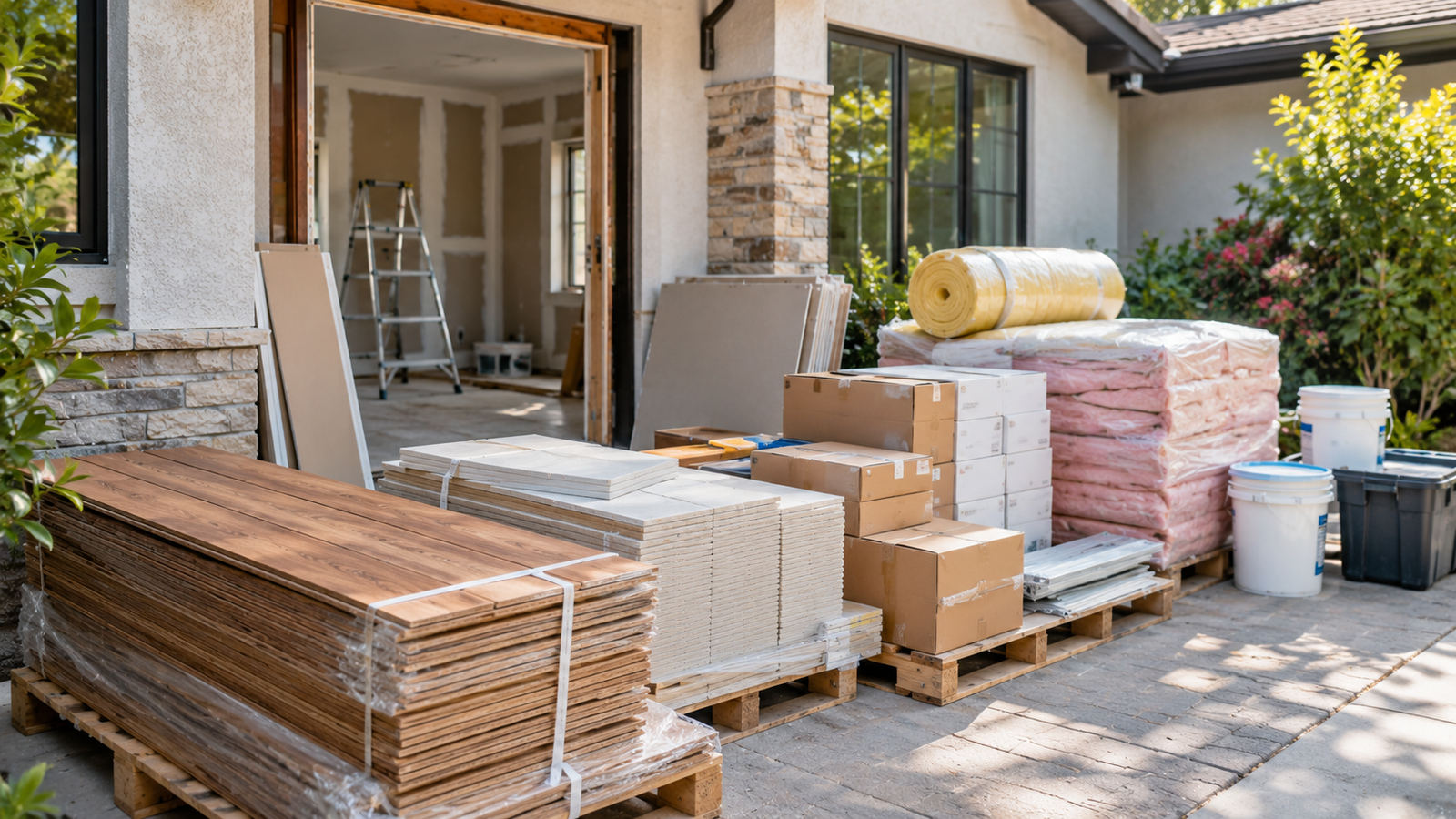
The price displayed for a renovation material rarely represents its complete installed cost.
Transportation, handling, preparation, wastage, taxes, and equipment requirements can affect the total amount paid.
These expenses are particularly important when a project involves large quantities of materials or products ordered from several suppliers.
4.1 Delivery and Handling Charges
Heavy and oversized products may require specialized transportation, mechanical unloading, or additional workers.
Cabinets, stone countertops, flooring, large appliances, and construction materials can generate delivery charges that are not included in their advertised prices.
Difficult access can increase these costs. A property with limited vehicle access, narrow staircases, or restrictions on loading may require additional handling.
Repeated orders also deserve attention. Ordering a small quantity of additional flooring or tiles later in the project may result in another delivery charge.
Homeowners can reduce unnecessary transportation expenses by confirming quantities early and coordinating deliveries where practical.
However, storing all materials onsite is not always the best solution. Products must be protected from moisture, damage, theft, and inappropriate storage conditions.
4.2 Material Waste and Ordering Allowances
Most renovation materials cannot be ordered using the exact finished surface area alone.
Tiles and flooring often require additional quantities for cutting, layout patterns, breakage, and installation adjustments.
Paint consumption depends on surface condition, product coverage, the number of coats, and preparation requirements.
Other materials may need to be ordered in standard package sizes that exceed the precise calculated quantity.
The appropriate waste allowance varies by product and installation method. Complex patterns and irregular room shapes may require more material than simple layouts.
Too little material can cause delays and additional deliveries, while excessive ordering creates unnecessary expense.
The most reliable approach is to calculate quantities from accurate measurements and confirm suitable allowances with the installer or supplier.
4.3 Taxes, Import Duties, and Additional Charges
Material prices may be displayed with or without applicable taxes, depending on the country and seller.
When comparing offers, homeowners should confirm whether sales tax, value-added tax (VAT), delivery fees, and other charges are included in the final price.
Imported products may involve customs duties, handling fees, or currency-related costs.
These additional expenses can be especially relevant for imported fixtures, custom furniture, specialist equipment, and materials purchased from overseas suppliers.
A product that initially appears less expensive may not remain the best option once all charges are included.
4.4 Price Changes and Product Availability
Prices may change between the planning stage and the actual purchase date.
Longer renovations are more exposed to this risk because materials are often ordered in phases.
Supply limitations can also affect the budget. If a selected product becomes unavailable, homeowners may need to choose an alternative, revise the design, or wait for delivery.
Not every shortage leads to a higher price, but delays can affect contractor scheduling and the use of temporary facilities.
Confirming product availability before work begins and ordering critical items at the appropriate time can help reduce disruption.
4.5 Tool and Equipment Rentals
Specialized equipment may be needed for demolition, surface preparation, construction access, or drying work.
Depending on the project, this could include scaffolding, floor sanders, concrete cutting equipment, lifts, dehumidifiers, or temporary generators.
Rental costs may increase when equipment is needed longer than planned.
Transport, fuel, deposits, and other rental conditions should also be reviewed.
Before approving a separate equipment charge, homeowners should establish whether the relevant tools are already included in the contractor's agreed price.
5. Labor Costs That Add Up Quickly
Labor costs depend not only on the amount of work completed but also on access conditions, project complexity, scheduling, and how well different trades are coordinated.
A renovation can become more expensive when tasks that were not included in the original scope must be completed before planned work can continue.
5.1 Demolition and Waste Removal
Removing existing materials is an essential part of many renovations, but it may be priced separately from installation.
Old flooring, plaster, cabinets, fixtures, and other building materials can require substantial labor to remove safely.
The difficulty depends on construction methods, material condition, and accessibility.
Demolition also produces waste that must be collected, transported, and disposed of according to local requirements.
Waste containers, collection services, disposal charges, and handling costs should be considered when reviewing contractor offers.
Some agreements include these services, while others leave responsibility with the homeowner.
Confirming the arrangement beforehand helps avoid paying separately for work that was assumed to be included.
5.2 Unexpected Repairs and Additional Work
Contractors may encounter issues that cannot reasonably be assessed until existing finishes are removed.
For example, a damaged subfloor may need repair before new flooring can be installed. Similarly, an uneven wall may require additional preparation before cabinets or tiles can be fitted accurately.
These tasks can increase labor time and material consumption.
However, not every unexpected issue should automatically result in an unapproved additional charge.
Homeowners should request a written description of the problem, the proposed solution, its cost, and any effect on the schedule before authorizing non-emergency work.
Photographs and clear documentation are particularly useful when concealed defects are discovered.
5.3 Specialized Contractors
Certain tasks require expertise beyond ordinary installation work.
Electrical modifications, complex plumbing, waterproofing, structural repairs, heating systems, and hazardous-material work may require suitably qualified professionals.
The number of contractors involved does not necessarily make a project more expensive by itself. The important issue is whether their responsibilities, prices, and schedules are clearly defined.
Poor coordination can lead to repeated visits or situations where one trade cannot proceed because another has not completed prerequisite work.
A detailed work sequence can reduce avoidable disruption.
5.4 The Financial Impact of Project Delays
A longer renovation does not automatically mean that every contractor will charge more.
The financial consequences depend on the contract, the cause of the delay, and whether additional work or resources are required.
However, delays can increase certain costs, particularly equipment rentals, temporary accommodation, storage, and repeated contractor visits.
A late delivery of custom cabinets, for example, may prevent subsequent installation work from taking place as scheduled.
When planning a renovation, homeowners should identify critical activities that depend on the completion of earlier tasks.
Building reasonable flexibility into the schedule helps reduce the impact of disruptions without assuming that every delay can be prevented.

6. Temporary Living and Lifestyle Costs
Renovation expenses extend beyond the construction site when everyday household activities are disrupted.
Projects involving kitchens, bathrooms, electrical systems, or extensive interior work may affect how homeowners live, cook, work, and store belongings.
These indirect costs can become important when construction lasts several weeks or months.
6.1 Temporary Accommodation
Some renovations allow homeowners to remain comfortably in the property, while others make temporary relocation necessary.
Major structural work, extensive demolition, unsafe conditions, or prolonged interruptions to essential utilities may prevent normal occupancy.
Temporary accommodation could involve a hotel, a short-term rental, or another suitable living arrangement.
The budget should reflect the likely duration of the stay, transportation needs, and any additional household expenses associated with relocation.
Families with pets, children, or home-working requirements may need accommodation with specific facilities.
Before deciding to remain onsite, homeowners should discuss safety, access, dust control, and essential services with the contractor.
6.2 Furniture Storage and Protection
Construction areas usually need to be cleared before work begins.
Furniture and personal belongings may be moved into another room, stored in a garage, or placed in rented storage.
The choice depends on available space, the expected renovation duration, and the sensitivity of the items.
Even when external storage is unnecessary, protective coverings, packing materials, and moving services can add to the overall cost.
Dust-producing work may also require temporary barriers and additional protection for nearby rooms.
Planning storage before demolition helps reduce damage and unnecessary interruptions during construction.
6.3 Additional Food and Household Expenses
A kitchen renovation can increase everyday spending when normal cooking facilities are unavailable.
Meals purchased outside the home, food delivery, and temporary cooking arrangements may cost more than the household's normal routine.
Limited refrigeration or washing facilities can also create inconvenience and additional spending.
Rather than treating these expenses as unavoidable, homeowners can estimate how long the kitchen will be unusable and prepare a temporary arrangement suited to their needs.
A practical temporary kitchen may reduce costs, provided it can be used safely and without interfering with construction.
6.4 Utilities and Temporary Connections
Construction work can affect electricity, water, heating, and other utility expenses.
Power tools, temporary lighting, drying equipment, and climate-control systems may increase consumption.
Certain projects may also require temporary connections, utility disconnection and reconnection services, or modifications to existing infrastructure.
Charges depend on the service provider, property conditions, and scope of work.
Homeowners should confirm which utility-related expenses are included in the contractor agreement and which remain their responsibility.
This is particularly important when construction equipment will operate for extended periods.
7. Design Changes and Upgrade Temptations
Not every renovation budget overrun results from an unexpected defect.
Some additional spending comes from decisions made after construction has already started.
Changing the original design can be worthwhile when it improves functionality or addresses a genuine problem. However, homeowners should understand the total financial impact before approving modifications.
7.1 Mid-Project Design Changes
Changing a room layout after work begins may affect several completed or scheduled tasks.
Moving a kitchen sink, for example, can require modifications to plumbing, cabinets, countertops, and surrounding finishes.
The additional expense is not limited to the price of the new arrangement. It may also include removing completed work, purchasing replacement materials, and coordinating another installation visit.
This is why important layout decisions should be finalized before construction wherever possible.
When changes are necessary, homeowners should request a written change order describing the revised work, additional cost, and effect on completion dates.
A clear approval process helps prevent misunderstandings and keeps the budget record accurate.
7.2 Upgrading Finishes Beyond the Budget
Premium materials can improve the appearance and performance of a renovated space, but upgrades should be evaluated against the original priorities.
Choosing natural stone instead of a standard countertop material, for example, may affect not only the purchase price but also fabrication, handling, and installation requirements.
Similarly, selecting a different flooring type may change the necessary subfloor preparation.
A useful decision-making approach is to compare the total installed cost of the upgrade with the benefit it provides.
Homeowners should also consider whether spending more in one area will require reducing expenditure elsewhere.
Optional improvements should not consume money reserved for unresolved safety or structural risks.
7.3 Custom Products and Long Lead Times
Custom cabinets, special-size windows, fitted furniture, and made-to-order fixtures can require more preparation than standard products.
Accurate measurements are essential because errors may lead to expensive modifications or replacement orders.
Manufacturing and delivery schedules should also be coordinated with the construction sequence.
Ordering too late can delay installation, while ordering before dimensions are finalized may increase the risk of mistakes.
Homeowners should review payment terms, production schedules, cancellation conditions, and replacement arrangements before committing to expensive custom products.

8. Post-Renovation Costs People Ignore
A renovation may be physically complete before all related expenses have been paid.
After construction ends, homeowners may still need to arrange final cleaning, replace damaged items, restore exterior areas, and account for changes to ongoing property expenses.
Including these items during planning prevents the final stage from becoming an unexpected financial burden.
8.1 Post-Construction Cleaning
Renovation work can leave dust and residue on surfaces, inside cabinets, around windows, and in adjacent rooms.
The amount of cleaning required depends on the type of work and how effectively dust was controlled during construction.
Professional cleaning may be useful after extensive demolition, drywall sanding, or major interior remodeling.
However, specialized ventilation duct cleaning is not automatically necessary after every renovation. The system should be assessed, and cleaning considered when there is evidence of significant contamination or another specific reason.
Homeowners should establish whether final cleaning is included in the contractor's responsibilities or must be arranged separately.
8.2 Furniture, Window Treatments, and Accessories
A completed renovation may require additional items before the space can be used as intended.
For example, changing window dimensions may require new blinds or curtains. Reconfiguring a room can make existing furniture unsuitable for the new layout.
Lighting fixtures, mirrors, storage accessories, and other finishing items may also be excluded from the original construction estimate.
These expenses are not always essential, so they should be separated from necessary completion work.
Homeowners can control spending by identifying what must be purchased immediately and what can be added gradually.
8.3 Exterior Repairs and Landscaping
Construction activity can affect areas outside the immediate renovation zone.
Material deliveries, waste containers, scaffolding, and contractor vehicles may damage lawns, paving, fencing, or landscaping.
Exterior repair costs are particularly relevant to projects involving roofs, windows, foundations, or large building extensions.
Before work begins, homeowners should document the condition of surrounding areas and discuss how they will be protected.
Contract terms should also clarify responsibility for damage and restoration.
This helps distinguish normal construction-related disturbance from damage that should be repaired by the contractor.
8.4 Property Taxes and Insurance After Renovation
Some improvements can affect ongoing ownership expenses after the project is completed.
Depending on local law, substantial additions or major reconstruction may influence a property's assessed value and future tax obligations.
However, ordinary repairs and cosmetic improvements do not automatically trigger higher property taxes in every jurisdiction.
The rules vary considerably, so homeowners should consult the relevant local authority when planning substantial changes.
Insurance costs may also change if renovations significantly alter the replacement value, use, or risk characteristics of the property.
Any potential long-term increases should be considered separately from the one-time construction budget.

9. How to Prepare for Hidden Renovation Costs
The most effective way to manage hidden renovation expenses is to combine a detailed initial budget with a clear process for reviewing changes.
No amount of planning can eliminate every unknown. However, homeowners can reduce uncertainty by assessing the property, documenting the agreed scope of work, and monitoring actual spending throughout construction.
9.1 Build a Renovation Contingency Fund
A contingency fund is money reserved for legitimate unexpected expenses that arise during renovation.
A commonly suggested starting point is approximately 10–20% of the planned project cost. This is a budgeting guideline rather than a guarantee that the reserve will be sufficient.
The appropriate amount depends on the building's condition, renovation complexity, inspection findings, and the amount of work that remains concealed.
A relatively straightforward cosmetic renovation may involve less uncertainty than a major renovation of an older property with unknown structural or utility conditions.
The contingency should remain separate from the money allocated to planned finishes and optional improvements.
It should primarily be available for unexpected but necessary work, not upgrades chosen simply because additional funds are accessible.
Example: Planning a $40,000 Renovation
Consider a hypothetical renovation with a planned budget of $40,000.
The example below illustrates how supporting expenses can form part of the original budget before a contingency reserve is added.
| Budget category | Planned cost |
|---|---|
| Construction labor and materials | $35,000 |
| Permits and approvals | $1,000 |
| Deliveries and waste removal | $1,500 |
| Temporary accommodation and related costs | $2,500 |
| Total planned expenses | $40,000 |
| Contingency reserve (15%) | $6,000 |
| Total financial allowance | $46,000 |
These figures are illustrative, not current market estimates for any particular country or renovation type. Actual costs depend on location, project scope, and property condition.
In this example, the homeowner plans to spend $40,000 but allows for a total financial requirement of up to $46,000 if the contingency becomes necessary.
The additional $6,000 is not an expense that must be incurred. If the project finishes without using the entire reserve, the unused amount remains available to the homeowner.
This distinction is important: a contingency increases financial preparedness without automatically increasing the project's planned scope.
9.2 Get Detailed Contractor Quotes
A detailed contractor quote should make it possible to understand what is being purchased.
Instead of accepting a single total price without explanation, homeowners should request enough detail to identify the scope of work, major materials, labor responsibilities, and excluded items.
The agreement should also address payment terms, project scheduling, change orders, and procedures for dealing with concealed defects.
When comparing contractors, price alone should not determine the decision.
Two offers may look similar while covering very different responsibilities. One may include demolition and disposal, while another prices those tasks separately.
The most useful comparison evaluates the same scope of work using consistent assumptions.
Homeowners should clarify uncertainties before signing rather than relying on verbal expectations.
9.3 Inspect the Home Before Renovation
A suitable pre-renovation assessment can identify problems that would otherwise affect the budget later.
The level of inspection should reflect the planned work and the condition of the property.
A relatively minor decorative project may require only a limited assessment, while extensive remodeling may justify specialist inspections of electrical systems, plumbing, moisture, or structural elements.
Moisture meters and thermal imaging can support investigations, but their findings must be interpreted correctly. Thermal anomalies alone do not prove that a leak exists.
Where symptoms suggest serious defects, qualified professionals should investigate further.
The purpose of inspection is not necessarily to eliminate every possible surprise. It is to identify significant risks early enough to make informed decisions about the project scope and available budget.
9.4 Prioritize Essential Repairs First
When funds are limited, necessary repairs should generally take priority over decorative improvements.
Structural stability, water damage, electrical safety, and essential plumbing should be assessed before expensive finishes are installed over affected areas.
The exact sequence depends on the project. Some tasks must be coordinated rather than completed independently, and certain systems should be installed before walls or floors are closed.
A logical renovation plan reduces the likelihood of reopening finished surfaces to correct underlying problems.
Optional improvements can be scheduled later if the financial position changes.
This approach allows homeowners to protect the essential functions of the property without committing prematurely to every desired upgrade.
9.5 Monitor Estimated and Actual Costs
Creating a budget is only the first stage of financial control.
Homeowners should update their records as invoices are received, materials are purchased, and additional work is approved.
A simple tracking system can show whether spending remains consistent with the original plan.
| Cost item | Estimated cost | Actual cost | Difference |
|---|---|---|---|
| Electrical work | $2,000 | $2,300 | +$300 |
| Plumbing | $3,000 | $2,900 | -$100 |
| Flooring | $5,000 | $5,600 | +$600 |
| Waste removal | $1,000 | $1,200 | +$200 |
| Total | $11,000 | $12,000 | +$1,000 |
This is a hypothetical tracking example. Positive differences represent spending above the original estimate.
The homeowner in this example has spent $1,000 more than planned across the selected categories.
Instead of discovering the overrun at the end of the project, regular tracking makes it possible to identify the change while other spending decisions can still be adjusted.
The record should distinguish approved changes, genuine unexpected repairs, and discretionary upgrades.
9.6 Account for Financing Costs
Homeowners who finance renovations should include the cost of borrowing in their calculations.
Loan interest, arrangement fees, valuation charges, and other financing expenses may affect the total amount paid over time.
The exact charges depend on the loan product and local financial regulations.
If construction is delayed or additional borrowing becomes necessary, the financial consequences should be reviewed before increasing the project scope.
A renovation that appears affordable based only on contractor invoices may have a significantly different total cost once financing is included.
10. Renovation Cost Checklist
Before starting construction, homeowners should review the budget against the full renovation process rather than checking only the cost of visible improvements.
The following checklist summarizes the areas most likely to require additional planning.
| Category | What to verify before renovation |
|---|---|
| Budget | The planned total includes supporting expenses and a separate contingency reserve. |
| Contractor agreement | Scope, exclusions, payment terms, and procedures for additional work are clearly documented. |
| Property condition | Relevant structural, electrical, plumbing, and moisture risks have been assessed. |
| Permits and design | Required approvals, professional drawings, and inspections have been considered. |
| Materials | Quantities, waste allowances, taxes, delivery charges, and availability have been checked. |
| Labor | Demolition, specialist work, preparation, and waste removal responsibilities are defined. |
| Schedule | Critical deliveries, inspections, and dependencies between trades are included in the plan. |
| Temporary living | Accommodation, storage, food, transport, and additional utility expenses have been considered. |
| Final completion | Cleaning, repairs, furniture requirements, and outstanding work are accounted for. |
| Long-term costs | Potential insurance, tax, maintenance, and financing implications have been reviewed. |
Review the Budget Before Construction Begins
A final budget review should answer three practical questions.
First, does the budget cover everything necessary to complete the agreed scope of work, including preparation and finishing tasks?
Second, are there unresolved conditions that could require additional spending once construction begins?
Third, can the homeowner manage a reasonable unexpected expense without compromising essential repairs or taking on unaffordable financial obligations?
If the answer to any of these questions is uncertain, the project may benefit from further inspection, a revised scope, or additional financial preparation.
A renovation budget should provide a realistic basis for decisions rather than simply describe the amount the homeowner hopes to spend.
Frequently Asked Questions About Hidden Renovation Costs
What Are the Most Common Hidden Renovation Costs?
Common overlooked expenses include repairs to concealed plumbing or electrical systems, subfloor preparation, permit and design fees, material delivery, waste disposal, temporary accommodation, and final cleaning.
The most significant risks depend on the condition of the property and the type of renovation. Older or more complex buildings may require additional investigation before the full cost can be estimated reliably.
How Much Extra Money Should You Budget for Unexpected Renovation Costs?
A contingency of approximately 10–20% of planned renovation expenses is a commonly used starting point.
However, this range is not suitable for every project. Renovations involving substantial structural work, unresolved moisture problems, or poorly documented building systems may require a larger reserve based on a specific risk assessment.
Can Renovation Costs Increase After Signing a Contractor Agreement?
Yes, but the circumstances depend on the contract and applicable law.
Additional costs may arise from homeowner-requested changes, approved work outside the original scope, or contractual provisions addressing unforeseen conditions.
Homeowners should review the agreement carefully and request written pricing before authorizing additional non-emergency work.
How Can Homeowners Reduce Unexpected Renovation Expenses?
The most effective measures are inspecting the property before major work, obtaining detailed contractor quotes, finalizing important design decisions early, and maintaining a contingency reserve.
Tracking actual expenditure and requiring written approval for changes also helps prevent small additional costs from accumulating unnoticed.
Are Hidden Renovation Costs More Common in Older Homes?
Older properties can have greater uncertainty because they may contain concealed deterioration, outdated systems, or undocumented previous modifications.
However, construction age alone does not determine renovation risk. Maintenance history, workmanship, moisture exposure, and inspection findings are more useful when assessing likely problems.
Should You Choose the Lowest Renovation Quote?
Not necessarily.
A lower quote may represent good value, but it may also exclude work covered by other contractors.
Homeowners should compare equivalent scopes, materials, responsibilities, schedules, and contract terms before deciding which offer provides the most appropriate combination of price and reliability.
Conclusion
Hidden renovation costs are an important part of realistic home improvement planning. They can arise from concealed building defects, administrative requirements, material purchases, additional labor, temporary living arrangements, and expenses that remain after construction is complete.
Not every renovation will experience these problems, and homeowners do not need to assume that every possible expense will occur. The goal is to understand where uncertainty exists and prepare for it without unnecessarily expanding the project.
A well-organized renovation budget includes all known expenses, identifies the most important risks, and provides a reasonable contingency for unexpected work.
Careful inspections, clear contractor agreements, thoughtful material choices, and regular cost tracking can help homeowners make better decisions throughout construction.
A successful renovation is not simply one that finishes at the lowest possible price. It is one that delivers the intended improvements safely, meets the homeowner's priorities, and remains financially manageable from planning through completion.