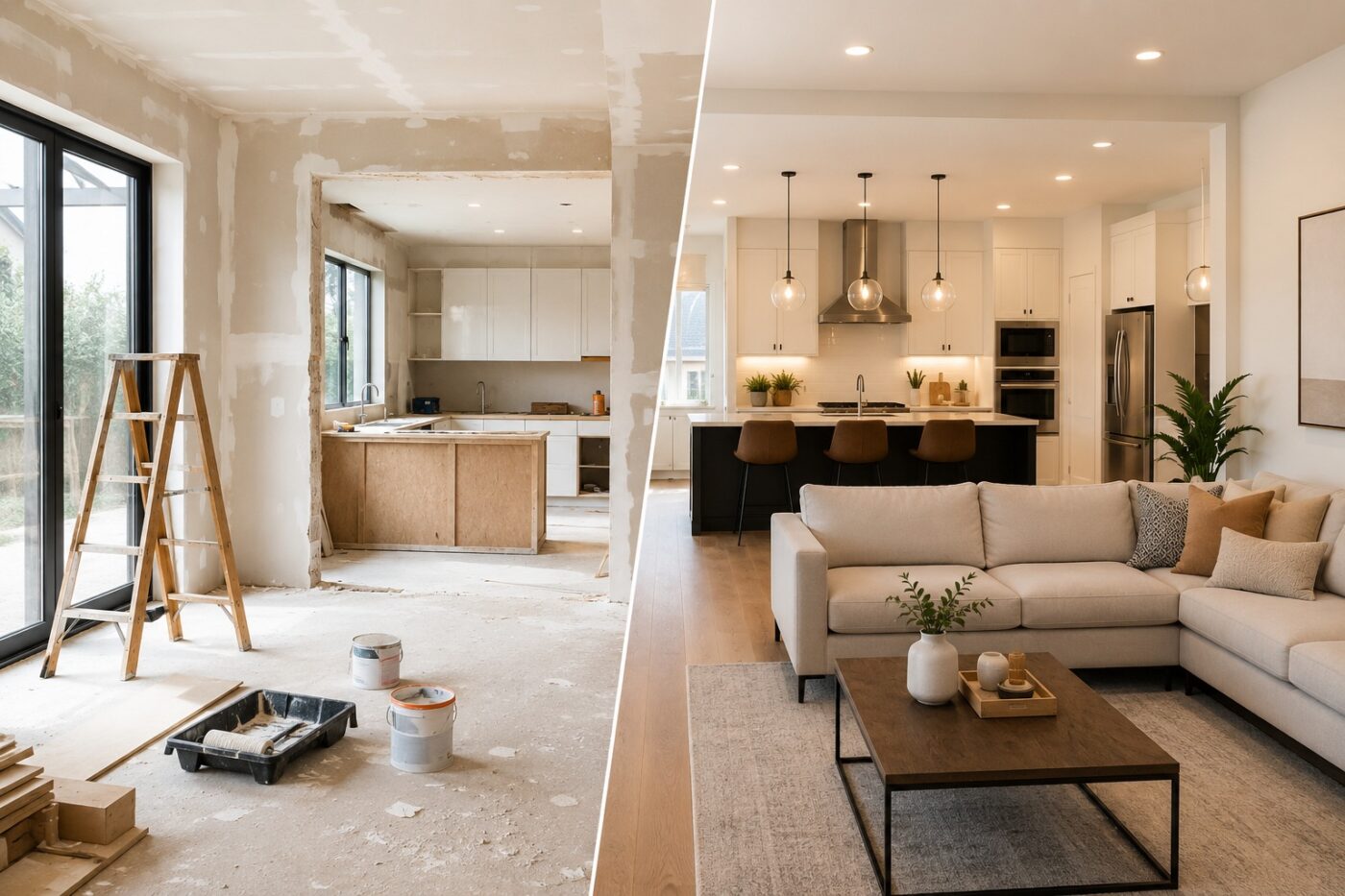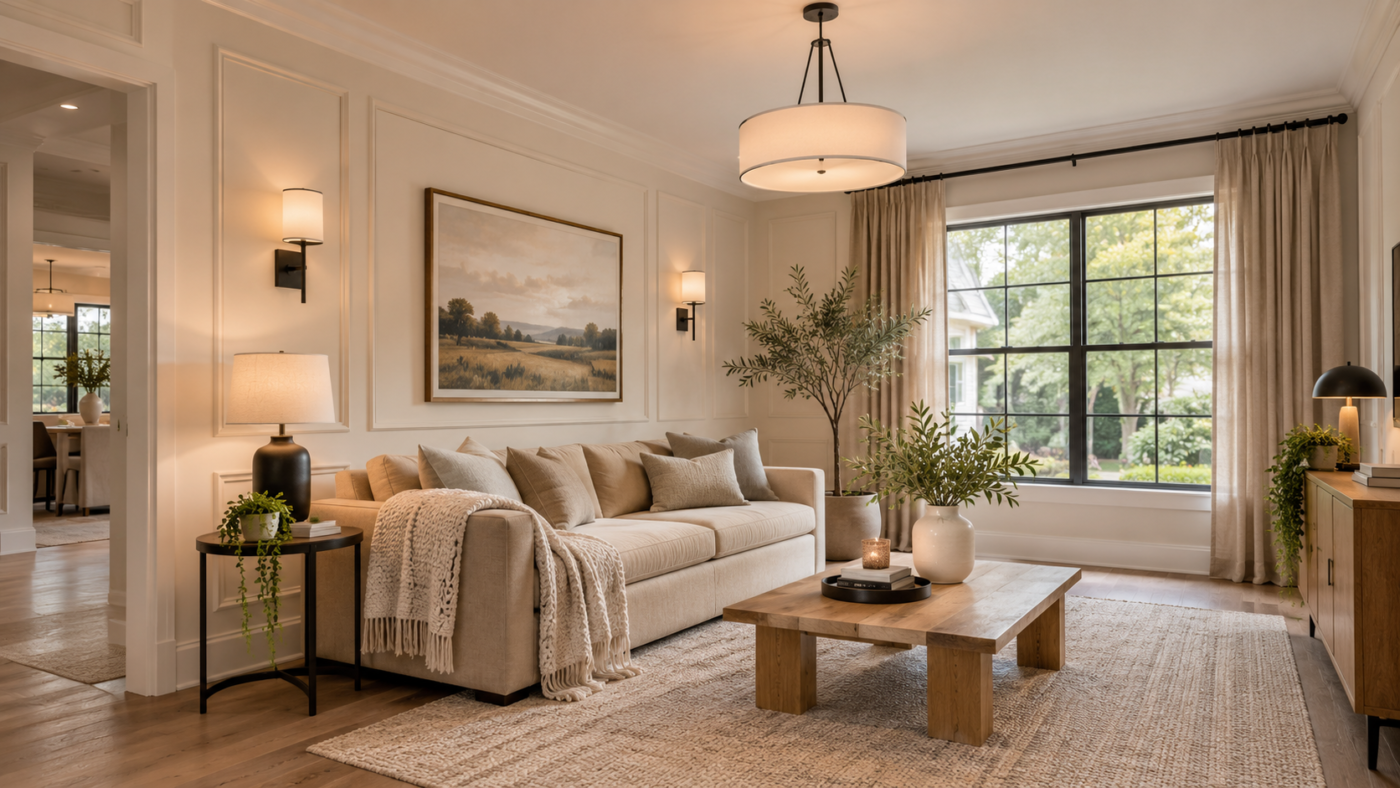
Introduction
A beautiful home doesn't have to come with an expensive renovation bill. Some of the most impressive interior transformations begin with surprisingly simple changes: a fresh coat of paint, better lighting, updated door hardware, or a few carefully chosen architectural details.
The difference between a home that looks expensive and one that feels unfinished often has less to do with the price of materials than with how everything fits together. Consistent colors, balanced proportions, clean finishes, and thoughtful lighting can make ordinary rooms feel sophisticated without replacing perfectly functional features.
The challenge is knowing where to spend, what to preserve, and which inexpensive improvements will actually make a difference. Not every budget upgrade is worthwhile, and choosing the cheapest option can sometimes lead to disappointing results.
This guide explores practical cheap renovation ideas that look expensive, from affordable cosmetic updates to smart material alternatives. You'll also learn how to prioritize improvements, refresh different rooms, avoid common mistakes, and create a polished interior while keeping renovation costs under control.
Best Cheap Renovation Ideas at a Glance
If you're looking for the biggest visual improvement without a major renovation, start with the features people notice first.
| Renovation Idea | Relative Cost | Visual Impact | Best Application |
|---|---|---|---|
| Repaint walls | Low–Medium | High | Outdated or worn interiors |
| Refresh interior doors | Low–Medium | High | Sound doors with dated finishes |
| Replace cabinet hardware | Low | Medium | Kitchens, bathrooms, wardrobes |
| Add decorative wall molding | Low–Medium | High | Plain walls and focal areas |
| Improve layered lighting | Low–Medium | High | Living rooms and bedrooms |
| Update curtains | Low–Medium | Medium–High | Rooms with poorly dressed windows |
| Refinish existing cabinets | Varies | High | Structurally sound cabinetry |
| Refresh baseboards and trim | Low–Medium | Medium–High | Rooms with worn architectural details |
These are relative comparisons rather than fixed price estimates. Costs depend on the size of the project, existing conditions, materials, and local labor rates.
The best starting point is usually the improvement that solves the most noticeable problem without requiring extensive construction.
1. What Makes a Cheap Renovation Look Expensive?
An expensive-looking interior is usually the result of several design decisions working together. Beautiful materials help, but visual consistency, good proportions, and careful finishing often have a greater influence on the overall impression.
Understanding these principles makes it easier to choose affordable improvements that complement one another instead of spending money on unrelated decorative upgrades.
1.1. The Importance of Visual Consistency
Walk into a thoughtfully designed home, and you'll often notice that its elements seem to belong together. Doors complement the walls, hardware finishes feel intentional, and architectural details follow a consistent style.
This sense of unity can be achieved without expensive products.
For example, basic interior doors painted in the same color, fitted with similar handles, and surrounded by coordinated trim can create a more refined appearance than a collection of individually expensive but mismatched doors.
Consistency doesn't mean every room should look identical. A bedroom can feel softer than a living room, and an entryway can have its own character. What matters is maintaining recognizable connections between the spaces.
Repeating a few colors, materials, or design details helps create those connections.
1.2. Choosing a Cohesive Color Palette
Color is one of the most affordable tools for changing how a home feels.
Warm whites, soft beige, muted greens, taupe, and gentle earth tones can provide a versatile foundation. They often work well with existing furniture and allow architectural details to stand out without introducing visual clutter.
Darker colors can be equally effective. Deep blue, charcoal, or forest green may create a dramatic, elegant atmosphere when used in the right proportions.
Before choosing paint, examine the flooring, furniture, doors, and natural light. A warm wall color may complement oak furniture beautifully but clash with certain cool-toned finishes.
Select a dominant color for the larger surfaces and use a smaller range of supporting colors. Testing samples in the actual room helps prevent expensive repainting.
1.3. Why Good Finishing Matters More Than Expensive Materials
A modestly priced product can look excellent when installed carefully. An expensive product can look disappointing when the workmanship is poor.
Uneven paint edges, visible filler marks, misaligned trim, and poorly finished joints draw attention to the renovation itself rather than the design.
Imagine two identical rooms painted in the same color. One has smooth walls, straight edges, and neatly finished baseboards. The other has visible roller marks, chipped corners, and inconsistent trim.
The material costs might be similar, but the final impression would be very different.
For budget projects, accurate measuring, appropriate preparation, and patient finishing can provide greater value than upgrading to a more expensive decorative product.
1.4. How Lighting and Proportions Influence Perceived Value
Lighting changes how every other element in a room appears. It can emphasize wall textures, soften shadows, and make carefully selected colors look their best.
Proportions are equally important. Oversized furniture can overwhelm a small room, while tiny decorative elements may feel disconnected from a large wall.
Neither problem is necessarily solved by spending more money.
A better arrangement of existing furniture, a properly sized light fixture, and curtains positioned to complement window proportions can improve a room without major construction.
The strongest budget interiors are not those filled with decorative features. They are spaces where each visible element contributes to a balanced result.
2. How to Identify High-Impact Renovation Upgrades
Before purchasing materials, determine which improvements will make the greatest difference.
A common budgeting mistake is spreading money across numerous minor updates while leaving the most noticeable problems untouched. Replacing several decorative accessories will have limited effect if the room still has damaged walls, worn doors, or inadequate lighting.
A more effective approach begins with identifying visual priorities.
2.1. Identify the Most Noticeable Areas of Your Home
Stand at the entrance to each room and observe what immediately attracts attention.
Large wall surfaces, interior doors, windows, prominent cabinets, and central lighting fixtures usually have more visual influence than small details hidden in corners.
Consider a living room with relatively attractive furniture but an outdated wall color. Repainting may change the room's appearance more dramatically than purchasing another coffee table.
An entryway with a scratched door and damaged trim presents a different opportunity. Refreshing those existing features may produce the strongest result.
Photographs can help reveal problems that are less obvious during everyday use. Take a picture from the doorway and identify which elements interrupt the overall design.
Focus first on features that are prominent, visibly outdated, and practical to improve.
2.2. Repair Visible Imperfections Before Decorating
Decorative upgrades are most effective when the surrounding surfaces are in good condition.
Cracked paint, loose trim, chipped corners, and poorly repaired holes can make a room appear neglected even when attractive furniture and accessories are present.
Before decorating, inspect the walls, doors, ceilings, and architectural finishes.
Small cosmetic defects can often be corrected with suitable fillers, localized repairs, and refinishing. The resulting improvement may be subtle, but it creates a cleaner foundation for everything else.
More serious problems require a different response. Persistent moisture stains, recurring cracks, mold, or significant surface movement should be investigated before they are covered.
Cosmetic improvements should follow necessary repairs, not conceal unresolved damage.
2.3. Prioritize Improvements With the Biggest Visual Impact
Three questions can help determine whether a proposed upgrade deserves a place in your renovation budget.
First, how noticeable is the existing problem? Second, how much will the improvement change the room? Third, will the result remain attractive and functional over time?
Replacing a damaged light fixture may answer all three questions positively. Purchasing an expensive decorative vase for an already crowded room probably will not.
When evaluating potential upgrades, compare their total cost rather than the purchase price alone.
A low-cost product that requires specialized installation might be less economical than a moderately priced alternative that can be installed more simply.
For a coordinated renovation, it also helps to choose improvements that reinforce one another. Repainting walls and refreshing nearby trim can produce a more complete transformation than either project alone.
For a broader approach to setting renovation priorities, see EURENOVA's Renovation Priorities: What to Renovate First.
2.4. Know When to Refresh Instead of Replace
Many existing interior elements can be restored at a lower cost than replacement.
A structurally sound wooden door might only need refinishing. Solid cabinets with outdated fronts may benefit from painting and new handles. Worn baseboards can sometimes be repaired without being removed.
However, restoration is worthwhile only when the underlying material remains suitable for continued use.
Severely damaged cabinetry, warped doors, and materials affected by extensive moisture deterioration may not justify the expense of refurbishment.
Before deciding, compare the full cost of repair with replacement, including labor, preparation, installation, and expected durability.
Preserving what already works allows more of the budget to support improvements that genuinely change the appearance of the home.
3. Transform Your Home With Affordable Paint Upgrades
Painting offers one of the best opportunities to create a dramatic visual change without replacing major interior features.
Because walls, doors, and trim occupy so much visible space, refreshing their finishes can make an entire room appear cleaner, more modern, and better maintained.
Successful painting depends on choosing suitable products and preparing surfaces correctly, not simply applying an attractive color.
3.1. Refresh Walls With Elegant, Timeless Colors
Begin by evaluating the room's existing color relationships.
If the walls compete with the flooring, furniture, or architectural details, a new color can create an immediate sense of harmony.
Warm white and beige shades are versatile choices, particularly where natural wood furniture or flooring is present. Muted green and earthy tones can add character without making a room feel overly decorative.
Rooms with strong natural light may accommodate deeper colors, while darker spaces often benefit from carefully selected shades that work with their existing lighting.
Avoid choosing colors solely from online photographs. Paint can look substantially different under warm artificial lighting, direct daylight, or against neighboring surfaces.
Apply samples to several areas and observe them before purchasing the full quantity.
If the existing paint is sound, the work may involve cleaning, minor repairs, suitable preparation, and repainting. Damaged or incompatible coatings may require additional treatment.
For a professional-looking result, prioritize even coverage and clean transitions around doors, ceilings, and trim.
3.2. Paint Interior Doors for a Custom Look
Interior doors are often overlooked, despite their strong influence on the overall design.
An older door may look outdated because of yellowed paint, worn varnish, or an unsuitable color rather than because of its shape or construction.
If the door is structurally sound, refinishing can provide an attractive alternative to replacement.
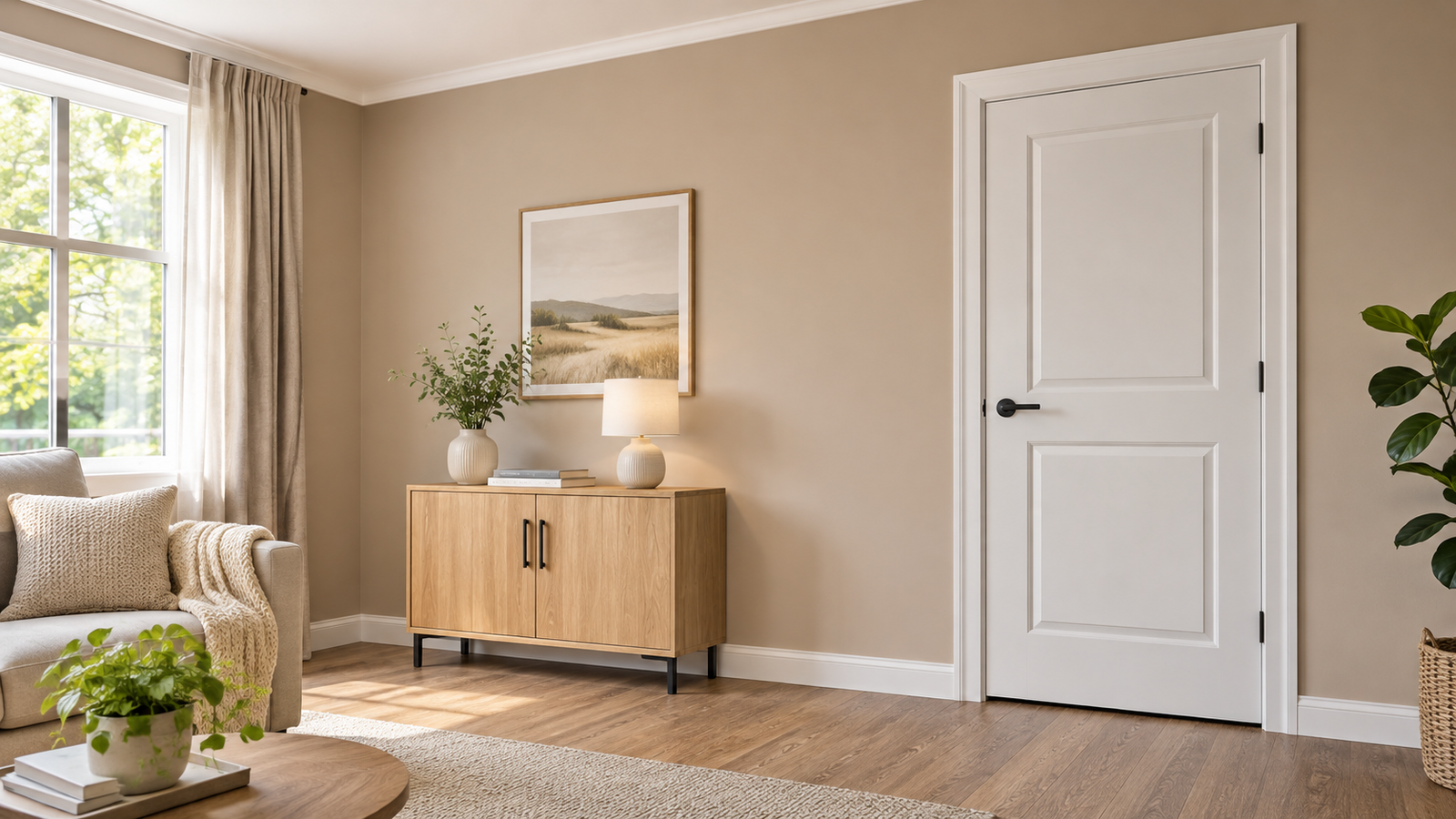
For example, painting several ordinary doors in a coordinated soft white or muted gray can make a hallway look significantly more consistent.
A darker door color can also work as an architectural accent, particularly when repeated deliberately rather than used randomly.
Before painting, identify the door material and existing finish. Painted timber, wood veneer, laminate, and factory-coated surfaces may require different preparation and coating products.
Use a paint suitable for frequently handled doors rather than assuming ordinary wall paint will provide adequate durability.
Protect or remove appropriate hardware before painting, and avoid coating hinges, latches, weather seals, or other functional components.
Fire-rated doors and specialized assemblies may have restrictions on modifications that must be respected.
3.3. Update Baseboards and Door Frames
Fresh wall paint can lose much of its impact when surrounded by scratched or discolored trim.
Baseboards and door frames establish the visual boundaries of a room, so their condition matters.
Where existing trim remains sound, repairing minor defects and repainting can produce a clean, consistent result.
Matching the trim to the wall color creates an understated appearance. A carefully chosen contrasting shade can emphasize architectural details.
Neither approach is automatically superior. The choice depends on the room's proportions and overall style.
If the trim is severely damaged or visually unsuitable, selective replacement may be reasonable. Simple, well-proportioned profiles often work better than elaborate designs in contemporary interiors.
3.4. Use Accent Colors Without Overwhelming the Space
An accent wall can add character without requiring additional building materials.
Choose a surface that already serves as a natural focal point, such as the wall behind a sofa or bed.
For a bedroom with warm neutral walls, a muted olive-green accent may introduce depth while preserving a calm atmosphere. A charcoal feature can work well in some contemporary interiors.
Avoid using accent colors merely to make an empty wall look different. The color should contribute to the room's composition and relate to existing furnishings.
Painting a built-in shelving unit or interior door can be another affordable way to introduce contrast without changing an entire room.
3.5. Choose the Right Paint Finish
The sheen of paint influences both appearance and maintenance.
Matte finishes create a soft surface with relatively little reflection, which can help disguise minor imperfections. Some washable matte products are suitable for frequently used rooms, although performance varies by formulation.
Eggshell and satin finishes provide greater sheen and may offer practical cleaning advantages in suitable applications.
Doors, baseboards, and other frequently touched elements often benefit from durable coatings developed specifically for trim or joinery.
Higher sheen can make surface imperfections more visible, so careful preparation becomes especially important.
Always check the manufacturer's recommendations for surface compatibility, primer requirements, drying time, and cleaning performance.
A smooth, durable finish achieved with suitable paint will generally look better than a more expensive coating applied over an inadequately prepared surface.
4. Add Architectural Details Without Major Construction
Plain walls can become attractive design features through relatively simple architectural additions.
Decorative molding, restrained paneling, and coordinated trim introduce dimension without requiring major structural changes.
These upgrades are particularly effective when the existing room has simple proportions and few architectural details.
4.1. Install Simple Decorative Wall Molding
Rectangular wall molding is a practical way to create a classic, custom-looking finish.
Lightweight polyurethane profiles, suitable MDF strips, and other decorative products can be arranged into symmetrical frames and painted to match the wall.
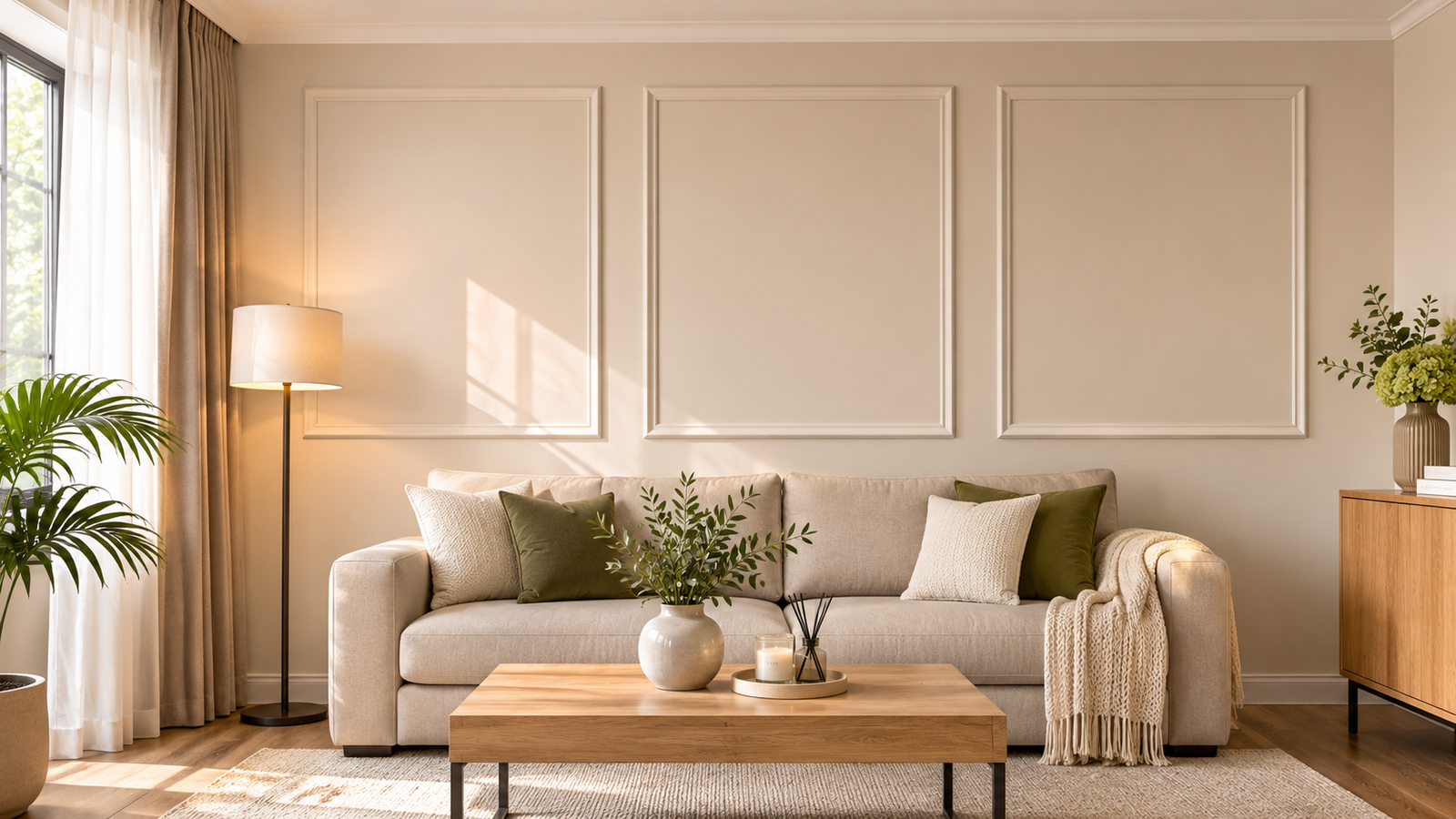
Consider a plain wall behind a sofa. Instead of covering it with expensive wallpaper, three evenly spaced molding frames can introduce structure and visual interest.
The proportions matter more than the complexity of the profile.
Before purchasing materials, measure the wall, locate switches and outlets, and test the proposed arrangement with removable painter's tape.
This makes it easier to correct awkward spacing before installation.
Use suitable adhesives or fasteners and account for any concealed services before drilling or nailing.
For a restrained appearance, paint the molding and wall in the same color. The relief creates interest through subtle shadows rather than strong color contrast.
4.2. Create Elegant Wall Paneling on a Budget
Simple board-and-batten patterns and half-height paneling can give ordinary rooms a more architectural character.
In suitable conditions, decorative strips can be attached to an existing wall, using the wall itself as the background rather than covering the entire area with new panels.
This can reduce material costs while creating the appearance of a more substantial installation.
Half-height paneling works particularly well in hallways and dining areas. Vertical arrangements may emphasize ceiling height in some rooms.
The design should account for door frames, electrical outlets, furniture, and existing trim.
Panels must be installed on sound, dry surfaces using methods suitable for the wall construction and selected materials.
A limited, carefully proportioned design is usually more convincing than a complicated pattern with inconsistent spacing.
4.3. Upgrade Basic Baseboards and Trim
Basic baseboards are not inherently unattractive. Problems usually arise when their proportions conflict with the room or their condition makes the interior look unfinished.
Simple replacement profiles can be an economical improvement when the existing trim is severely worn or unsuitable.
Choose a profile that complements the ceiling height, door casings, and architectural style.
Tall, elaborate baseboards are not always better. In compact contemporary rooms, a clean, moderate profile may look more appropriate.
Accurate installation is essential. Misaligned corners and poorly finished joints can undermine the intended effect.
4.4. Use Ceiling Details Sparingly
A plain ceiling often looks best when it is smooth, clean, and properly painted.
Some rooms can benefit from subtle crown molding or coving, particularly where the design already incorporates traditional architectural details.
Lightweight decorative profiles may provide a more affordable alternative to elaborate plasterwork.
However, oversized molding can make low ceilings feel visually compressed.
Before adding any ceiling treatment, consider whether it complements the room or merely adds unnecessary decoration.
Decorative products should never cover unresolved water damage, structural cracking, or unsuitable substrates.
4.5. Avoid Overdecorating Small Rooms
Architectural details work best when they have room to be appreciated.
A small bedroom may need only a simple molding arrangement behind the bed. Adding paneling, multiple accent colors, elaborate ceiling trim, and numerous decorative accessories could make the same room feel crowded.
Choose one feature that provides a clear improvement and allow the surrounding surfaces to remain relatively simple.
This approach reduces installation complexity and material consumption while giving the finished result a more confident, intentional appearance.
5. Upgrade Lighting for a More Luxurious Atmosphere
Lighting can change the atmosphere of a room more dramatically than many decorative purchases.
A well-lit space reveals textures, supports everyday activities, and helps create visual depth. Poor lighting can make even attractive materials look dull or uncomfortable.
Fortunately, meaningful improvements are possible without redesigning the entire electrical installation.
5.1. Replace Outdated Light Fixtures
A bulky or visually outdated ceiling fixture can dominate an otherwise attractive room.
Replacing it with a simpler design may create a more contemporary appearance, especially when its dimensions suit the space.
Look for balanced proportions, appropriate light distribution, and finishes that complement existing hardware.
A streamlined pendant may work well above a dining table, while a discreet ceiling fixture may be more appropriate in a low hallway.
Avoid selecting lighting purely because it resembles an expensive designer product. The fixture must provide suitable illumination and remain practical for the room.
Changes to fixed electrical wiring and installations should be performed by a qualified electrician.
5.2. Combine Ambient, Task, and Accent Lighting
Many ordinary rooms rely entirely on one central ceiling fixture.
Introducing additional light sources can make the space feel more comfortable and visually interesting.
Ambient lighting provides general illumination, task lighting supports activities such as reading, and accent lighting emphasizes selected features.
For example, a living room with a ceiling light can gain a more refined atmosphere from a floor lamp beside the sofa and a small lamp on a sideboard.
This arrangement creates different levels of light without requiring an expensive lighting system.
A practical improvement is to identify a poorly illuminated activity or corner and introduce one suitable fixture. Evaluate the result before purchasing more.

5.3. Choose Appropriate Light Color and Brightness
Light color influences how paint, wood finishes, and furniture appear.
Warm white light, commonly around 2700–3000 K, is often suitable for living rooms and bedrooms. Neutral white light around 3500–4000 K can be useful in some work areas, kitchens, and bathrooms.
These are starting points, not universal requirements.
Compare light output in lumens when determining brightness rather than relying only on wattage.
Color rendering is also important. LED products with good color-rendering performance can help furniture, paint, and decorative materials appear more natural.
Where dimming is desired, ensure that the lamps, drivers, and controls are compatible.
The objective is comfortable, useful illumination rather than simply making every surface as bright as possible.
5.4. Use Affordable Decorative Lamps
Portable lamps provide an easy way to improve lighting without extensive renovation.
A floor lamp can add vertical balance beside a sofa, while a table lamp may make an entryway console or bedside cabinet feel more intentional.
Simple ceramic, metal, or fabric-shaded designs can look elegant when their proportions complement the surrounding furniture.
Choose lamps for their light distribution as well as their appearance.
A decorative fixture that creates uncomfortable glare or provides too little illumination offers limited practical value.
5.5. Make Better Use of Natural Light
Before installing additional lighting, examine how daylight enters the room.
Heavy curtains, overcrowded window areas, and poorly positioned furniture may unnecessarily block available light.
Lighter window treatments can allow more daylight into suitable rooms while preserving privacy.
Mirrors may also help distribute light when positioned to reflect a brighter part of the interior.
However, strong reflections should not create glare or interfere with comfortable use of the space.
Good lighting design combines daylight and artificial illumination to support both appearance and function.
6. Replace Small Details That Make a Big Difference
Small interior components often reveal how well a home has been maintained.
Scratched handles, mismatched cabinet pulls, loose hinges, and damaged decorative fittings can make an otherwise renovated room feel incomplete.
Updating selected details is relatively inexpensive compared with replacing large interior elements.
6.1. Upgrade Interior Door Handles
Door handles are visible, frequently used, and repeated throughout the home.
Choosing a consistent design can improve the appearance of several rooms at once.
Simple matte black, brushed nickel, or satin-metal handles may complement contemporary interiors, while traditional spaces can benefit from more classic shapes.
Before ordering, check the existing fixing points, spindle dimensions, latch compatibility, and door thickness.
Selecting compatible replacements avoids unnecessary drilling and repairs.
Function remains essential. A handle should operate smoothly and preserve any required privacy, fire-safety, or escape functions.
6.2. Replace Worn Cabinet Knobs and Pulls
Cabinet hardware provides another opportunity for inexpensive improvement.
An older wardrobe or kitchen cabinet can look noticeably more refined after replacing worn handles with simple, coordinated alternatives.
Before purchasing, measure the distance between existing fixing holes.
Using the same mounting dimensions can save work and prevent unwanted holes.
Check the handle proportions against the cabinet fronts. A long pull that looks attractive in a product photograph may overwhelm a small drawer.
Purchasing one sample before ordering the entire set is a sensible way to confirm the appearance.
6.3. Refresh Visible Hinges and Hardware
Not every worn component needs replacement.
An uneven cabinet door may require hinge adjustment. Loose fastening may need a suitable repair, while metal hardware in good condition may simply benefit from careful cleaning.
Replace hinges when their condition, function, or compatibility genuinely requires it.
New hardware must support the door's weight and suit the existing installation.
Avoid painting moving mechanisms or substituting decorative fittings for components with specific safety requirements.
6.4. Choose Consistent Finishes Throughout the Home
Hardware becomes more visually effective when it relates to nearby fixtures and decorative elements.
For example, brushed-metal cabinet pulls can complement similarly finished door handles and lighting accents.
Perfect matching is unnecessary, but the combination should feel deliberate.
When replacing every visible metal finish would be expensive, use the existing permanent fixtures as a starting point and choose new products that complement them.
This approach creates continuity without unnecessary spending.
6.5. Update Small Fixtures Without Unnecessary Replacement
Some interior details can be refreshed by changing an individual component rather than replacing the whole assembly.
A compatible decorative light shade, suitable cabinet fitting, or worn accessory may be replaced independently.
In kitchens and bathrooms, small fittings can sometimes be updated while preserving functional plumbing fixtures.
Electrical and plumbing components require particular care. Decorative upgrades must not compromise safe operation, electrical protection, or waterproofing.
The most worthwhile changes are those that improve the visible finish while keeping reliable existing systems intact.
7. Make Existing Surfaces Look New Again
Replacing worn materials can be expensive, especially when removal, disposal, installation, and repairs to surrounding surfaces are included.
When the underlying elements remain sound, restoration offers an opportunity to achieve a fresh appearance with less disruption.
The challenge is determining which materials can be improved economically and which have reached the end of their useful life.
7.1. Refinish Rather Than Replace When Possible
Solid wood doors, suitable furniture surfaces, and certain architectural finishes can often be restored.
A scratched wooden tabletop, for example, may benefit from refinishing rather than replacement if the underlying timber remains in good condition.
The appropriate method depends on the construction.
Solid wood can sometimes tolerate more extensive sanding than thin veneer. Laminate and other manufactured finishes may require specialized preparation or may not be suitable for conventional refinishing.
Identify the material before using abrasive tools or applying coatings.
A successful restoration should improve both appearance and durability, rather than simply conceal wear temporarily.
7.2. Refresh Old Cabinets and Built-In Furniture
Built-in furniture occupies a substantial amount of visual space, making it a worthwhile renovation priority.
If cabinet boxes are structurally sound and the layout remains practical, refreshing their visible surfaces may be more economical than replacing the units.
For example, an older wardrobe with stable construction could be transformed through compatible refinishing, updated handles, and hinge adjustments.
Cabinet doors and visible frames should receive consistent treatment so that the finished piece looks coordinated.
However, swollen boards, severe delamination, and significant moisture damage may make restoration unsuitable.
Check surface compatibility and ventilation requirements before applying new coverings or finishes.

7.3. Repair Scratches, Gaps, and Minor Surface Damage
Small defects can make otherwise sound materials look older than they are.
Appropriate fillers, touch-up products, and localized refinishing may correct minor scratches, dents, and surface imperfections.
The repair method should match the material and the type of damage.
A product intended for painted plaster may be unsuitable for wood, laminate, or metal. Necessary movement gaps should also remain functional.
Where color matching is difficult, refinishing an entire small component may create a more consistent appearance than a visible patch.
7.4. Restore Worn Finishes
Some surfaces need cleaning rather than replacement.
Residue, accumulated dirt, and unsuitable cleaning products can make finishes appear dull or discolored.
Begin with the least aggressive treatment recommended for the material.
Where a coating has deteriorated, refinishing may be appropriate after confirming compatibility with the existing surface.
Older coatings can contain hazardous substances. Before sanding or stripping potentially lead-containing paint or disturbing suspected asbestos-containing materials, arrange appropriate assessment and safe handling.
Products used for refinishing should also be applied with suitable ventilation and according to their safety instructions.
7.5. Recognize When Replacement Is the Better Investment
Restoration is not worthwhile when it costs nearly as much as replacement but produces a less durable result.
Use the following comparisons as a starting point.
| Existing Feature | Consider Refreshing When | Consider Replacing When |
|---|---|---|
| Interior doors | The structure is sound and wear is cosmetic | Severe warping or structural damage is present |
| Cabinets | Boxes and joints remain stable | Widespread swelling or deterioration exists |
| Wooden furniture | The underlying material can be safely refinished | Damage or repair cost makes restoration impractical |
| Baseboards | Scratches and finish damage are minor | Material is extensively damaged |
| Painted walls | The substrate is sound | The underlying surface requires substantial repair or replacement |
The full comparison should include preparation, materials, labor, disposal, and expected service life.
Restoring an item that will fail again shortly is not genuine savings.
8. Use Windows and Interior Proportions to Create an Expensive Look
Some of the most effective visual improvements involve placement rather than construction.
Window treatments, mirrors, furniture, and decorative elements influence how a room's proportions are perceived. Adjusting them can create a more polished appearance without replacing major features.
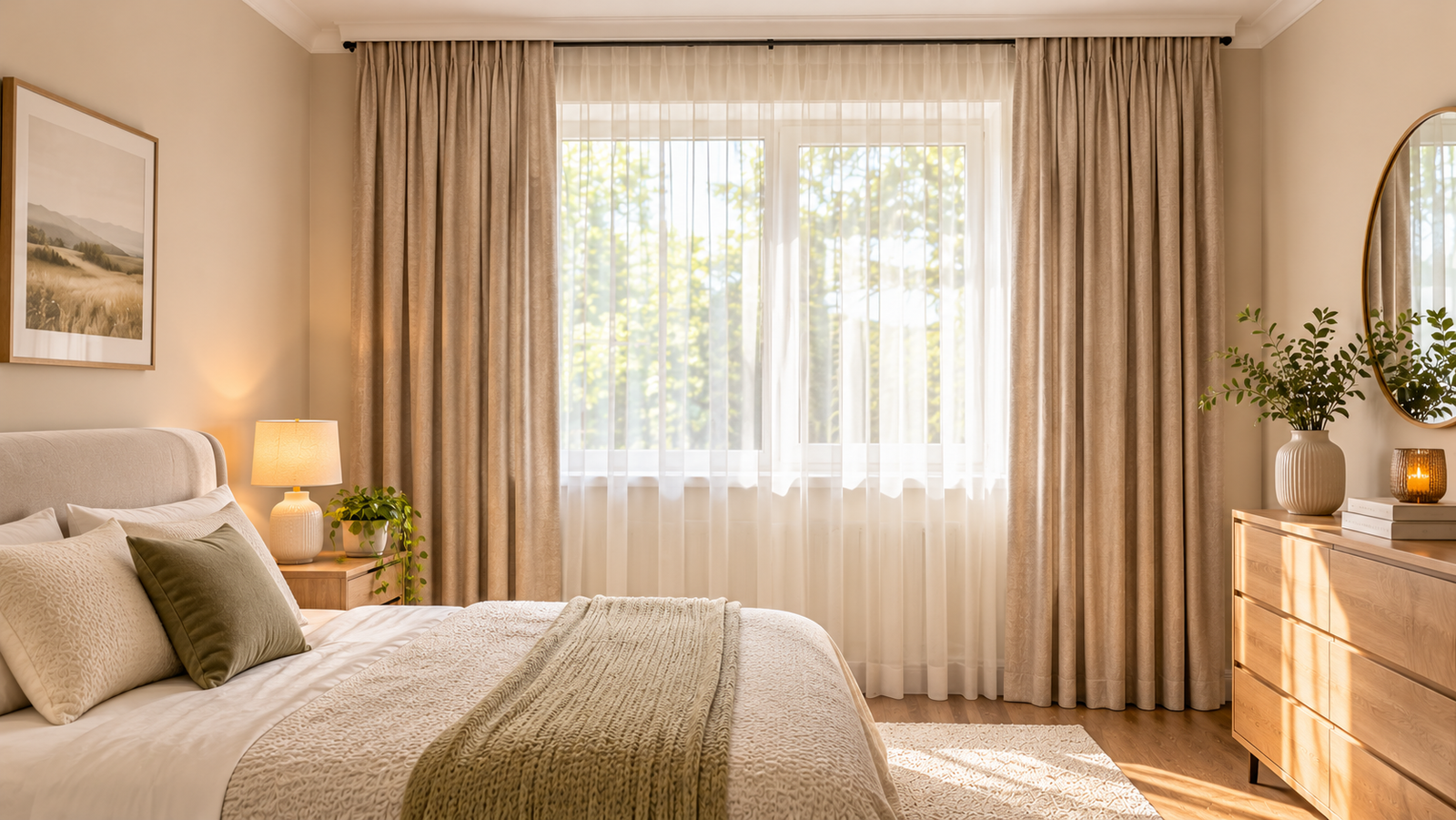
8.1. Hang Curtains Higher for the Illusion of Taller Ceilings
Curtains positioned immediately above a window can emphasize the window's existing dimensions.
Installing the rod higher may make the opening appear taller and give the room a stronger vertical emphasis.
As an initial design reference, a rod might be positioned approximately 10–20 cm above the window frame where ceiling height and surrounding details permit.
Extending it beyond the sides of the opening can also allow curtains to stack farther from the glass, improving daylight access.
Exact dimensions depend on window size, available wall space, and curtain design.
Measure carefully and use mountings suitable for the wall construction and curtain weight.
8.2. Choose Full-Length Window Treatments
In many living rooms and bedrooms, full-length curtains create a more finished appearance than panels that stop awkwardly above the floor.
Fabric that hangs with consistent folds can make the window treatment look substantial even when it is affordable.
A small floor clearance is often practical, particularly where curtains need to move easily and remain clean.
Choose fabric according to its drape, light control, privacy, and maintenance requirements.
A simple linen-look material can provide an elegant appearance without luxury textiles.
However, full-length curtains are not appropriate for every window. Kitchens, compact bathrooms, and areas with obstructions may benefit from other window coverings.
8.3. Use Mirrors to Improve Light Distribution
Mirrors can add visual depth and reflect natural or artificial light.
A well-proportioned mirror above an entryway console may improve the composition of a narrow hall. In a living room, a mirror reflecting a bright, attractive area can help the space feel more open.
Placement matters more than price.
Avoid positions that reflect clutter or create uncomfortable glare.
Large mirrors must be mounted securely using appropriate hardware, especially where tipping could present a hazard.
8.4. Maintain Balanced Furniture and Decor Proportions
Before purchasing new furniture, examine the existing arrangement.
A large sofa pushed into an awkward corner, an undersized rug, or a poorly positioned cabinet can make a room feel less balanced.
Rearranging furniture around a clear focal point may improve both appearance and circulation.
Decorative items should relate to the furniture and walls around them.
Artwork that is too small for a large sofa can appear disconnected. A rug that does not visually connect the seating area may make the furniture feel scattered.
Proportion guidelines can help, but always check actual room dimensions and usable floor space before making purchases.
8.5. Reduce Visual Clutter for a Cleaner Finish
Organizing a room is often the least expensive improvement available.
Overcrowded shelves, exposed cables, and excessive decorative accessories can distract from attractive architectural features.
Begin by removing items that do not serve a useful or meaningful purpose.
Arrange frequently used belongings in existing storage and allow some surfaces to remain clear.
Personal objects and photographs can still contribute warmth and character. The goal is not an empty room, but a space where the furnishings and decoration feel intentional.
9. Choose Budget Materials That Look Premium
Affordable alternatives to natural stone, solid wood, and elaborate decorative finishes can offer excellent visual value.
However, a convincing appearance is only part of the decision. Materials must also suit the room's conditions, withstand expected use, and remain practical to maintain.
9.1. Affordable Alternatives to Natural Stone
Natural stone can create beautiful interiors, but its cost, installation requirements, and maintenance needs may exceed a modest renovation budget.
Stone-look ceramic and porcelain tiles offer alternatives for suitable applications.
Some products reproduce marble veining, limestone textures, or other natural patterns with considerable realism.
Pattern variation is important. Repeating identical decorative tiles too frequently can reveal the artificial design.
Grout color and joint alignment also influence the result.
A carefully selected tile with consistent installation may look more refined than a more expensive product installed with irregular spacing.
Stone-look laminates can provide an affordable appearance on suitable furniture and work surfaces, although their resistance to heat, scratches, and moisture may differ from natural stone.
9.2. Wood-Look Finishes Without Solid Wood Prices
Wood-look materials can introduce warmth without the cost of extensive solid hardwood installations.
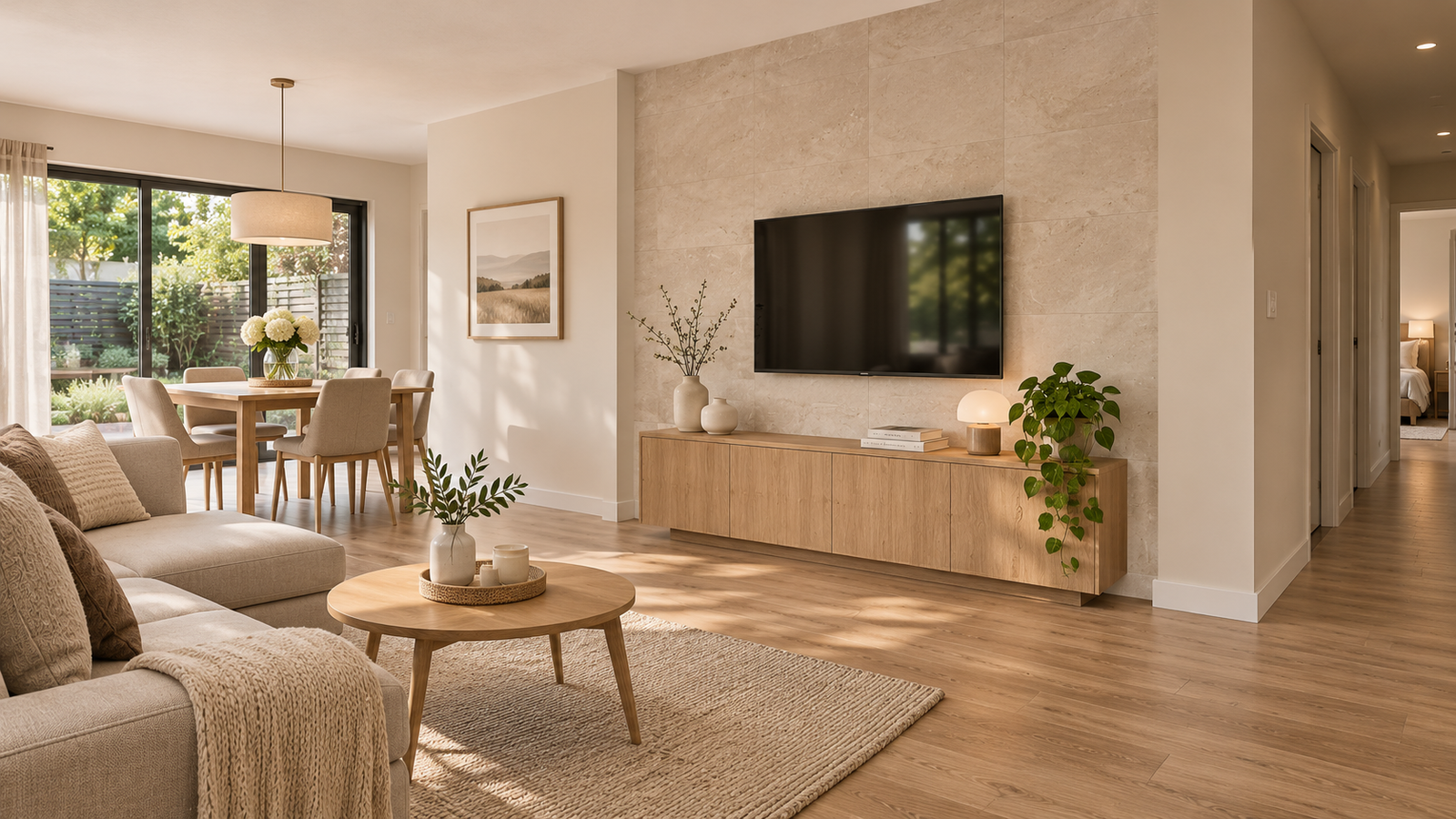
Laminate, certain resilient flooring products, and decorative furniture boards are available in realistic timber-inspired finishes.
For a convincing result, compare grain variation, surface texture, color, and sheen.
A subtle oak-look surface may complement warm neutral walls, while a darker walnut-inspired finish can create contrast in an appropriate setting.
Avoid combining numerous unrelated imitation wood patterns within the same room.
Durability varies by product. Some materials are suitable for ordinary dry interiors but require additional protection or a different specification in moisture-prone areas.
The manufacturer's technical information should guide selection.
9.3. Decorative Panels and Quality Laminates
Decorative wall panels can add texture and depth to otherwise plain interiors.
Vertical wood-look panels, restrained geometric surfaces, and smooth laminated finishes are among the available options.
A single feature wall is often more effective than covering every surface.
Quality depends on the product's construction as well as its decorative layer. Edges, joints, adhesives, and moisture protection can determine whether the finish remains attractive.
Check fire-performance requirements, indoor-use suitability, and any relevant emissions information for wood-based products.
Decorative coverings should not be installed over unresolved moisture or deteriorating substrates.
9.4. When Budget Materials Are Worth Using
The best material is not necessarily the cheapest or the most expensive. It is the one that meets the requirements of its intended application at a reasonable total cost.
Consider this practical comparison.
| Premium Appearance | Affordable Alternative | Main Consideration |
|---|---|---|
| Marble or limestone | Stone-look ceramic or porcelain tile | Pattern realism, slip resistance, installation |
| Solid hardwood appearance | Suitable wood-look laminate or resilient flooring | Wear, moisture and maintenance requirements |
| Solid wood cabinetry | Quality decorative laminated boards | Edge sealing, durability and emissions |
| Elaborate plaster molding | Suitable lightweight decorative molding | Proportions and installation quality |
| Expensive wall finishes | Well-prepared painted surfaces | Surface preparation and coating durability |
These materials are not necessarily identical in performance to the premium products they resemble.
An affordable finish is worthwhile when it delivers the desired appearance while meeting practical requirements.
Frequently used surfaces, moisture-exposed areas, and safety-critical components may justify higher spending.
9.5. How to Avoid Cheap-Looking Finishes
The most common problem with inexpensive decorative products is not their price but their presentation.
Highly repetitive patterns, poorly aligned joints, excessive gloss, and visible unfinished edges can make a surface appear artificial.
A restrained selection of materials generally works better than combining multiple dramatic imitations.
For example, warm neutral walls, a realistic wood-look surface, and a subtle stone-inspired accent can create a cohesive interior.
Before purchasing materials for a large area, compare physical samples in the room.
Look at them under daylight and artificial lighting, beside the existing flooring and furniture.
Also evaluate how edges, corners, transitions, and fixtures will be finished.
Careful installation often has a greater impact on the final appearance than selecting a more expensive decorative pattern.
10. Cheap Renovation Ideas for Different Rooms
Different rooms require different priorities.
A living room benefits from a clear focal point, while a bedroom needs comfortable lighting and visual balance. Entryways depend on first impressions, and kitchens and bathrooms demand additional attention to functional surfaces.
The following examples demonstrate how relatively small improvements can work together.
10.1. Living Room: Create a Polished Focal Point
Imagine a living room with sound furniture, dated wall colors, and a single ceiling fixture.
A complete remodel would be unnecessary if the main problem is cosmetic.
A practical budget makeover could begin by repainting the walls in a coordinated neutral shade. A simple molding arrangement behind the sofa could establish a focal point, while a floor lamp near the seating area would introduce softer lighting.
Existing furniture could then be repositioned to improve balance and circulation.
These changes address several visible problems without replacing the furniture or altering the room's structure.
For a smaller budget, simply repainting the focal wall and improving the lighting may be sufficient.
The strongest result comes from completing a few complementary improvements rather than adding numerous unrelated accessories.
10.2. Bedroom: Focus on Color, Lighting, and Symmetry
A bedroom can feel more refined through simple improvements that support a calm atmosphere.
Consider a room with mismatched bedside lamps, short curtains, and an outdated wall color.
Rather than replacing the bed or wardrobe, start by selecting a coordinated color palette.
A muted accent behind the bed can establish a focal point. Suitable bedside lighting can create visual balance, while full-length curtains may improve the room's proportions.
These changes make the room feel more intentional without requiring expensive furniture.
Symmetry can be useful, but it should not become a rigid rule. Where furniture placement or room dimensions are uneven, balanced visual weight is more important than identical objects on both sides.
10.3. Entryway: Improve First Impressions
An entryway often contains only a few prominent elements, which makes cosmetic improvements particularly noticeable.
Suppose the entrance has a scratched interior door, worn hardware, insufficient lighting, and visible clutter.
If the door remains sound, refinishing it and updating the handle can improve its appearance.
A suitable mirror can add visual depth, and better lighting can create a more welcoming atmosphere.
Organizing shoes, coats, and accessories within existing storage completes the transformation.
Before adding new furniture, confirm that the entryway retains comfortable circulation and that doors open freely.
A small, coordinated entrance can make a stronger impression than a larger space filled with unnecessary decoration.

10.4. Kitchen: Refresh Visible Details Without a Full Remodel
Kitchens are expensive to remodel because they contain cabinetry, appliances, plumbing, and electrical installations.
However, when the layout remains practical and the major components are sound, cosmetic improvements may provide worthwhile results.
Replacing worn cabinet handles, adjusting hinges, and cleaning or refinishing suitable cabinet surfaces can create a more consistent appearance.
Improving task lighting may also make the kitchen more comfortable and visually appealing.
Avoid replacing functional countertops, cabinets, or appliances solely because they do not match a temporary design trend.
At the same time, unresolved leaks, damaged surfaces, and unsafe installations require proper attention before cosmetic work.
For more extensive kitchen changes, a separate renovation plan should address layout, ventilation, materials, and installation requirements.
10.5. Bathroom: Make Small Cosmetic Improvements
Bathrooms require careful material selection because moisture exposure can quickly damage unsuitable finishes.
Where waterproofing and plumbing are sound, cosmetic improvements may include restoring suitable surfaces, updating accessories, and improving mirror lighting.
A coordinated set of towel hooks and other fittings can look more intentional than mismatched hardware collected over time.
Cleaning appropriate surfaces and replacing deteriorated sealant where necessary can also improve appearance.
However, deteriorated grout or sealant should not be mistaken for the entire waterproofing system. Persistent moisture, loose tiles, or recurring mold may indicate problems requiring investigation.
Bathroom electrical work and new fixtures must meet applicable requirements for wet and damp locations.
The goal is to make a functioning bathroom look cleaner and more coordinated without compromising its protection against moisture.
11. How to Plan a Budget Renovation That Looks Expensive
Affordable renovation ideas deliver better results when they are organized into a realistic plan.
Without clear priorities, small purchases can accumulate, projects can overlap, and newly finished surfaces may be damaged by later work.
A practical renovation plan should coordinate the budget, sequence, and intended appearance from the beginning.
11.1. Set a Realistic Renovation Budget
Start by establishing the maximum amount available for the project.
Then determine which improvements are necessary and which are optional.
Material prices alone do not represent the full renovation cost. Surface preparation, tools, equipment rental, labor, disposal, and minor repairs may add significant expenses.
Obtain local prices or contractor quotations for the proposed work rather than relying on generic online estimates.
Dividing the budget between rooms or stages can make spending easier to monitor.
However, shared design decisions, such as wall colors and trim finishes, should be considered across the home before work begins.
11.2. Separate Essential Repairs From Cosmetic Improvements
A decorative upgrade should never take priority over an unresolved problem that could cause further damage or affect safety.
Inspect the property before committing to cosmetic work.
Moisture damage, unsafe electrical components, structural concerns, and major deterioration may require professional assessment.
Once essential repairs are understood, decorative improvements can be planned around the remaining budget.
This approach also prevents newly finished surfaces from being damaged when hidden problems are discovered later.
11.3. Compare DIY and Professional Labor Costs
DIY work can reduce labor expenses when the task is suitable for the homeowner's skills and available tools.
Simple painting, replacing compatible cabinet hardware, or arranging decorative elements may be manageable for many homeowners.
More demanding work requires a realistic assessment of difficulty.
Installing detailed molding, refinishing delicate surfaces, or completing extensive repairs can become expensive if errors result in wasted materials.
Compare the total DIY cost with professional quotations, including tools, preparation, time, and potential corrections.
Work involving structural components, fixed electrical installations, or other safety-critical systems should be completed by appropriately qualified professionals.
11.4. Plan Upgrades in the Right Order
Renovation activities should follow a sequence that minimizes rework.
Inspection and essential repairs generally come first, followed by preparation and any planned modifications that affect surrounding surfaces.
Painting, trim finishing, lighting improvements, and hardware updates should be scheduled according to the specific installation requirements.
For example, completing necessary wall repairs before decorative molding prevents complications later.
Similarly, deciding on lighting positions before final painting can reduce the risk of damaging finished surfaces.
For larger homes, completing work room by room may help manage costs and disruption.
However, consistent colors, trim profiles, and hardware finishes should be selected early so that individual stages contribute to the same overall design.
11.5. Reserve Money for Unexpected Expenses
Even straightforward cosmetic projects can reveal unexpected problems.
Damaged surfaces, additional preparation requirements, or unsuitable materials may increase the final cost.
A contingency allowance helps prevent these issues from interrupting the project.
For relatively predictable cosmetic work, approximately 10–15% of the planned budget may serve as an initial guideline. Older properties and uncertain renovation conditions can require a larger reserve.
This is a planning reference rather than a guarantee that unexpected costs will remain within that amount.
Keep the reserve separate from money intended for decorative purchases.
Track actual spending and review the remaining budget after each stage.
If an unexpected repair becomes necessary, postpone optional improvements rather than reducing the quality of essential work.
12. Common Budget Renovation Mistakes That Make a Home Look Cheap
Even carefully selected materials can produce disappointing results when the overall renovation is poorly planned.
Avoiding a few common mistakes can protect the budget while improving the finished appearance.
12.1. Choosing Materials Based Only on Price
The cheapest material is not always the most economical.
A low-cost coating that requires repeated applications or deteriorates quickly can become more expensive than a suitable alternative.
Compare appearance, performance, installation requirements, and maintenance before purchasing.
Reserve the greatest attention to durability for surfaces that experience frequent use or challenging conditions.
12.2. Mixing Too Many Colors and Finishes
Unrelated colors, decorative patterns, and hardware finishes can make an interior feel fragmented.
Before making purchases, establish a small group of complementary colors and materials.
A coordinated design does not have to be neutral or minimalist. Strong colors and mixed finishes can work well when their relationships are intentional.
The problem is not variety itself, but the absence of a clear design direction.
12.3. Ignoring Surface Preparation
Poor preparation frequently undermines cosmetic renovations.
Paint applied over unstable coatings may peel, while decorative elements installed on uneven surfaces can reveal gaps and misalignment.
Allow sufficient time for cleaning, repairs, compatible priming, and appropriate drying or curing.
Preparation should address the condition of the material rather than merely conceal visible imperfections.
12.4. Using Poorly Sized Decorative Elements
An oversized light fixture, undersized mirror, or awkward molding pattern can disturb a room's proportions.
Measure surfaces and test layouts before purchasing or installing decorative elements.
Temporary painter's tape or paper templates can help visualize dimensions without making permanent changes.
An affordable product that fits the space properly will often look better than an expensive object chosen without considering scale.
12.5. Cutting Costs on Important Repairs
Painting over moisture damage or covering deteriorating materials with decorative panels may temporarily improve appearance, but the underlying problem remains.
Essential repairs, appropriate materials, and safe installation should take priority over cosmetic spending.
If the budget cannot support both, postpone decorative upgrades.
A home that looks attractive but contains unresolved building defects is not a successful renovation.
12.6. Prioritizing Appearance Over Durability
A material that looks convincing in a showroom may perform poorly in everyday use.
Consider cleaning requirements, moisture exposure, sunlight, wear, and the expected lifespan before purchasing.
Decorative products should be selected for their intended conditions rather than their appearance alone.
A well-maintained finish that lasts is more valuable than a striking surface that quickly deteriorates.
Conclusion — An Expensive Look Is About Smart Choices, Not Expensive Purchases
Creating a sophisticated home doesn't require replacing every outdated feature or investing in luxury materials. Often, the strongest improvements come from thoughtful decisions about paint, lighting, architectural details, and the elements already present in a room.
A carefully refinished door, coordinated hardware, well-positioned lighting, or a simple decorative wall treatment can change how an interior looks and feels without extensive construction.
The best results come from addressing visible imperfections, choosing compatible materials, and maintaining consistent design decisions throughout the home.
Equally important is knowing where not to compromise. Proper preparation, essential repairs, durable products, and safe installation protect the value of cosmetic improvements.
Begin with one room or a clearly defined area. Identify its most noticeable problems, select a few complementary upgrades, and evaluate the results before continuing.
Ultimately, the best cheap renovation ideas that look expensive are those that combine visual impact, practical value, and lasting quality.
With clear priorities and a realistic budget, even modest improvements can create a home that feels polished, comfortable, and thoughtfully designed.
Frequently Asked Questions (FAQ)
What is the cheapest way to make a house look expensive?
One of the most affordable approaches is to improve existing surfaces and create a consistent design. Repainting walls, repairing minor imperfections, updating door hardware, and reorganizing furniture can make a noticeable difference without major construction. Start with the most visible areas and choose improvements that complement one another. Clean finishes and balanced proportions often contribute more to an expensive-looking interior than additional decorative purchases.
Which budget renovation upgrades make the biggest visual difference?
Painting, improved lighting, refreshed interior doors, and simple architectural molding often provide substantial visual improvements. Their effectiveness depends on the home's existing condition and design. Large surfaces and frequently noticed features usually deserve attention before minor accessories. For the best results, choose upgrades that solve visible problems while reinforcing the room's overall style.
Can you make an old house look modern without a full renovation?
Yes, provided the building's essential systems and materials remain in suitable condition. Updated wall colors, refinished doors, contemporary lighting, and coordinated hardware can modernize many interiors without changing the layout. Existing cabinets and furniture may also be worth restoring. However, moisture damage, structural problems, and unsafe installations should be assessed and repaired before cosmetic improvements begin.
What affordable materials look the most expensive?
Realistic wood-look laminates, stone-inspired porcelain tiles, quality decorative panels, and well-finished painted surfaces can create a refined appearance. Their success depends on color, texture, pattern variation, and installation quality. Affordable products should be selected for appropriate applications because their durability and maintenance requirements may differ from the premium materials they resemble.
How can I renovate a room on a very small budget?
Begin with changes that require little or no spending. Rearrange furniture, remove unnecessary clutter, clean existing finishes, and improve the use of natural light. If funds remain, consider one high-impact improvement such as repainting a wall, refreshing trim, or updating compatible hardware. Complete necessary repairs first and avoid buying decorations that do not address the room's main visual problems.
What renovation improvements should you never do cheaply?
Safety-critical work should never be compromised to preserve money for cosmetic upgrades. Electrical installations, structural repairs, waterproofing, essential plumbing, and work involving hazardous materials require appropriate products and qualified professionals where necessary. Frequently used surfaces also deserve attention to durability. Saving on decorative details is generally more reasonable than choosing unsuitable products for important building components.