
Introduction
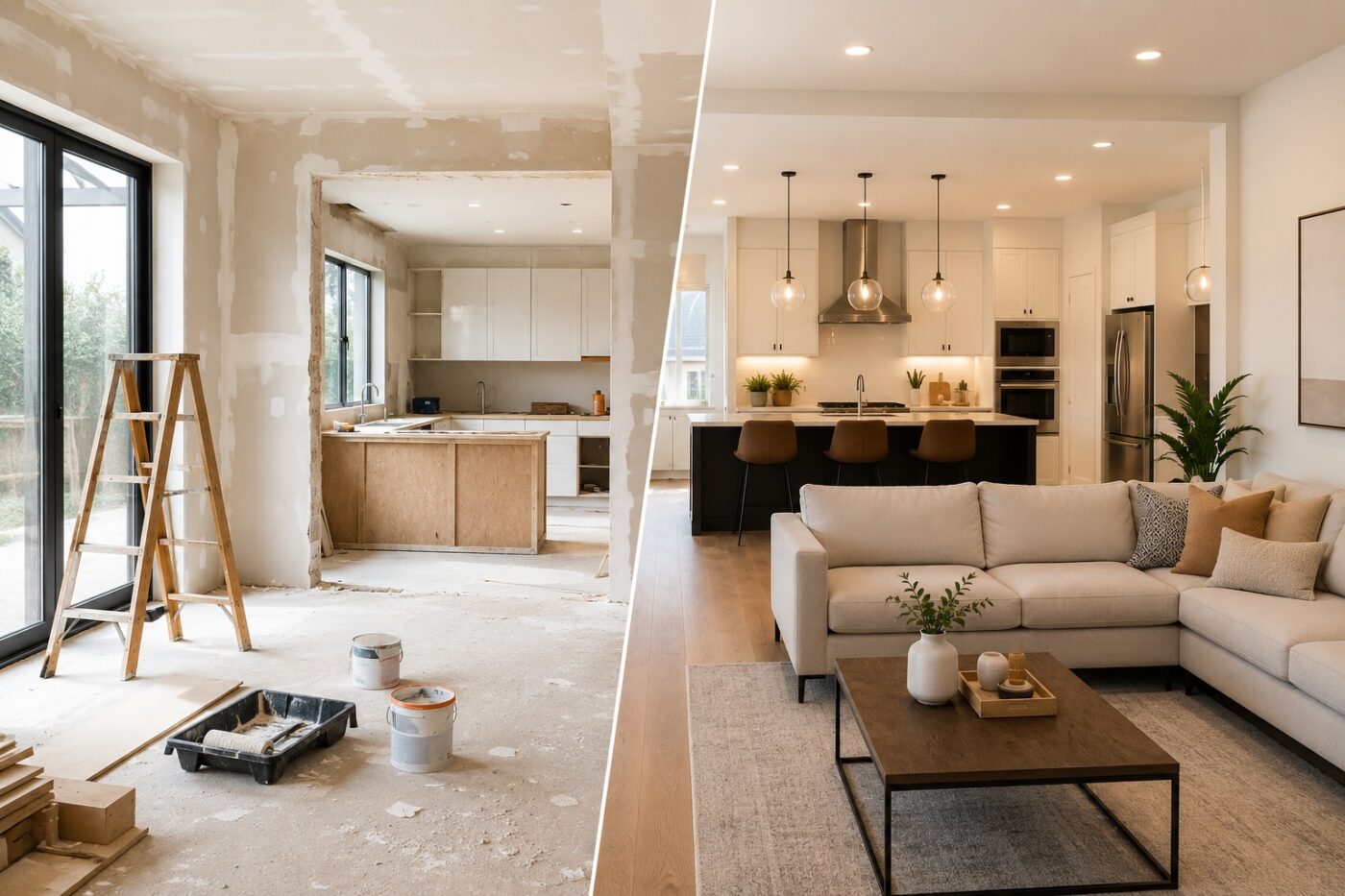
A complete home renovation is one of the most significant investments homeowners make to improve comfort, functionality, energy efficiency, and long-term property value. Whether you are modernizing an outdated house, renovating a recently purchased fixer-upper, or upgrading a property for long-term living, a properly planned renovation can completely transform both the appearance and performance of your home.
Modern renovation is no longer only about cosmetic improvements. Today, homeowners prioritize energy efficiency, smart layouts, durable materials, healthy indoor air quality, modern engineering systems, and long-term maintenance reduction. A successful renovation often combines visual upgrades with major infrastructure improvements such as electrical rewiring, plumbing replacement, insulation upgrades, ventilation improvements, waterproofing, and structural repairs.
However, renovation projects are also known for hidden costs, unexpected delays, contractor problems, and structural surprises discovered after demolition begins. Many homeowners underestimate how quickly a “simple renovation” can become a complex construction project once old finishes are removed.
Hidden water damage, uneven floors, mold behind drywall, outdated wiring, poor insulation, and improperly completed previous renovations are some of the most common problems discovered during remodeling work. These issues can dramatically increase both renovation costs and project timelines.
One of the biggest differences between a successful renovation and a stressful one is preparation. Realistic budgeting, proper renovation sequencing, material selection, contractor management, and contingency planning all play critical roles in achieving good results.
This complete home renovation guide explains the entire renovation process step by step, including:
- renovation planning;
- budgeting;
- demolition;
- structural repairs;
- plumbing and electrical upgrades;
- insulation improvements;
- contractor selection;
- room-by-room renovation advice;
- realistic timelines;
- common renovation mistakes;
- practical cost-saving strategies.
Whether you are planning a small interior refresh or a full structural reconstruction, understanding the renovation process before construction begins can help you avoid expensive mistakes and achieve better long-term results.
Table of Contents
Signs Your Home Needs Renovation
Many homeowners delay renovation projects until problems become impossible to ignore. However, recognizing early warning signs can help prevent major structural damage, reduce future repair costs, and improve both safety and living comfort.
Some renovation problems are cosmetic, while others directly affect energy efficiency, structural stability, and long-term property durability.
Outdated Interior Design
One of the most obvious signs a home needs renovation is an outdated interior. Aging flooring, worn wall finishes, dark rooms, old kitchen cabinets, outdated bathrooms, and poor lighting can make a property feel uncomfortable and less functional.
Homes built decades ago were often designed for completely different lifestyles and may not support modern expectations such as:
- open living spaces;
- larger kitchens;
- smart home technology;
- home offices;
- modern storage systems.
Modern renovation projects usually focus on:
- increasing natural light;
- improving layouts;
- maximizing storage;
- creating multifunctional spaces;
- improving overall usability.
Even relatively simple upgrades such as repainting walls, replacing flooring, and modernizing lighting can significantly improve both aesthetics and functionality.
Rising Energy Bills
High heating and cooling costs are often signs of poor insulation, outdated windows, roof heat loss, or inefficient HVAC systems.
Older homes commonly lose heat through:
- poorly insulated walls;
- attic spaces;
- old windows;
- doors;
- foundation gaps;
- roof junctions.
One of the most common hidden renovation problems is discovering missing or incorrectly installed insulation after opening walls or ceilings.
Poor insulation around windows and roof connections often causes:
- condensation;
- cold drafts;
- mold growth;
- moisture damage.
Energy-efficient renovation upgrades may include:
- wall insulation;
- attic insulation;
- air sealing;
- window replacement;
- smart thermostats;
- modern heating systems;
- ventilation improvements.
These upgrades not only reduce utility costs but also improve indoor comfort year-round.
Plumbing and Electrical Problems
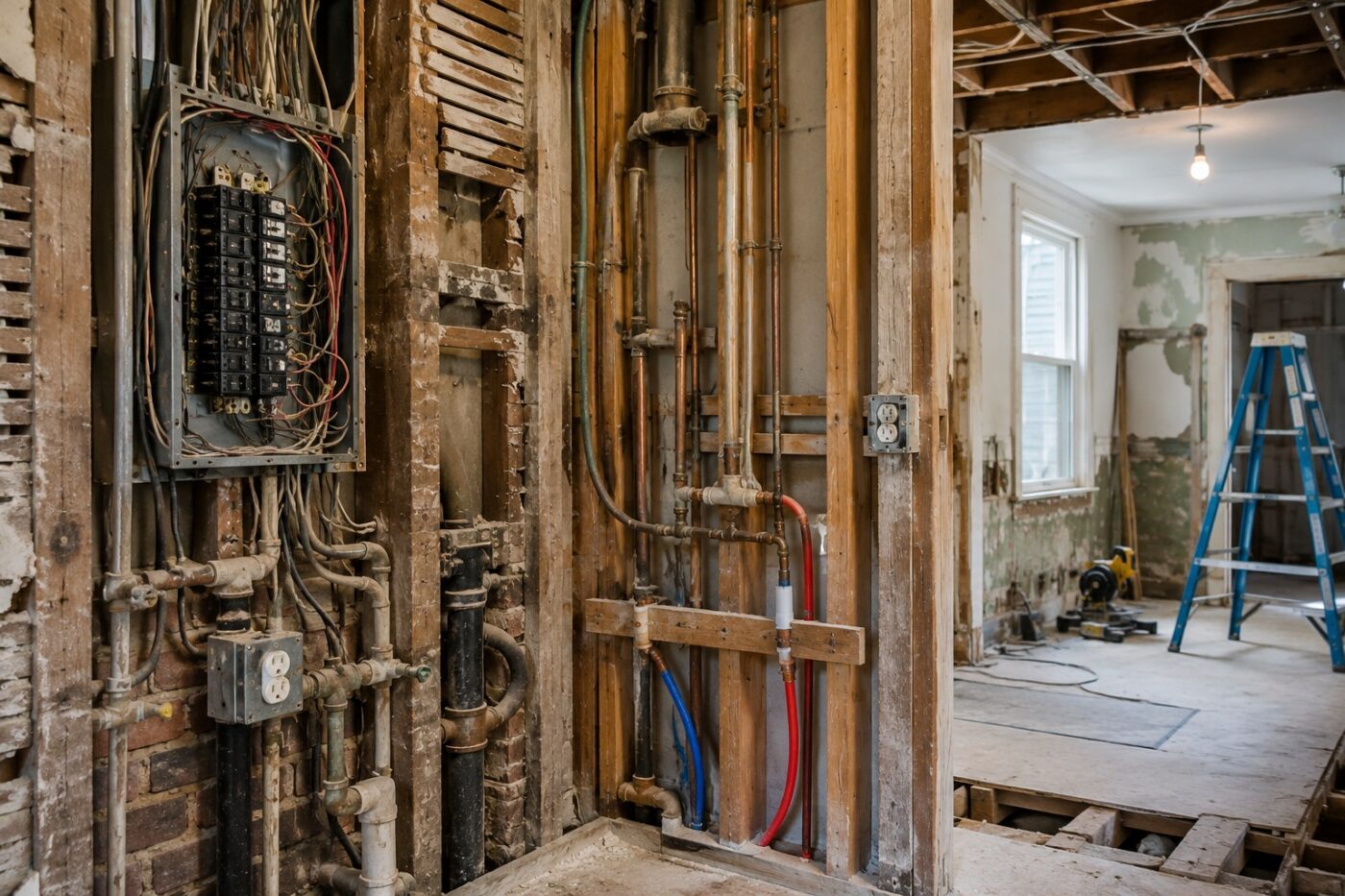
Outdated engineering systems are some of the most expensive renovation discoveries homeowners face.
Warning signs may include:
- flickering lights;
- overloaded outlets;
- tripping breakers;
- leaking pipes;
- low water pressure;
- rust-colored water;
- insufficient electrical capacity.
Many older homes were never designed to handle:
- modern appliances;
- electric heating;
- multiple bathrooms;
- smart home systems;
- high electrical loads.
One of the most common renovation mistakes is keeping outdated wiring or plumbing to save money during renovation. In many cases, homeowners later need to reopen finished walls to repair systems that should have been replaced initially.
Modern engineering upgrades often include:
- full electrical rewiring;
- upgraded breaker panels;
- new plumbing systems;
- improved drainage;
- additional outlets;
- LED lighting systems;
- smart home preparation.
Poor Layout and Lack of Functionality
Older homes frequently have layouts that no longer suit modern living.
Common layout problems include:
- small kitchens;
- narrow hallways;
- dark rooms;
- insufficient storage;
- isolated living areas;
- poor furniture placement options.
Modern renovation often focuses on improving functionality by:
- opening living spaces;
- redesigning layouts;
- improving traffic flow;
- maximizing natural light;
- creating better storage systems.
One of the biggest differences between a successful renovation and a disappointing one is layout planning. Even expensive materials cannot compensate for a poorly functioning floor plan.
Structural Wear and Hidden Damage
Structural problems should never be ignored during renovation planning.
Common warning signs include:
- cracked walls;
- sagging ceilings;
- uneven floors;
- roof leaks;
- moisture stains;
- mold growth;
- rotten wood;
- foundation movement.
Many homeowners are surprised by how many hidden problems appear after demolition begins. Water damage behind drywall, damaged floor joists, hidden mold, and improperly modified load-bearing walls are extremely common in older homes.
Professional inspection before renovation can help identify:
- structural issues;
- roof damage;
- insulation problems;
- plumbing leaks;
- electrical safety hazards.
In many cases, early detection prevents much more expensive repairs later.
How to Plan a Home Renovation
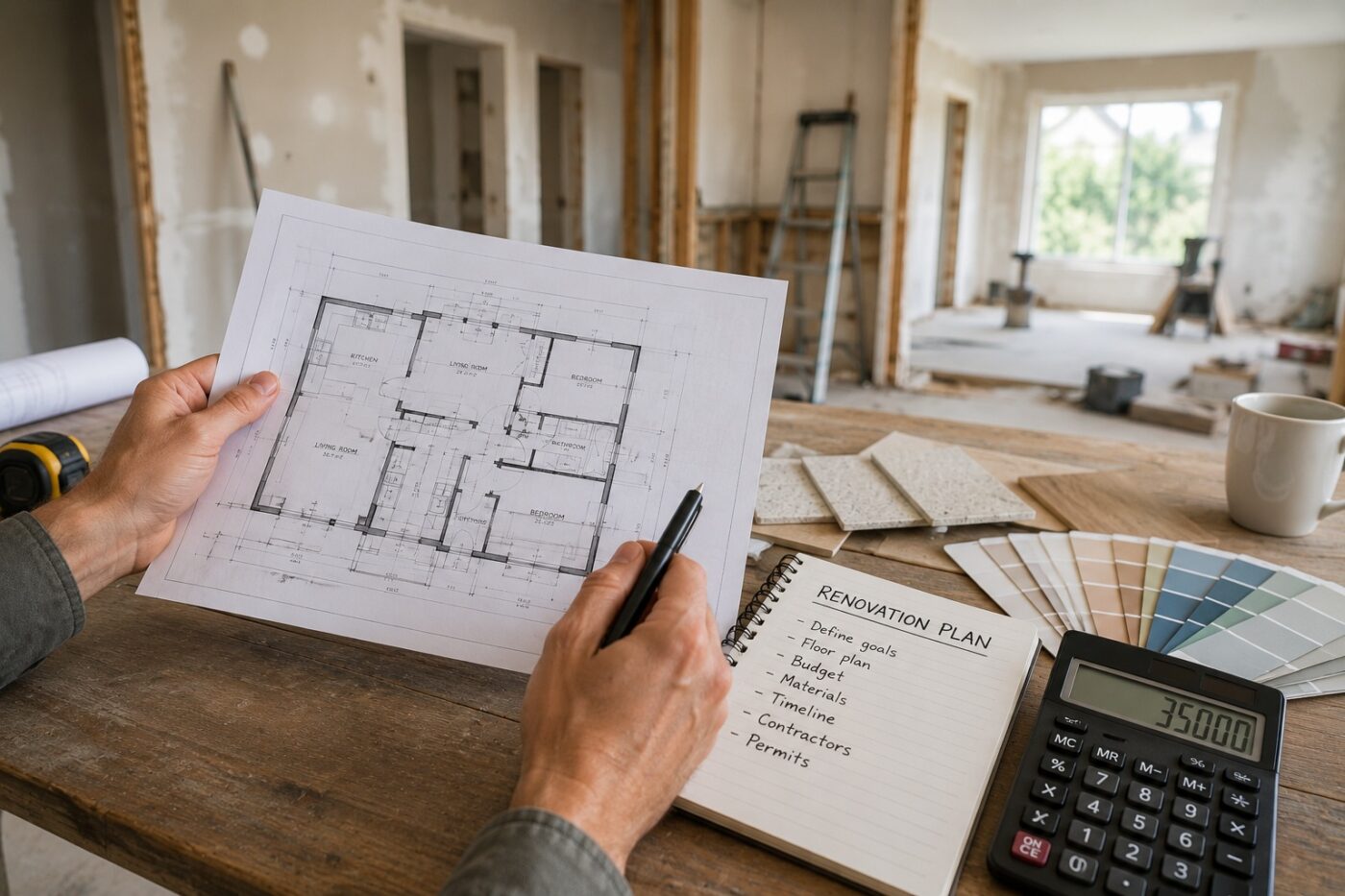
Proper planning is the foundation of every successful renovation project. Poor planning is one of the main reasons homeowners experience budget overruns, timeline delays, contractor conflicts, and low-quality results.
A well-organized renovation plan helps:
- reduce stress;
- control expenses;
- improve scheduling;
- minimize mistakes;
- improve overall construction quality.
Define Your Renovation Goals
Before renovation begins, homeowners should clearly define their priorities.
Common renovation goals include:
- modernizing interiors;
- improving functionality;
- increasing energy efficiency;
- increasing resale value;
- fixing structural problems;
- improving comfort;
- preparing a property for long-term living.
Some homeowners focus mainly on aesthetics, while others prioritize:
- insulation;
- heating efficiency;
- ventilation;
- engineering upgrades;
- layout improvements.
Clearly defining goals helps guide:
- budgeting decisions;
- contractor hiring;
- renovation sequencing;
- material selection.
Set a Realistic Budget
Underestimating renovation costs is one of the most common homeowner mistakes.
A realistic renovation budget should include:
- materials;
- labor;
- demolition;
- permits;
- inspections;
- waste removal;
- delivery fees;
- temporary housing;
- furniture and appliances;
- emergency reserves.
Most experts recommend keeping at least 10–20% of the renovation budget reserved for unexpected problems.
Average Home Renovation Costs
Renovation costs vary significantly depending on:
- property size;
- local labor prices;
- material quality;
- structural condition;
- renovation complexity.
Cosmetic Renovation
Usually includes:
- painting;
- lighting upgrades;
- flooring replacement;
- cosmetic bathroom improvements.
Average cost:
- approximately $20–50 per sq ft.
Mid-Range Renovation
Usually includes:
- kitchen renovation;
- bathroom renovation;
- electrical upgrades;
- plumbing improvements;
- insulation upgrades.
Average cost:
- approximately $60–120 per sq ft.
Full Structural Renovation
Usually includes:
- wall reconstruction;
- roofing;
- complete engineering systems;
- layout redesign;
- insulation replacement;
- HVAC installation.
Average cost:
- approximately $150+ per sq ft.
Luxury materials, custom furniture, smart home systems, and structural modifications can increase costs significantly.
Hidden Renovation Costs Homeowners Often Ignore
Unexpected expenses are extremely common during renovation.
The most common hidden renovation costs include:
- mold remediation;
- hidden water damage;
- structural corrections;
- outdated wiring;
- plumbing replacement;
- permit fees;
- waste disposal;
- temporary accommodation;
- delivery delays;
- custom furniture manufacturing;
- flooring leveling;
- asbestos or hazardous material removal.
One of the biggest renovation budgeting mistakes is assuming demolition will reveal exactly what was expected.
In reality, demolition often exposes:
- damaged framing;
- moisture problems;
- previous poor-quality repairs;
- unsafe electrical modifications.
Create a Renovation Timeline
Most homeowners underestimate how long renovation projects actually take.
Renovation delays are commonly caused by:
- contractor scheduling problems;
- permit approvals;
- hidden structural issues;
- material shortages;
- delivery delays;
- custom manufacturing times;
- weather conditions.
A realistic renovation timeline should include extra flexibility for unexpected complications.
Correct Home Renovation Order
One of the biggest renovation mistakes is completing work in the wrong sequence.
Incorrect sequencing often causes:
- damaged finishes;
- duplicated labor;
- unnecessary expenses;
- project delays.
The recommended renovation order is:
- Inspection and planning
- Budgeting and design
- Demolition
- Structural repairs
- Plumbing installation
- Electrical installation
- HVAC and ventilation
- Insulation work
- Drywall and plastering
- Flooring installation
- Painting and wall finishing
- Kitchen and bathroom installation
- Lighting and fixtures
- Final finishing and cleaning
For example, installing flooring before completing ceiling or painting work often leads to scratches, stains, and expensive repairs.
Choosing Between DIY and Professionals
DIY renovation can reduce labor costs, but many homeowners underestimate the technical complexity of renovation work.
DIY Tasks Usually Suitable for Homeowners
DIY-friendly renovation tasks may include:
- painting;
- wallpaper removal;
- shelving installation;
- furniture assembly;
- simple decorative upgrades;
- landscaping;
- minor cosmetic improvements.
Renovation Work Best Left to Professionals
Professional contractors are usually necessary for:
- electrical rewiring;
- plumbing replacement;
- structural modifications;
- roofing;
- waterproofing;
- gas systems;
- HVAC installation.
One poorly completed waterproofing job can later destroy flooring, drywall, insulation, and nearby rooms.
Similarly, incorrectly installed electrical systems can create serious fire hazards.
How to Choose Reliable Contractors
Hiring unreliable contractors is one of the fastest ways to turn renovation into a financial disaster.
Before hiring contractors:
- verify licenses and insurance;
- request references;
- review previous projects;
- compare multiple quotes;
- request detailed contracts;
- avoid large upfront payments.
A professional contractor should clearly explain:
- timelines;
- costs;
- payment stages;
- warranty conditions;
- responsibilities;
- material specifications.
One major warning sign is contractors who provide vague pricing without written estimates.
Can You Live in a House During Renovation?
Many homeowners try living in the property during renovation to reduce costs, but large projects can quickly become physically and emotionally exhausting.
Common renovation living challenges include:
- dust everywhere;
- noise;
- temporary loss of electricity or water;
- limited cooking access;
- contractor traffic;
- poor air quality;
- constant cleaning.
One of the most underestimated renovation problems is dust management. Fine construction dust often spreads far beyond active work zones and may continue appearing for weeks.
Families with children or pets should pay special attention to:
- exposed wiring;
- sharp tools;
- chemical fumes;
- debris;
- poor ventilation.
Living in the house is usually more realistic during:
- cosmetic renovations;
- phased room-by-room upgrades.
Full structural renovations often require temporary housing.
Step-by-Step Home Renovation Process
Demolition and Preparation
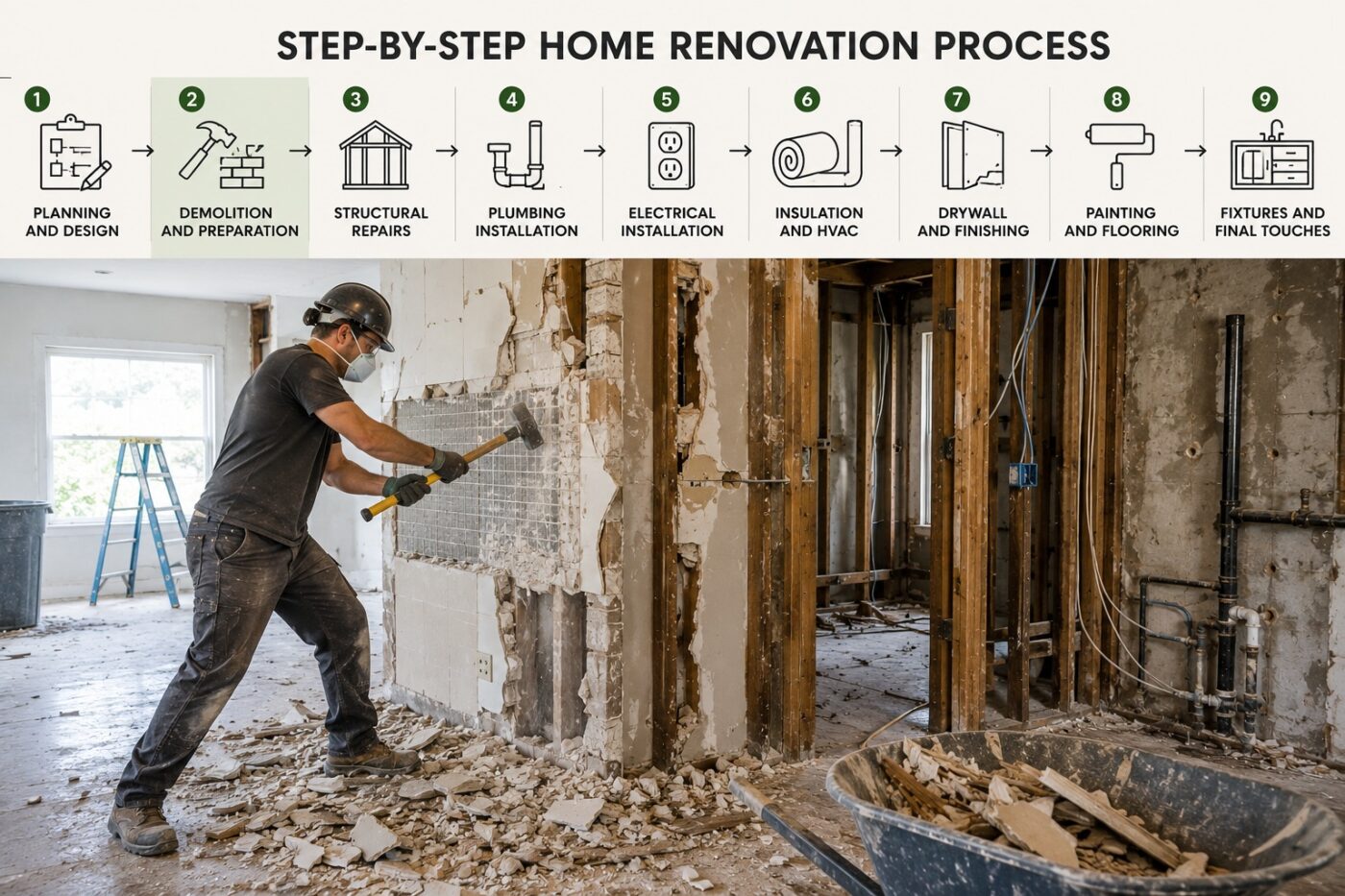
Demolition removes outdated finishes and prepares the property for reconstruction.
Typical demolition work includes:
- removing flooring;
- dismantling kitchens;
- removing drywall or plaster;
- removing old plumbing;
- removing outdated wiring.
Many homeowners are surprised by how different the house looks once demolition begins. This stage often reveals hidden structural problems that were impossible to detect earlier.
Before demolition begins:
- inspect load-bearing walls;
- disconnect utilities if necessary;
- protect unaffected areas;
- organize debris removal.
Structural Repairs
Structural repairs ensure the property remains safe and stable.
This stage may include:
- wall reinforcement;
- floor leveling;
- roof repairs;
- ceiling reinforcement;
- foundation corrections;
- moisture treatment.
Many older homes reveal hidden damage after demolition, including:
- rotten wood;
- damaged subfloors;
- weakened framing;
- water damage.
Ignoring structural issues during renovation almost always creates larger expenses later.
Electrical and Plumbing Updates
Modern engineering systems are critical for safety and long-term reliability.
Electrical upgrades may include:
- full rewiring;
- upgraded panels;
- additional outlets;
- LED lighting systems;
- smart home preparation.
Plumbing upgrades may include:
- pipe replacement;
- drainage improvements;
- water pressure optimization;
- bathroom and kitchen preparation.
One common renovation mistake is underestimating future electrical demand. Modern homes often require significantly more outlets and higher electrical capacity than older systems can safely provide.
Insulation and Energy Efficiency
Energy-efficient renovation has become one of the biggest priorities in modern remodeling.
Common insulation upgrades include:
- wall insulation;
- attic insulation;
- floor insulation;
- air sealing;
- window replacement.
Proper insulation improves:
- comfort;
- heating efficiency;
- moisture control;
- indoor air quality;
- long-term operating costs.
Interior Finishing
Interior finishing transforms the construction site into a livable home.
Typical finishing work includes:
- drywall installation;
- plastering;
- painting;
- flooring;
- tile installation;
- lighting installation;
- kitchen assembly;
- bathroom installation.
One of the biggest finishing-stage mistakes is rushing the work near project completion. Small imperfections become highly visible after furniture and lighting are installed.
Renovating Key Areas of the Home
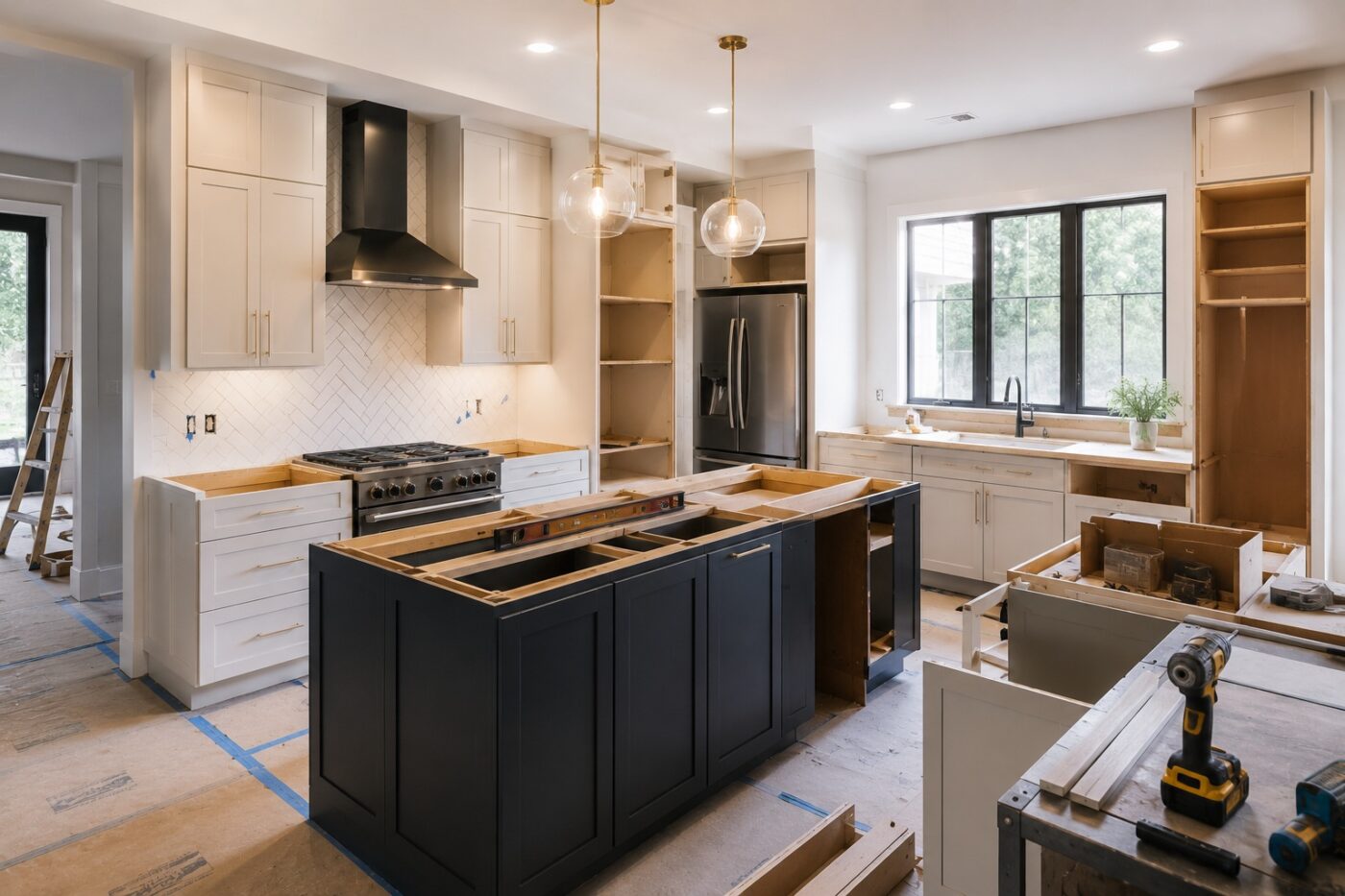
Kitchen Renovation
Kitchen renovation is often one of the most expensive parts of a renovation project.
A well-designed kitchen should prioritize:
- workflow efficiency;
- ventilation;
- storage;
- lighting;
- durable materials.
One of the most important kitchen planning principles is the work triangle between:
- sink;
- stove;
- refrigerator.
Poor kitchen layouts create daily frustration regardless of how expensive the renovation becomes.
Waterproof vinyl flooring has become increasingly popular in modern kitchen renovations because it combines durability, moisture resistance, and easier maintenance compared to traditional hardwood flooring.
Bathroom Renovation
Bathrooms require special attention to:
- waterproofing;
- ventilation;
- plumbing quality;
- moisture control.
One of the most expensive bathroom renovation mistakes is skipping waterproof membranes behind showers or flooring.
Even small hidden leaks can eventually damage:
- drywall;
- insulation;
- subfloors;
- nearby rooms.
Poor bathroom ventilation is another extremely common renovation problem that eventually leads to mold and condensation issues.
Living Room Renovation
Living room renovation usually focuses on:
- lighting;
- layout optimization;
- comfort;
- storage;
- heating improvements.
Modern living rooms often prioritize:
- open layouts;
- multifunctional furniture;
- layered lighting;
- neutral colors;
- improved natural light.
Bedroom Renovation
Bedroom renovation should prioritize:
- comfort;
- sound insulation;
- storage;
- air quality;
- lighting control.
Layered lighting systems and improved insulation can significantly improve sleep quality and overall comfort.
Popular Home Renovation Styles
Modern Style
Minimal clutter, clean lines, open layouts, and neutral colors.
Scandinavian Style
Bright interiors, natural materials, functional simplicity, and warm textures.
Minimalist Style
Hidden storage, simple spaces, limited decoration, and visual cleanliness.
Industrial Style
Concrete surfaces, exposed brick, metal accents, and loft-inspired aesthetics.
Traditional Style
Classic materials, decorative details, warm color palettes, and timeless design.
Many successful renovations combine multiple styles to create more personalized interiors.
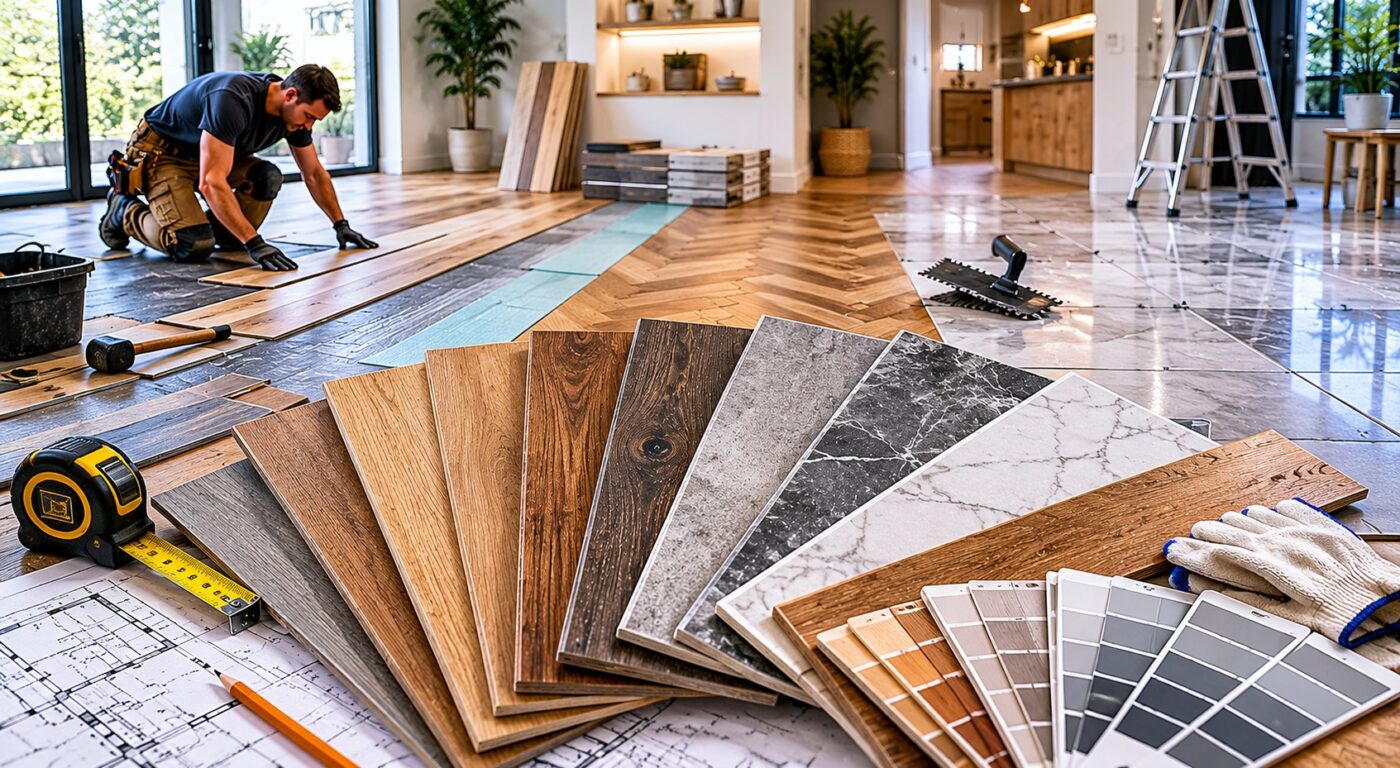
Flooring Materials Comparison
| Material | Durability | Water Resistance | Cost Level |
|---|---|---|---|
| Laminate | Medium | Low | Budget |
| Vinyl | High | High | Medium |
| Tile | Very High | Excellent | Medium-High |
| Engineered Wood | High | Medium | Medium-High |
| Hardwood | Very High | Low | Premium |
Choosing the right flooring material is one of the most important long-term renovation decisions, especially in kitchens, hallways, bathrooms, and high-traffic living areas.
Common Home Renovation Mistakes
The most common renovation mistakes include:
- underestimating costs;
- poor planning;
- choosing unreliable contractors;
- skipping waterproofing;
- ignoring ventilation;
- rushing finishing work;
- changing layouts during construction.
One of the biggest mistakes homeowners make is focusing only on aesthetics while ignoring infrastructure improvements.
Beautiful finishes cannot compensate for:
- unsafe wiring;
- leaking plumbing;
- moisture problems;
- poor insulation.
What Usually Delays Renovation Projects?
The most common renovation delays include:
- material shortages;
- contractor scheduling problems;
- hidden structural damage;
- permit approvals;
- custom furniture delays;
- weather conditions;
- engineering corrections after demolition.
One delayed custom kitchen or window order can postpone multiple finishing stages.
Building flexibility into the renovation schedule helps reduce stress and improve project management.
Tips to Save Money on Renovation
The smartest renovation budgets focus on long-term value rather than simply minimizing short-term expenses.
The best cost-saving strategies include:
- prioritizing infrastructure upgrades;
- comparing contractor quotes;
- buying materials strategically;
- avoiding unnecessary luxury upgrades;
- reusing quality existing materials;
- avoiding last-minute layout changes.
Trying to save money on:
- waterproofing;
- insulation;
- electrical systems;
- plumbing;
- ventilation;
usually creates larger repair costs later.
Complete Home Renovation Checklist
Before Renovation
- inspect the property;
- define priorities;
- create a realistic budget;
- compare contractors;
- finalize materials and layouts.
During Renovation
- monitor progress regularly;
- inspect engineering systems;
- track expenses;
- verify installation quality;
- maintain communication with contractors.
After Renovation
- perform final inspections;
- test all systems;
- organize warranties and documents;
- deep clean the property;
- create a maintenance plan.
Frequently Asked Questions
Is it cheaper to renovate or rebuild?
It depends on the structural condition of the property. Cosmetic and mid-range renovations are usually cheaper than rebuilding, but severely damaged homes may require reconstruction.
How much should I budget for unexpected renovation costs?Most renovation experts recommend reserving at least 10–20% of the renovation budget for hidden problems and unexpected expenses.
What should never be skipped during renovation?
Critical infrastructure upgrades should never be skipped:
- waterproofing;
- ventilation;
- plumbing quality;
- electrical safety;
- insulation;
- structural repairs.
What should be renovated first in an old house?
The highest-priority areas are usually:
- roofing;
- plumbing;
- electrical systems;
- structural repairs;
- insulation.
Cosmetic improvements should usually come later.
Can I renovate one room at a time?
Yes, phased renovation is common for homeowners with limited budgets. However, full renovations are usually faster and more cost-efficient overall.
What renovation adds the most home value?
The highest ROI renovations often include:
- kitchen renovation;
- bathroom modernization;
- insulation upgrades;
- flooring replacement;
- window replacement;
- curb appeal improvements.
What is the hardest part of home renovation?
The most difficult parts are usually:
- budget management;
- contractor coordination;
- hidden structural surprises;
- renovation stress;
- timeline delays;
- decision fatigue during long projects.
Conclusion
A complete home renovation is a complex but highly rewarding investment that can dramatically improve comfort, functionality, energy efficiency, and long-term property value.
The most successful renovation projects are not necessarily the most expensive ones. They are the projects built on realistic planning, smart budgeting, proper renovation sequencing, durable materials, and reliable workmanship.
One of the biggest lessons homeowners learn during renovation is that hidden problems are extremely common. Unexpected structural damage, outdated engineering systems, moisture issues, contractor delays, and budget adjustments are part of many real-world renovation projects.
Maintaining flexibility, realistic expectations, and a financial reserve helps reduce stress and improves overall project stability.
Modern renovation should focus not only on appearance but also on long-term performance. Proper insulation, ventilation, waterproofing, engineering quality, and layout functionality often provide greater long-term value than purely decorative upgrades.
Whether you are planning a cosmetic refresh or a full structural transformation, informed decision-making and careful preparation can help you avoid expensive mistakes and create a home that is:
- more comfortable;
- more energy-efficient;
- safer;
- more functional;
- better suited for modern living.
A thoughtfully renovated home is not only more visually appealing — it becomes a more reliable, efficient, and enjoyable place to live for many years to come.